
Non-surgical spinal decompression in Chesterfield, MO
Computer-controlled, FDA-cleared, and specific to the disc that is actually injured. The centerpiece of our four phase Disc Care Protocol.
A compressed, herniated, or degenerating disc rarely heals on its own, because the pressure that injured it never lets up. Spinal decompression reverses that pressure. A computer-controlled table gently cycles your spine through precise pulling patterns, targeted to the exact level of the injury, creating negative pressure inside the disc. That vacuum effect draws bulging material back toward center and pulls in the fluid and nutrients the disc needs to repair.
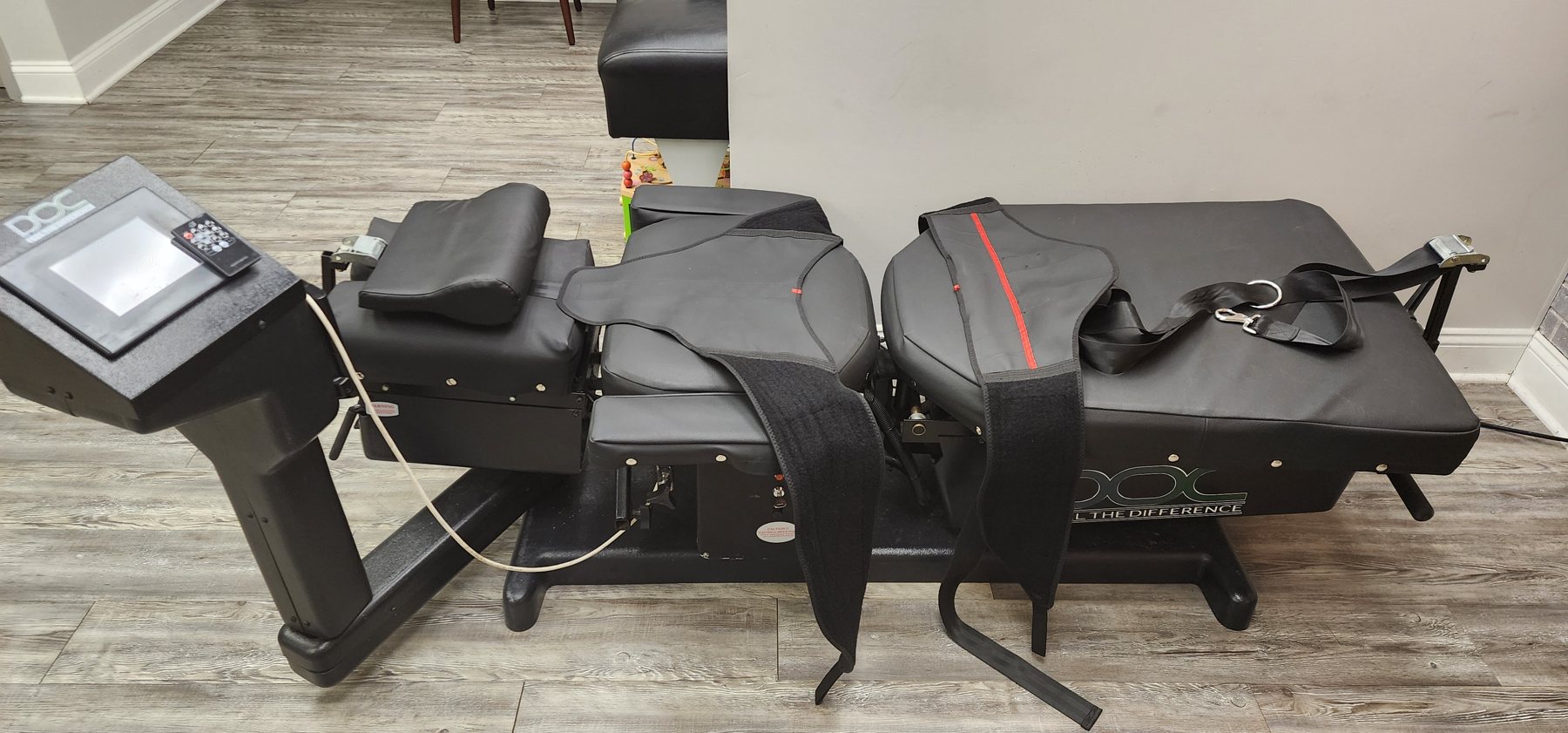
Built on research, run by computers
Our protocol builds on decompression research developed at Harvard School of Medicine by Dr. Norman Shealy and was refined in partnership with Disc Centers of America. The table's software sets the angle, tension, and pull rate for your specific spinal level, then listens: onboard sensors detect the smallest muscle spasm and adjust instantly, so your body never fights the treatment. It is FDA cleared for cervical and lumbar disc conditions.
One phase of four
Decompression does the structural work, and the rest of the Disc Care Protocol makes it stick. Class IV cold laser accelerates tissue repair around the disc, HakoMed electroanalgesia calms radiating nerve pain and supports nerve recovery, and PulStar computer-guided adjusting keeps the joints above and below moving correctly. Each phase amplifies the others; that combination is why patients who failed single-tool care respond here.
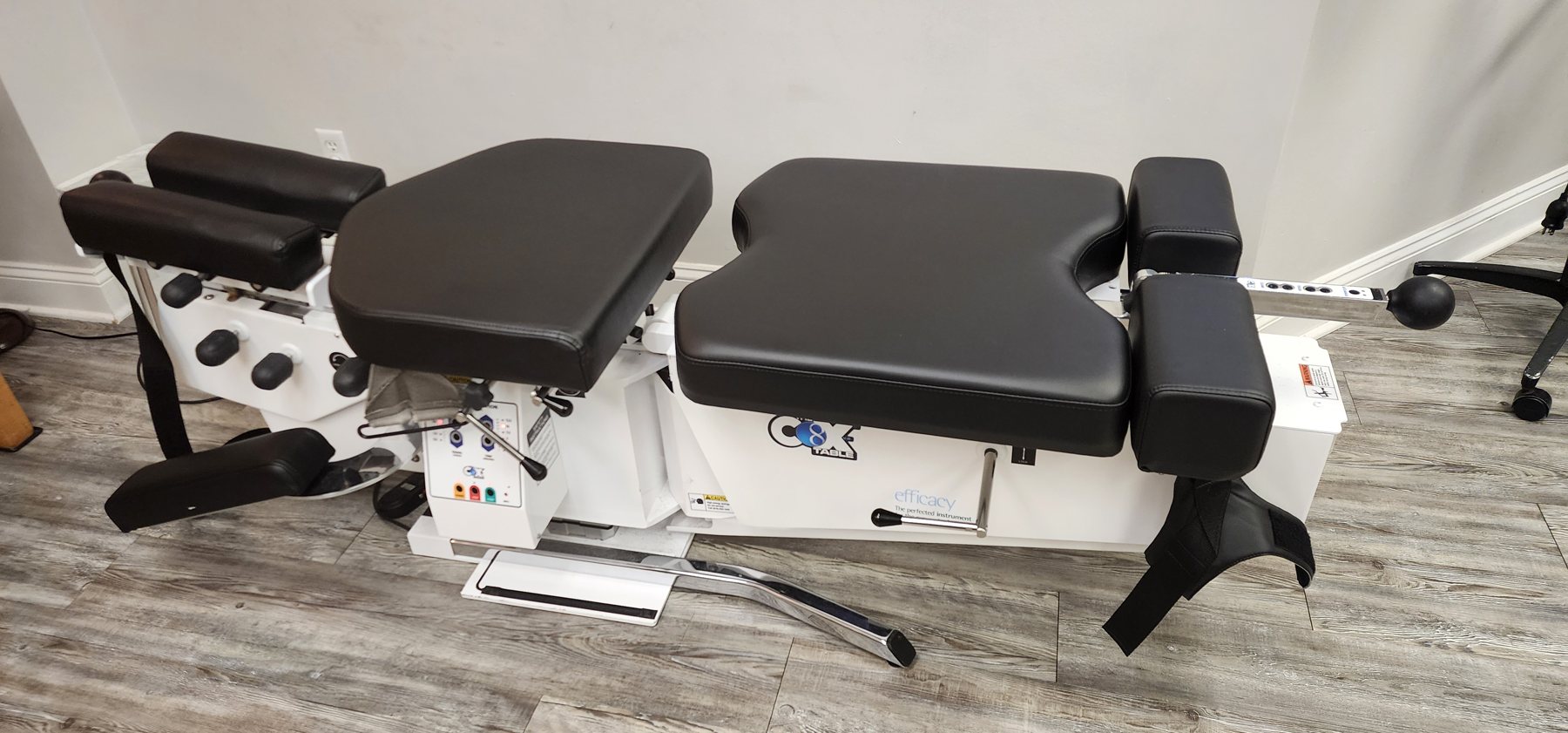
Three tools, one goal
Not every disc responds to the same tool, so we run three. The DOC table handles motorized cervical and lumbar decompression, the Cox 8 delivers hands-on flexion distraction for the cases that want a gentler, doctor-guided pull, and the handheld VDP (Vertebral Distraction Pump) lets Dr. Hayes create precise, segment-by-segment distraction from C2 all the way to the sacrum for facet syndrome and focal disc lesions. Your examination decides which combination fits your spine.
Who it helps
- Herniated and bulging discs, cervical or lumbar
- Sciatica and radiating arm or leg pain
- Degenerative disc disease
- Spinal stenosis
- Failed back surgery cases, evaluated individually
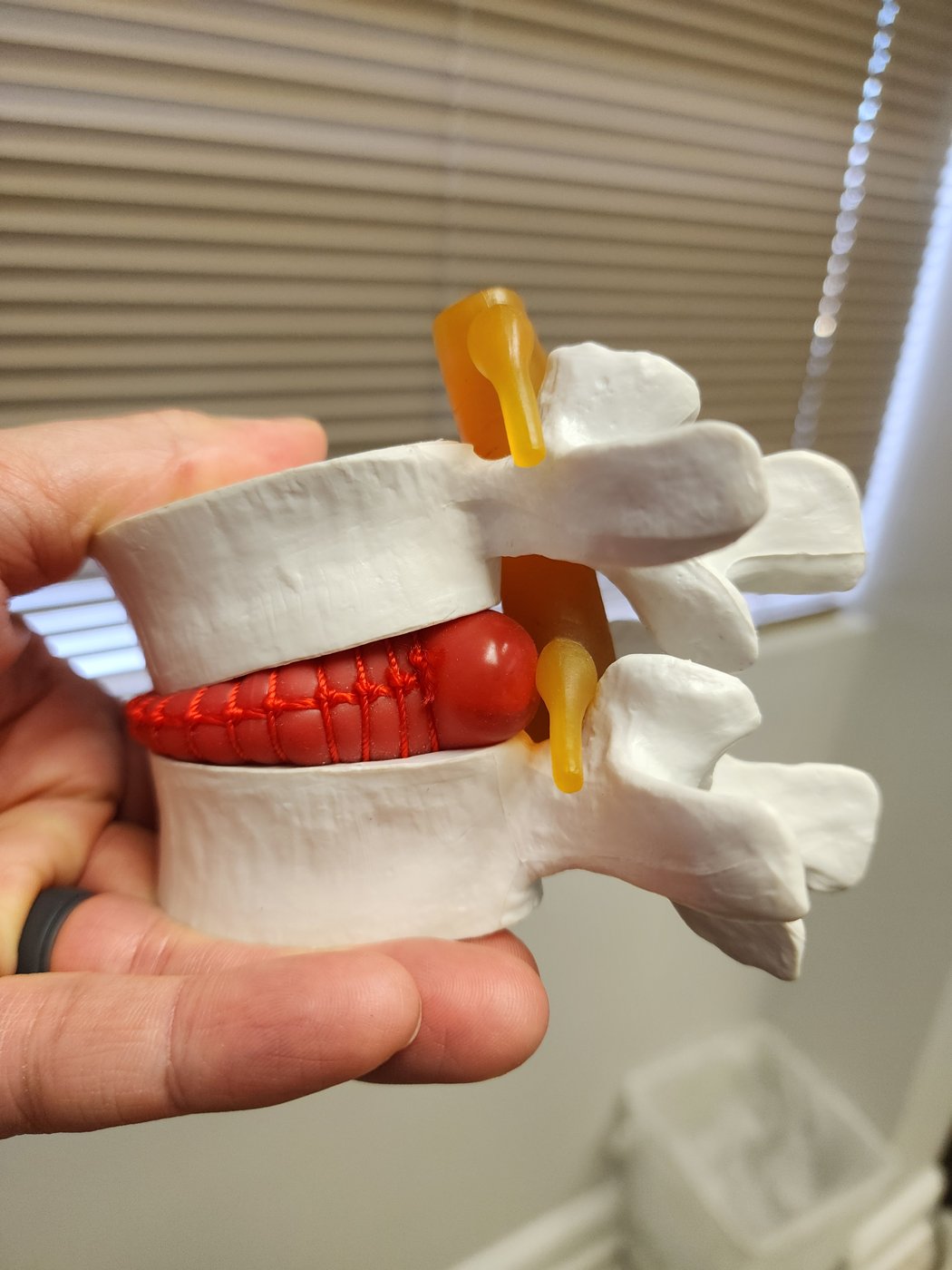
Honest candidacy, always. Decompression is powerful for the right disc problem and wrong for some others. Your sixty minute examination exists to make that call before you spend a dollar on treatment.
What a visit looks like
You lie comfortably on the table, secured with a harness, while the computer runs your programmed cycle. Sessions run about 20 to 30 minutes, and most patients read or rest through them. There is no downtime; many patients come on a lunch break. Dr. Hayes tracks your response objectively at each visit and adapts the protocol as your disc improves.
Questions, answered
Does spinal decompression hurt?
No. Most patients describe a gentle, rhythmic stretching sensation, and some fall asleep during treatment. The computer monitors your muscles continuously and backs off the moment it detects guarding or spasm.
How is this different from traction or an inversion table?
Traction pulls the whole spine the same way the whole time. Decompression is computer controlled: the angle, force, and pull pattern are programmed for your specific spinal level and adjusted in real time, which is what lets it target one injured disc.
How many sessions does a disc protocol take?
It depends on the disc, the severity, and how long the problem has been there. After your examination and imaging review, Dr. Hayes will lay out a specific plan with a defined number of visits, so you know the full scope and cost before you commit.
Am I a candidate if I have already had injections or been told I need surgery?
Often, yes. Many of our disc patients arrive after injections stopped working or while weighing a surgical consult. The examination determines candidacy honestly: if we do not believe decompression can help your case, we will tell you.
Is decompression safe for older patients?
Decompression is non-invasive and drug free, and treatment parameters scale to the patient. During your examination, Dr. Hayes screens for the conditions that would rule it out, such as certain fractures, tumors, or advanced osteoporosis.
Find out if your disc is a candidate.
One examination answers it. Book online or call the office and we will take a proper look.