
Carpal tunnel treatment in Chesterfield, MO
Hand and wrist numbness is not always the wrist. We follow the nerve from the neck down and relieve every point of compression we find, without surgery.
The carpal tunnel is a narrow passage on the palm side of the wrist, bounded by the small carpal bones and roofed by a tough band of ligament. Nine tendons and one nerve share that space. When the tunnel narrows or the tendons swell, the median nerve is the structure that gives, and you feel it: numbness and tingling in the thumb, index, and middle fingers, burning that wakes you at two in the morning, a grip that drops coffee cups, hands you shake out at a red light hoping the feeling comes back.
That is the textbook description, and for some patients it is exactly what is happening. For many others it is only the last few inches of a longer story.
The nerve starts at your neck
The median nerve does not begin at the wrist. It is assembled from nerve roots that exit the cervical spine at C6 through T1, then travels a long and crowded route: between the scalene muscles at the side of the neck, under the collarbone, beneath the pectoralis minor at the front of the shoulder, down the arm, through the forearm muscles, and only then into the carpal tunnel. Pressure at any one of those places produces symptoms in the hand, because the hand is where that nerve reports.
Clinicians call this a double crush: a nerve already irritated at one level tolerates a second, smaller compression far worse than a healthy nerve would. A stiff mid cervical segment plus a modestly tight wrist can add up to hand numbness that neither would cause alone. It also explains a frustration we hear constantly, from patients who had a wrist released surgically and got partial relief, or none. The wrist was real. It was not the only thing.
What the examination looks for
Your sixty minute examination is built to map the whole nerve path rather than confirm a label you arrived with. Dr. Hayes takes a full history first, including your work, your sleep position, and prior injuries to the neck and shoulder. Then comes neurological testing: sensation by dermatome, grip and pinch strength, reflexes, and the specific muscles the median nerve supplies. Orthopedic testing follows at the wrist, elbow, shoulder, and cervical spine, because provocation tests at each level tell us which ones actually reproduce your symptoms.
The pattern of your numbness matters enormously. Median nerve compression at the wrist affects the thumb, index, middle, and half the ring finger, and typically spares the little finger and the palm. Symptoms in the little finger point toward the ulnar nerve, often at the elbow. Numbness across the whole hand, into the forearm, or worsening when you raise your arm overhead suggests compression up at the shoulder or neck. Getting this right is the difference between treating your problem and treating a guess.
Not every hand complaint is carpal tunnel. Cervical radiculopathy, thoracic outlet compression, ulnar entrapment at the elbow, and early nerve pain from metabolic causes all mimic it. The examination exists to distinguish them before anyone treats anything.
How we treat it
Treatment follows the findings, and it addresses every level that tested positive. At the wrist and forearm, we work to restore normal motion in the carpal bones and release the soft tissue that crowds the tunnel. At the shoulder and neck, we free the segments and muscles that are compressing the nerve upstream, using gentle instrument adjusting with PulStar, Impulse, or Activator. These are computer guided or handheld low-force tools with no twisting and no cracking, which matters when a patient is already sensitized.
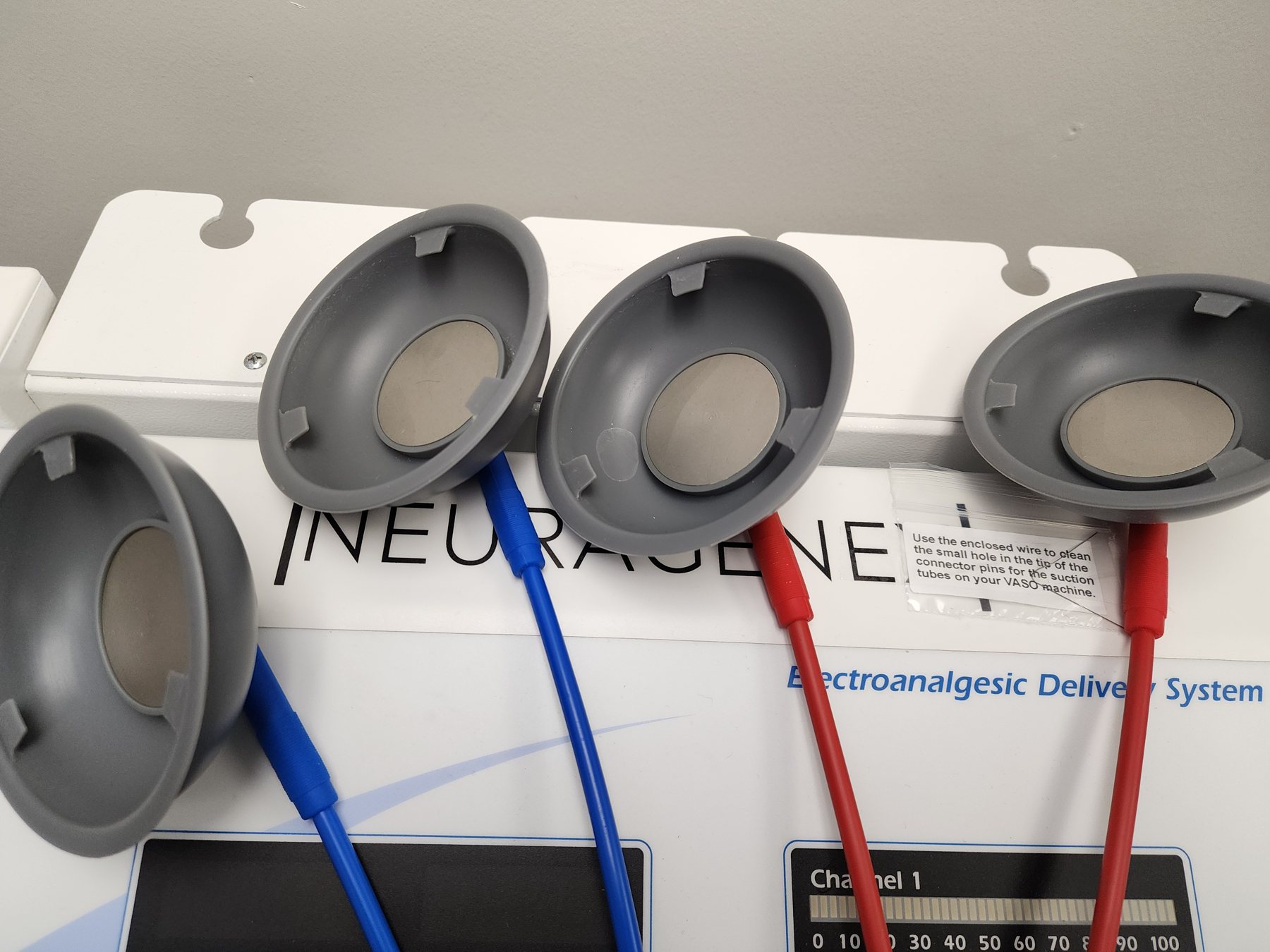
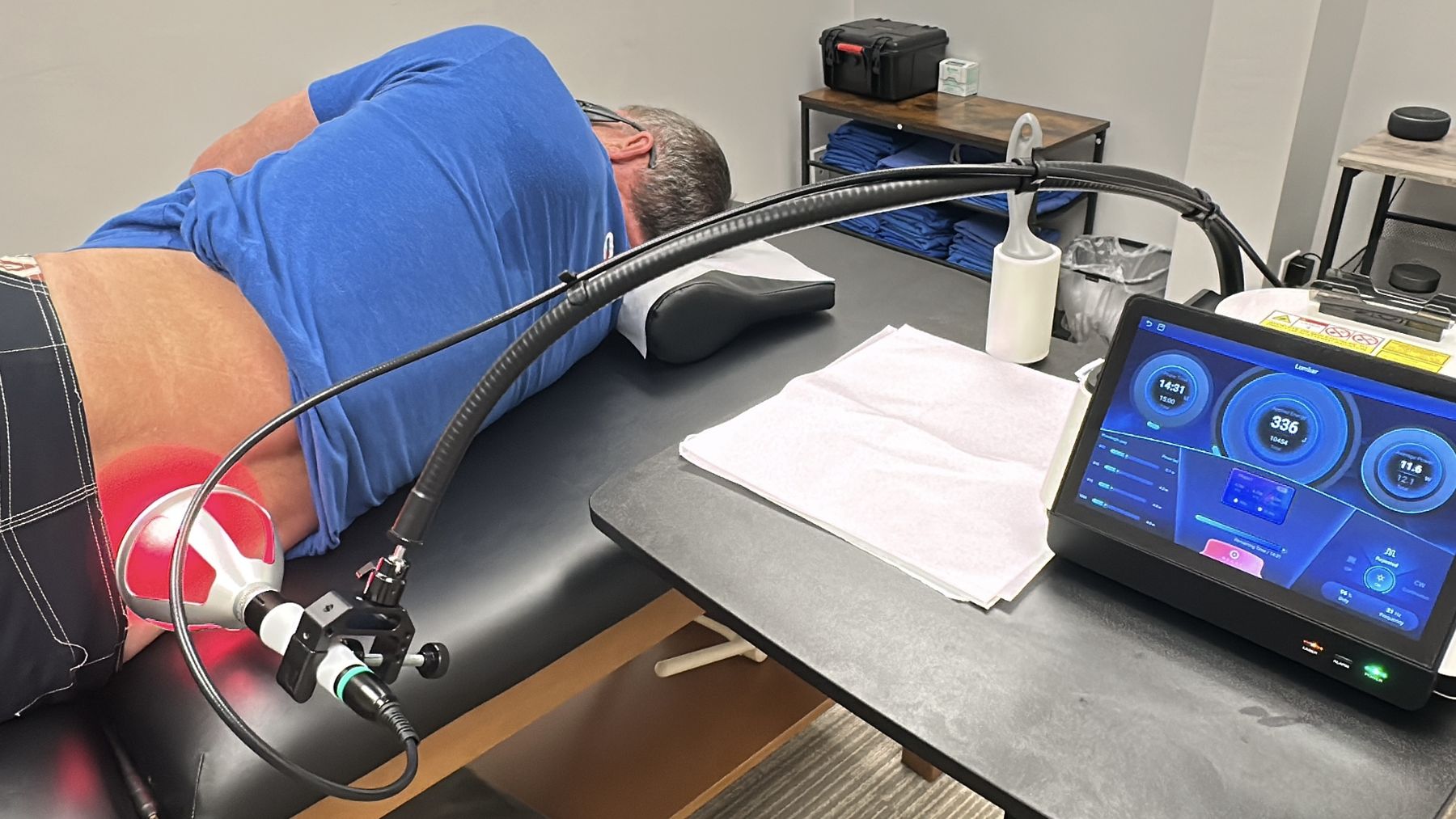
Two modalities do the nerve work directly. Class IV cold laser is photobiomodulation, FDA cleared, and it accelerates tissue repair while calming the inflammation crowding the nerve. Horizontal therapy electroanalgesia on the hako-med PRO ElecDT HT, along with Neuragene electroanalgesic delivery, targets nerve pain and supports peripheral nerve recovery along the length of the pathway. Where tendon and soft tissue changes are the stubborn part of the picture, Storz radial shockwave may be added. Supportive care such as therapeutic ultrasound and shortwave diathermy warms and mobilizes tissue so the work holds.
Who this helps
- Numbness or tingling in the thumb, index, and middle fingers
- Night pain and burning that wakes you and eases when you shake the hand
- Weak grip, clumsiness, or dropping objects
- Hand symptoms alongside neck, shoulder, or upper back tension
- Keyboard, trade, and repetitive-use hands that bracing or rest has not helped
- Patients weighing a surgical release who want conservative care first
- Partial or absent relief after a prior release
What a visit looks like
Bonesetters runs by appointment only, and nothing here is rushed. Your first visit is the full sixty minutes: history, neurological, physical, and orthopedic testing, a plain explanation of what Dr. Hayes found and where, and your first adjustment. Follow-up visits combine the adjusting work with whatever modalities your plan calls for, and Dr. Hayes retests as you go, so progress is measured rather than assumed. You will also leave with specific things to change between visits: sleep position, wrist posture at your desk, and how you set your hands during the tasks that aggravate it.
Questions, answered
If the numbness is in my hand, why examine my neck?
Because the median nerve starts there. The nerve roots that build it exit the spine at C6, C7, C8, and T1, then pass through the scalene muscles, under the collarbone, beneath the pectoralis minor, through the forearm, and finally into the wrist. Pressure anywhere along that route can produce hand symptoms. Treating only the wrist when the compression is higher up is the most common reason carpal tunnel care fails.
How do you tell the difference between wrist and neck compression?
Pattern and testing. True median nerve compression at the wrist spares the little finger and usually spares the palm. Symptoms that include the little finger, the back of the hand, or the forearm point elsewhere. Dr. Hayes combines orthopedic testing at the wrist, elbow, shoulder, and neck with a neurological examination to locate every level that reproduces your symptoms, not just the first one.
What if I already had a nerve conduction study?
Bring it. Nerve conduction results are useful data, and Dr. Hayes will review them with you. Keep in mind that a study measuring the wrist tells you about the wrist. Patients with normal or borderline studies and real symptoms often have compression at a level the test did not cover.
Can this help if surgery has already been recommended?
Often, yes, and many of our hand and wrist patients arrive exactly at that point. Conservative care does not close the surgical door: if you try this first and it does not resolve the problem, surgery remains available. If the examination shows advanced nerve damage or a case this care will not address, Dr. Hayes will tell you plainly.
How long before I can sleep through the night again?
Night symptoms are usually the first thing patients report changing, because much of the nighttime burning comes from position and fluid pressure rather than permanent damage. How quickly, and how completely, depends on how long the nerve has been compressed and how many levels are involved. After the examination you will get a specific plan with a defined number of visits, so you know the scope and the cost before you commit.
Find out where your hand symptoms actually start.
One thorough examination, from the neck to the fingertips. Book online or call the office.