
The Disc Care Protocol in Chesterfield, MO
Four phases, layered on purpose. Built with Disc Centers of America on decompression research from Harvard School of Medicine, for the disc injuries that have not responded to anything else.
Most disc care fails for a predictable reason: it treats one part of the problem. A table unloads the disc but nothing calms the inflamed tissue around it. A laser calms the tissue but the joint above it is still locked and reloading the injury every time you stand up. Meanwhile the nerve running past the disc keeps firing, so the muscles keep guarding, so the segment never gets a chance to settle.
The Disc Care Protocol exists to close that gap. It is four distinct technologies applied in a deliberate order, each one making the next more effective, delivered as a planned course of care rather than a series of appointments you keep booking and hoping about.
Phase one: spinal decompression
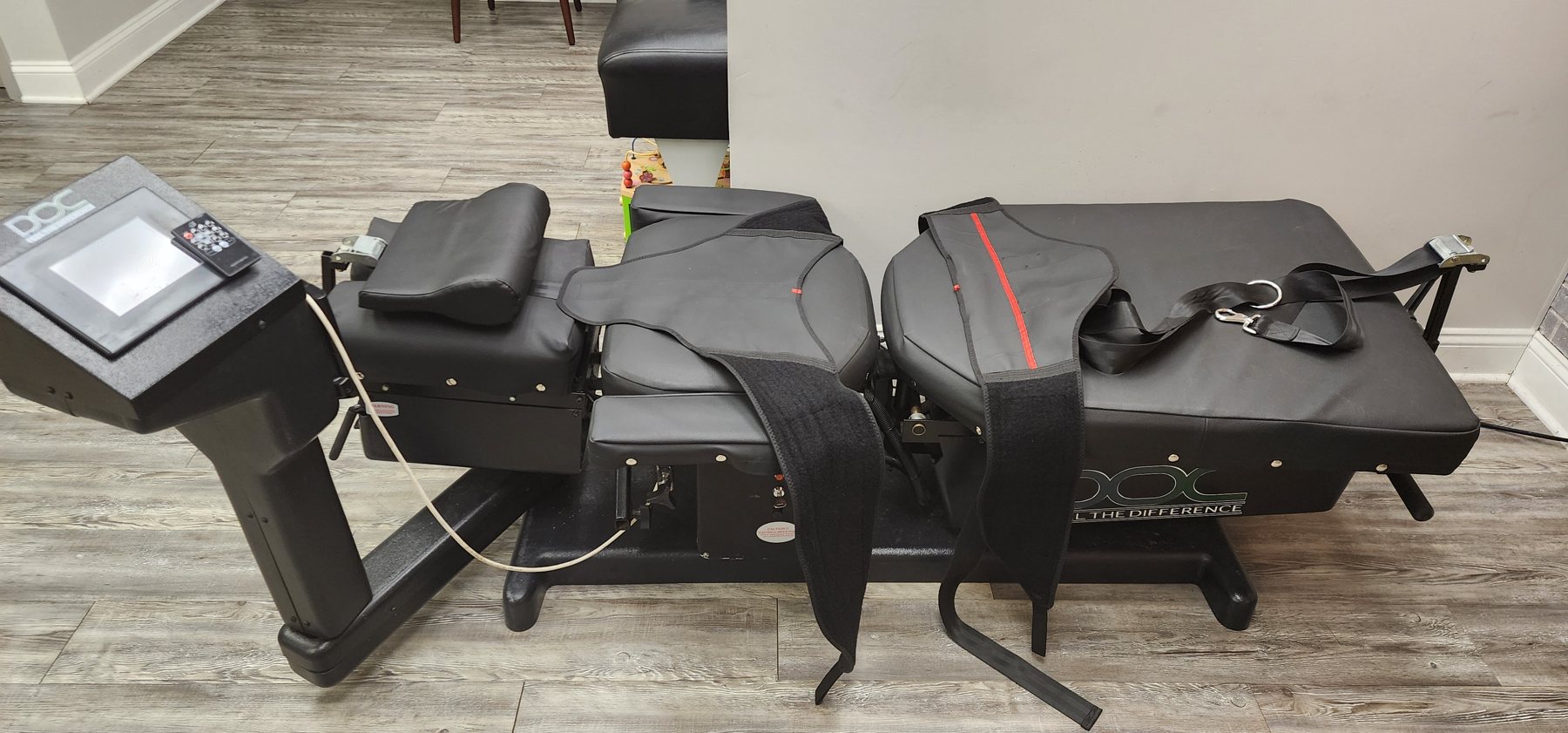
Decompression does the structural work. A computer-controlled table cycles your spine through precise pulling patterns targeted at the exact injured level, creating negative pressure inside the disc so bulging material can draw back toward center and fluid and nutrients can move in. We run three tools here: the motorized DOC table for cervical and lumbar work, the Cox 8 for hands-on flexion distraction when a gentler doctor-guided pull is the better call, and the handheld VDP for segment-specific distraction.
Phase two: Class IV cold laser
Photobiomodulation works the tissue environment around the disc that decompression has just unloaded. Therapeutic light is absorbed by the cells as energy, which supports repair, improves local circulation, and calms the inflammatory signalling that keeps a disc injury painful long after the initial event. Unloading a disc into inflamed, oxygen-starved tissue wastes the unloading. This is the phase that stops that happening.
Phase three: HakoMed electroanalgesia
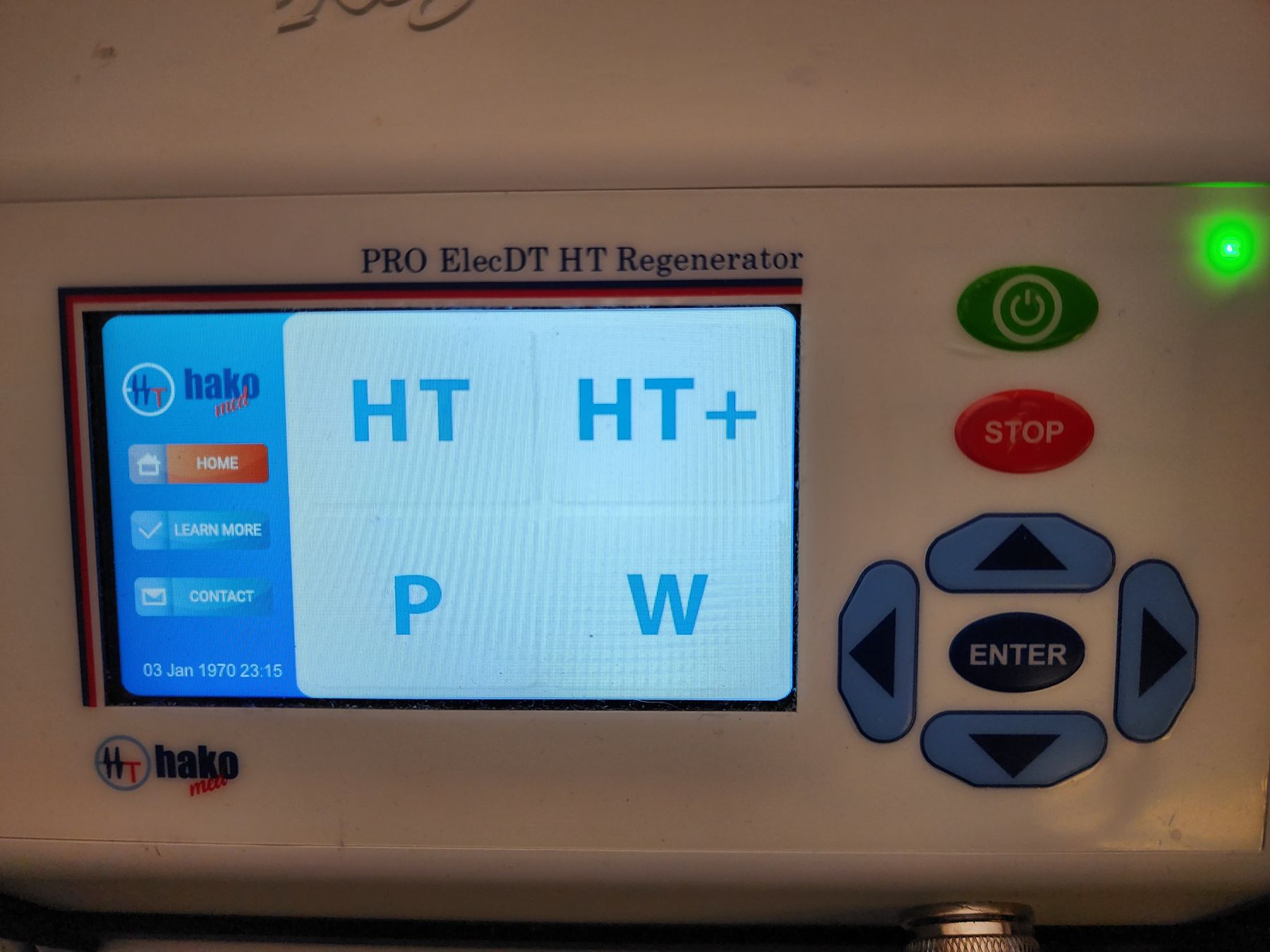
A disc injury is usually also a nerve problem, which is why the pain runs down an arm or a leg rather than staying put. Our hako-med horizontal therapy unit delivers electroanalgesia aimed at that radiating pain and at supporting peripheral nerve recovery between sessions, so the guarding relaxes and the segment can actually rest.
Phase four: computer-guided adjusting
Finally, the joints above and below the injury have to move correctly, or they will keep loading the disc you just spent weeks repairing. PulStar adjusting reads the spine segment by segment, shows the stiffness pattern on screen before and after, and corrects it with precise, measured impulses. No twisting, no cracking, and an objective record of what changed.
Honest candidacy, always. This protocol is powerful for the right disc problem and wrong for some others. Your sixty minute examination exists to make that call before you spend a dollar on treatment, and Dr. Hayes will say plainly if your case is not a fit.
Who the protocol is for
- Herniated and bulging discs, cervical or lumbar
- Sciatica and radiating arm or leg pain
- Degenerative disc disease
- Spinal stenosis
- Failed back surgery cases, evaluated individually
How a plan is built
Nothing starts until the examination is done. Dr. Hayes takes your history, runs neurological, physical, and orthopedic testing, reviews any imaging you bring, and then tells you what he found in plain terms. If the protocol fits, you receive the specific plan: which phases, how many visits, and the total cost, in writing, before you decide. Progress is re-checked as you go, and the plan adapts to how your disc is actually responding rather than following a script.
Questions, answered
Why four phases instead of just decompression?
Because a disc injury is more than a mechanical problem. Decompression unloads the disc, but the inflamed tissue around it, the irritated nerve running past it, and the joints above and below it all keep feeding the problem. Treating one of those and ignoring the rest is the most common reason patients stall out elsewhere and end up here.
How long does a protocol take?
It depends on the disc, the severity, and how long it has been there. After your examination and imaging review, Dr. Hayes lays out a specific plan with a defined number of visits, so you know the full scope and the full cost before you commit to any of it.
Am I a candidate if I have been told I need surgery?
Often, yes. Many of our disc patients arrive after injections stopped working or while weighing a surgical consult. The examination determines candidacy honestly, and if we do not believe the protocol can help your case, we will tell you that instead of selling you a plan.
Does it hurt?
No. Most patients describe decompression as a gentle, rhythmic stretch and some fall asleep during it. The laser is painless, the electroanalgesia feels like a light pulsing, and the adjusting is done with instruments rather than twisting. There is no downtime after a session.
What happens after the protocol finishes?
Dr. Hayes re-examines you and tells you where you actually landed. Some patients are done. Others move to a much lighter maintenance schedule to hold what they gained. Either way you get a straight answer rather than an automatic renewal.
Find out if your disc is a candidate.
One examination answers it. Book online or call the office and we will take a proper look.