
Spinal stenosis treatment in Chesterfield, MO
Narrowing crowds the nerves and your legs pay for it. We work to open that space mechanically, without injections and without surgery.
Your spinal cord and nerve roots travel through openings that are only just large enough for them. Stenosis means one or more of those openings has narrowed. It usually happens slowly, as a combination of a disc losing height and bulging backward, facet joints thickening with arthritic change, and the ligament along the back of the canal growing stiffer and thicker with age. Sometimes a vertebra has slipped slightly forward on the one below it and closes the channel that way. None of it happens overnight, which is why most people cannot name the day their symptoms started.
What patients actually describe
Back pain is often the smaller complaint. The symptom that brings people in is the legs: a deep ache, heaviness, burning, or a dead and rubbery feeling that builds after a few minutes of standing or walking, then eases within a minute or two of sitting down. Patients tell us they can push a grocery cart through an entire store but cannot walk the parking lot, or that they lean on the handle of a lawnmower to keep going. That is not coincidence. Leaning forward opens the canal. Standing upright and arching closes it. When the narrowing is in the neck instead, the pattern shifts to arm heaviness, hand clumsiness, or numbness that comes and goes with head position.
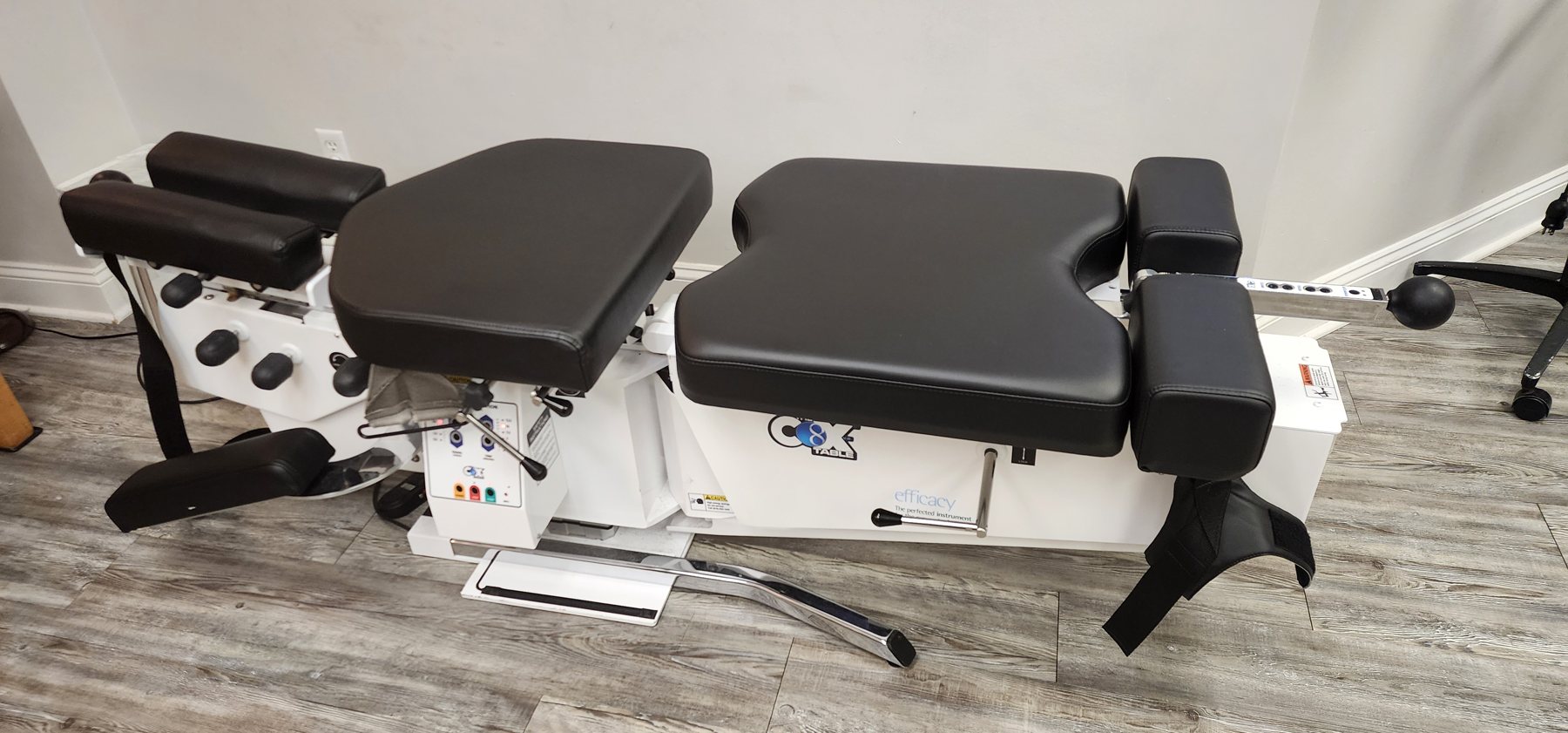
How we open the space
Stenosis responds to the same thing that relieves it in daily life, applied deliberately and to one segment at a time. On the Cox 8 table, Dr. Hayes uses Cox flexion distraction to take the involved level into controlled forward bending while gently pulling it apart. That increases the diameter of the canal, widens the openings where nerve roots exit, and lowers pressure inside the disc so it stops crowding the space from the front. Because his hands stay on your spine throughout, the force adapts to what your body allows on that particular day.
Where the picture calls for a longer, computer-controlled pull, motorized spinal decompression on the DOC table does the same work over a full session, with onboard sensors easing off the instant they detect muscle guarding. For narrowing that is focal, meaning one stubborn segment rather than several, the handheld VDP (Vertebral Distraction Pump) creates two to three millimeters of distraction at a single level, anywhere from C2 to the sacrum, including the facet joints that are frequently the real culprit.
Honest candidacy, always. Stenosis is a structural diagnosis, and not every case belongs in a conservative program. Progressive weakness, changes in bowel or bladder control, or a rapidly worsening gait need medical evaluation rather than a treatment plan. Your sixty minute examination exists to sort that out before you spend a dollar on care.
Making the relief hold
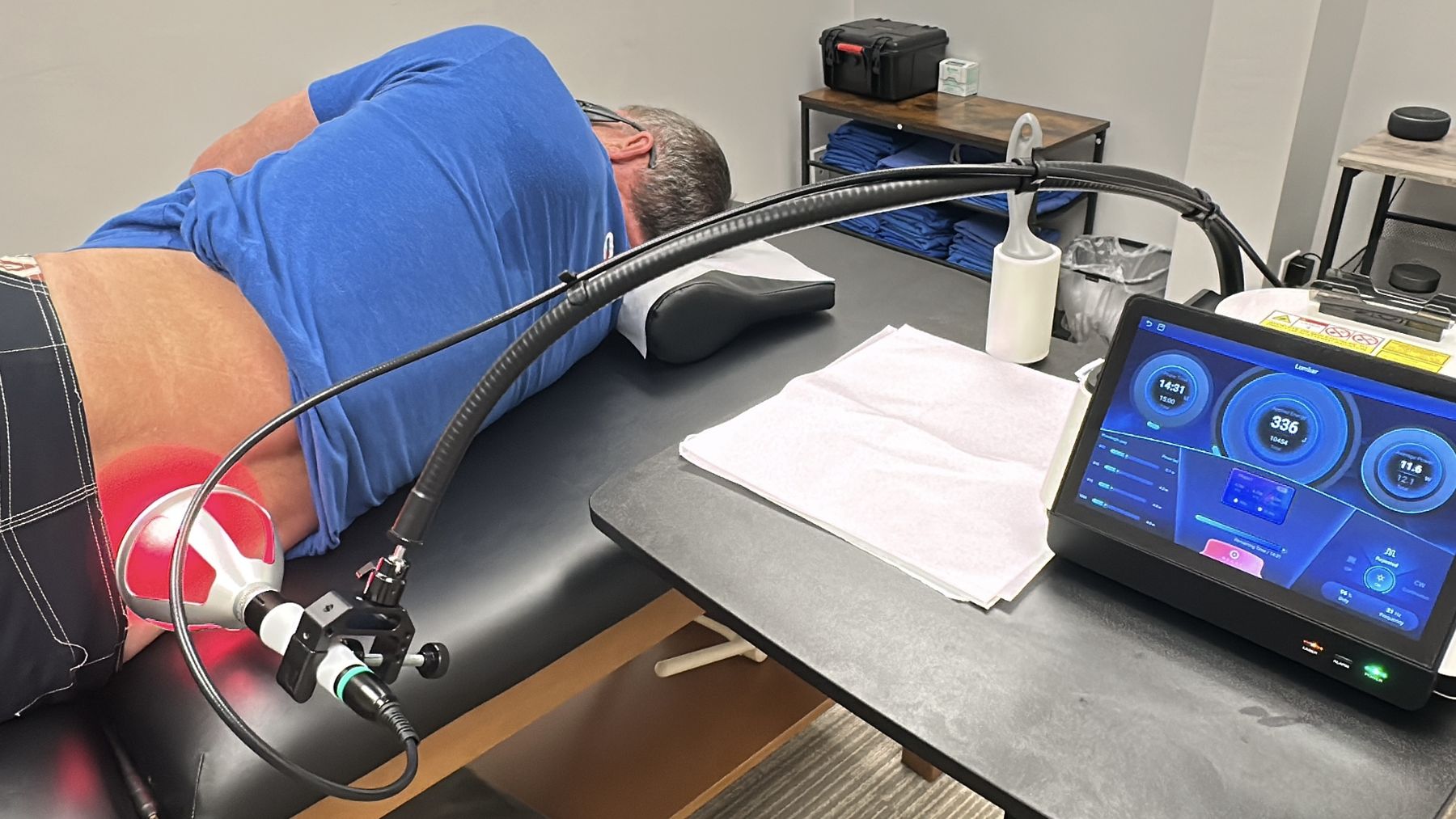
Opening space is the first job. Keeping an irritated nerve calm while it recovers is the second. Class IV cold laser (photobiomodulation, FDA cleared) is used to settle inflammation in the tissue around the compressed root. Electroanalgesia through the hako-med PRO ElecDT HT and Neuragene systems addresses the nerve pain itself and supports peripheral nerve function, which matters when numbness has been present a long time. Intersegmental traction on the roller table and shortwave diathermy warm and mobilize stiff segments before treatment so the work holds longer. When adjusting is appropriate, it is delivered with the PulStar, Impulse, or Activator instruments: low force, no twisting, no rotation into extension.
What a visit looks like
Your first appointment is sixty minutes, and it is spent finding out exactly which levels are narrowed and how the nerves are behaving. Dr. Hayes takes a full history, runs neurological, orthopedic, and physical testing, reviews any imaging you bring, and walks you through what he found. Treatment visits are unhurried. Nothing is rushed, and no stone is left unturned. He tracks objective findings, walking tolerance among them, at each visit and adjusts the plan as your response tells him to.
Questions, answered
Can chiropractic care reverse the narrowing itself?
Bone spurs and thickened ligament do not disappear. What can change is how much room the nerve has to work with at that level. Flexion based distraction opens the canal and the foramen mechanically, takes pressure off the disc, and restores motion to joints that have stiffened, which is often enough to change what your legs feel like when you walk.
Why do my legs feel fine sitting but give out after a block of walking?
Standing and extending your low back closes down the canal and the openings where nerve roots exit. Sitting or leaning forward opens them again. That position dependent pattern is the classic signature of lumbar stenosis, and it is one of the first things Dr. Hayes tests for during your examination.
Is any of this going to hurt?
Treatment is worked in the direction your spine already tolerates, which for stenosis is almost always gentle forward bending. Most patients describe flexion distraction as a slow, rhythmic stretch that feels like relief. Nothing is forced, and there is no twisting or cracking involved.
I have already been told I need surgery. Is it too late to try this?
Many of our stenosis patients arrive holding a surgical recommendation and looking for a non-surgical option first. Prior injections or a surgeon's opinion do not disqualify you. The examination determines candidacy honestly, and if we do not believe this care fits your case, we will tell you.
How many visits will I need?
It depends on which levels are narrowed, how long the nerve has been compressed, and what else is going on in your spine. After the examination and imaging review, Dr. Hayes lays out a specific plan with a defined number of visits, so you know the scope and the cost before you commit to anything.
Find out how much room your nerves actually have.
One examination answers it. Book online or call the office and we will take a proper look.