
Back pain treatment in Chesterfield, MO
Acute or chronic, the question is the same: which structure is actually generating the pain? We find the driver, then treat it directly.
"Back pain" is a symptom, not a diagnosis. Four very different structures can produce it, and they respond to four very different treatments. A disc that has bulged or torn refers pain in a deep, hard-to-point-at way and often sends symptoms down a leg. A facet joint that has locked or become inflamed produces sharp, local pain at one spot that hurts most on extension and rotation. A muscle in protective spasm creates a broad, aching band that tightens as the day goes on. A compressed or irritated nerve root gives you numbness, tingling, burning, or weakness that follows a specific map down the limb.
Those four rarely feel identical to the patient, but they get treated identically almost everywhere: rest, a muscle relaxer, some heat, come back if it persists. That approach works fine for a strained muscle and does very little for a disc lesion. It is the reason so many of our patients arrive months or years in, having done exactly what they were told, still hurting.
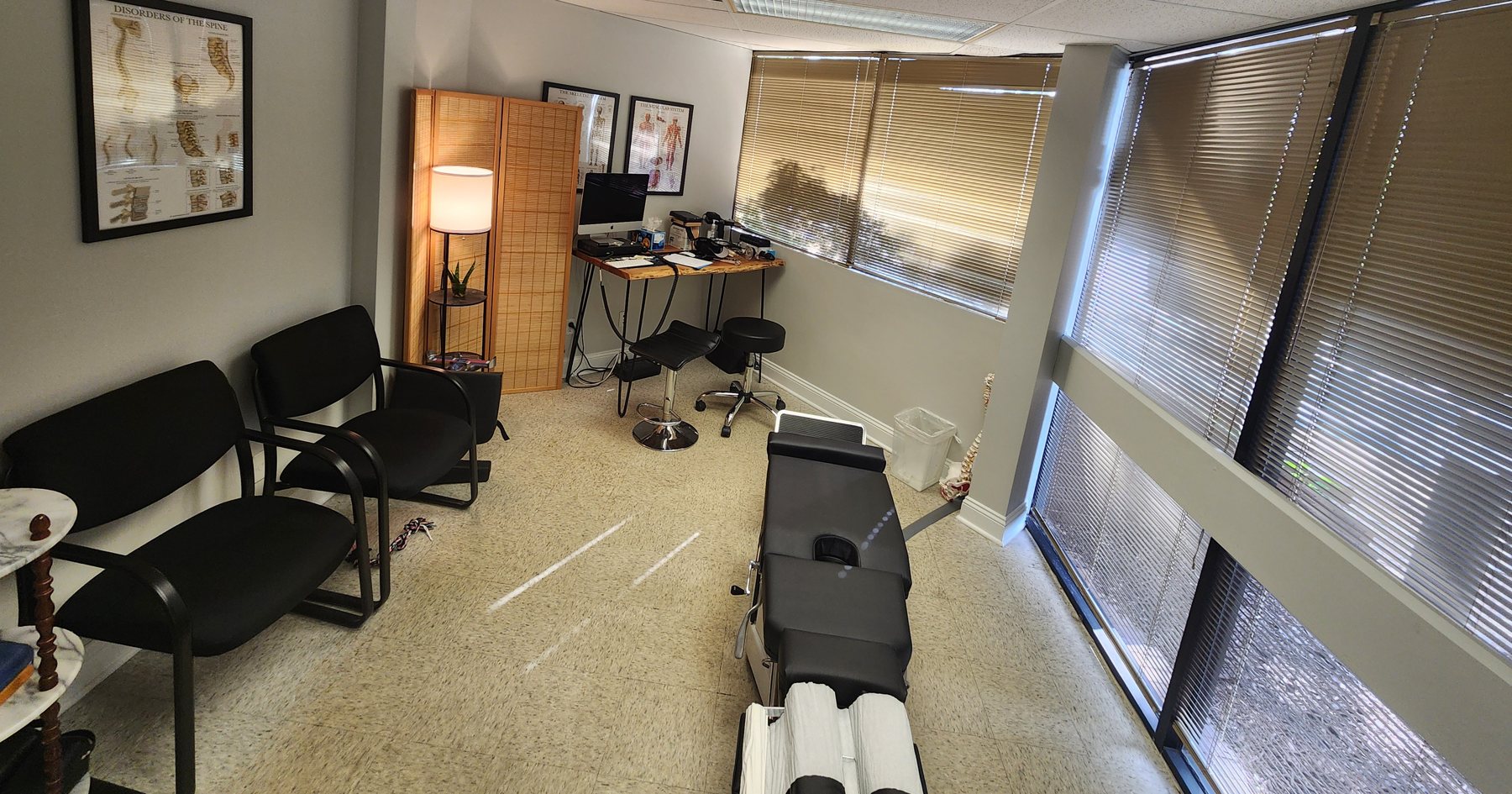
Finding the actual driver
Your first visit is sixty minutes, and most of it is investigation. Dr. Hayes takes a full history, because how the pain started and what makes it better or worse narrows the field before anyone touches you. Then comes orthopedic testing that loads each structure selectively, neurological testing of reflexes, strength, and sensation to check whether a nerve root is involved, and hands-on assessment of joint motion and muscle tone segment by segment. PulStar analysis adds an objective layer: a computer-guided reading of how each vertebra moves, recorded before and after treatment so change can be measured rather than described. Imaging is ordered or reviewed when the findings call for it.
The point of all that testing is a specific answer. When one structure is clearly primary, treatment gets focused. Often more than one is involved, a disc lesion with secondary spasm and joint restriction above it, and then the sequence matters: you calm the spasm before you can correct the joint, and you unload the disc before either will hold.
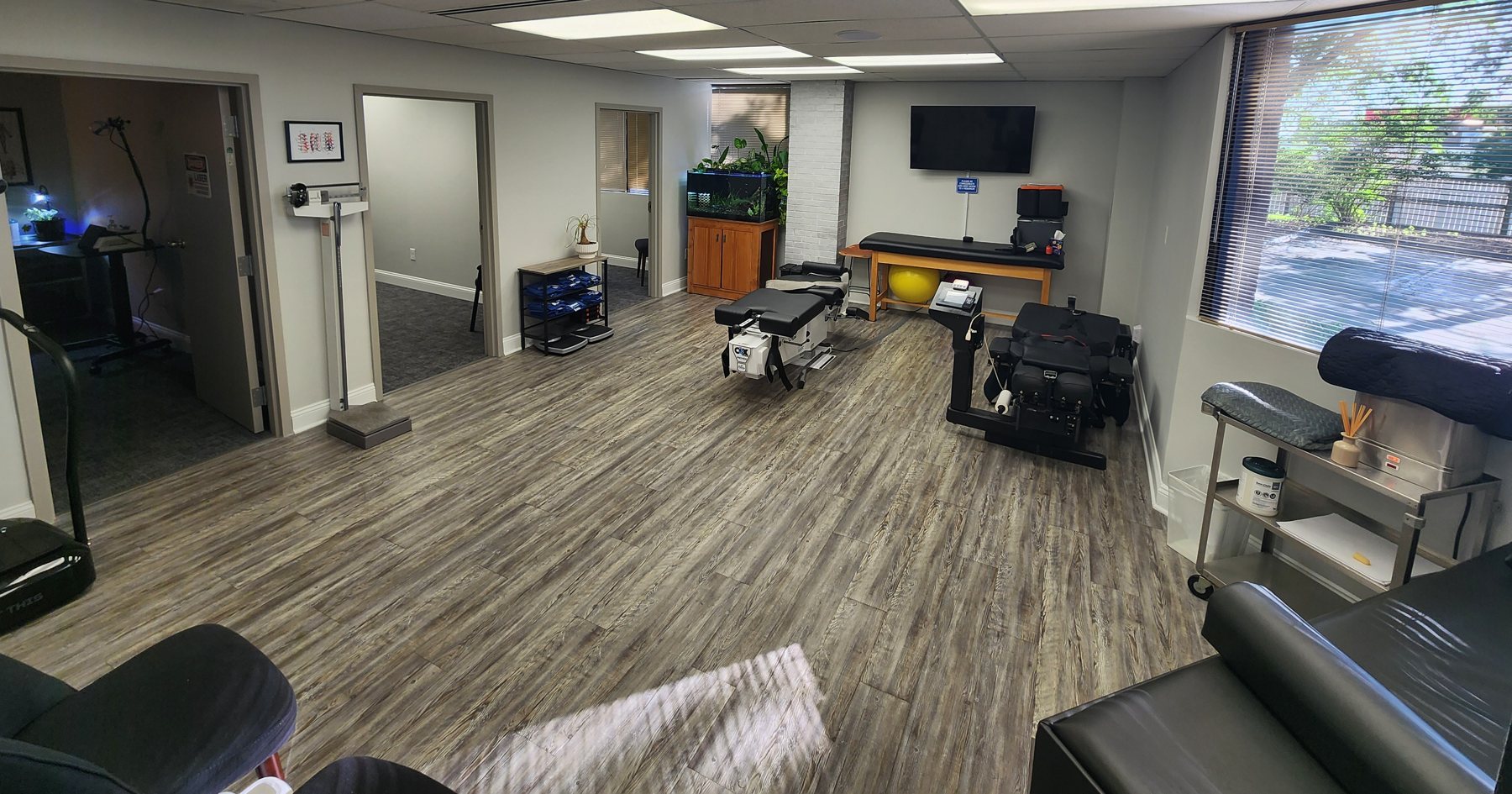
The tools we reach for
What we use depends entirely on what the examination found.
- Disc driven pain. Non-surgical spinal decompression on the DOC table, hands-on flexion distraction on the Cox 8, or segment-specific distraction with the handheld VDP (Vertebral Distraction Pump), which creates 2 to 3 millimeters of targeted separation at a single level from C2 to the sacrum.
- Joint driven pain. Diversified adjusting for manual specific correction, or instrument adjusting with PulStar, Impulse, or Activator when a gentler, no-twist approach fits better. Thompson drop-piece and Sacro Occipital Technique cover the cases that need low force or pelvic balancing.
- Muscle driven pain. Interferential stim (NeuroMed) for spasm and acute pain, intersegmental traction on the IST-350 roller table, therapeutic ultrasound, and shortwave diathermy to warm and mobilize tissue so the adjustment holds. Storz radial shockwave for stubborn soft-tissue problems that have not moved.
- Nerve driven pain. hako-med PRO ElecDT HT horizontal therapy and Neuragene electroanalgesic delivery for nerve pain and peripheral nerve support, plus Class IV cold laser, an FDA cleared photobiomodulation therapy that accelerates tissue repair and calms inflammation. Radiating leg pain is often sciatica and is worked up on its own terms.
We address the cause, not the symptom. Anything here can make a back feel better for a day. The reason we test first is so the thing we treat is the thing that is actually wrong.
What a visit looks like
Nothing is rushed. Your examination runs the full sixty minutes and ends with your findings explained in plain language, a clear plan, and, when appropriate, your first adjustment. Follow-up visits typically combine a specific correction with whatever supportive therapy your case calls for, and Dr. Hayes re-measures against your baseline rather than asking only how you feel. This is an appointment-only practice, so you get the room and the time.
Questions, answered
How do you know whether my pain is a disc, a joint, a muscle, or a nerve?
By testing, not by guessing. Orthopedic testing loads each structure in a way that provokes it selectively, neurological testing checks reflexes, strength, and sensation along specific nerve roots, and PulStar analysis measures segment-by-segment joint motion objectively. Those findings, read together with your history and any imaging, point at one primary driver.
Do I have to be cracked or twisted?
No. If manual adjusting is not right for you, or you simply do not want it, we have instrument options. PulStar, Impulse, and Activator all deliver a specific correction with no twisting and no popping, and low-force techniques such as Sacro Occipital Technique and Logan Basic work through blocking and light contact.
My back pain came on suddenly and I can barely move. Should I still come in?
Yes, and acute cases are often the fastest to change. Early care usually leans on interferential stim and gentle mobilization to quiet the spasm before any specific correction is attempted. Call the office and we will find you an appointment.
I have had this for years and tried everything. Is there any point?
That describes most of the people who walk through our door. What usually went wrong is that the pain got treated while the driver went unidentified, so the relief never held. The examination is built to find that driver. If we do not believe we can help your case, we will tell you.
Will I need imaging?
Sometimes. If your history or examination findings suggest a disc lesion, a structural problem, or anything that needs to be ruled out before treatment, Dr. Hayes will order imaging or review films you already have. We do not image reflexively, and we do not treat blind.
Stop treating the symptom.
One examination tells you what is actually driving your back pain. Book online or call the office.