
Electrical stimulation therapies in Chesterfield, MO
Two different tools for two different problems: electroanalgesia for nerve pain and peripheral nerve support, and interferential stimulation for muscle spasm and acute pain.
Your nervous system already runs on electricity. Nerves carry signals as electrical impulses, and muscles contract because a nerve told them to. When a nerve is irritated, starved of blood supply, or damaged, that signaling goes wrong in specific ways: burning, numbness, pins and needles, pain that fires down a limb, or muscle that will not stop guarding. Therapeutic electrical stimulation works in that same language. Applied correctly, it treats the tissue rather than simply masking what it feels like.
Most people have met electrical stimulation as a home TENS unit, which is why the therapy gets underestimated. We run two clinically distinct systems here, and the difference between them matters more than most patients expect.
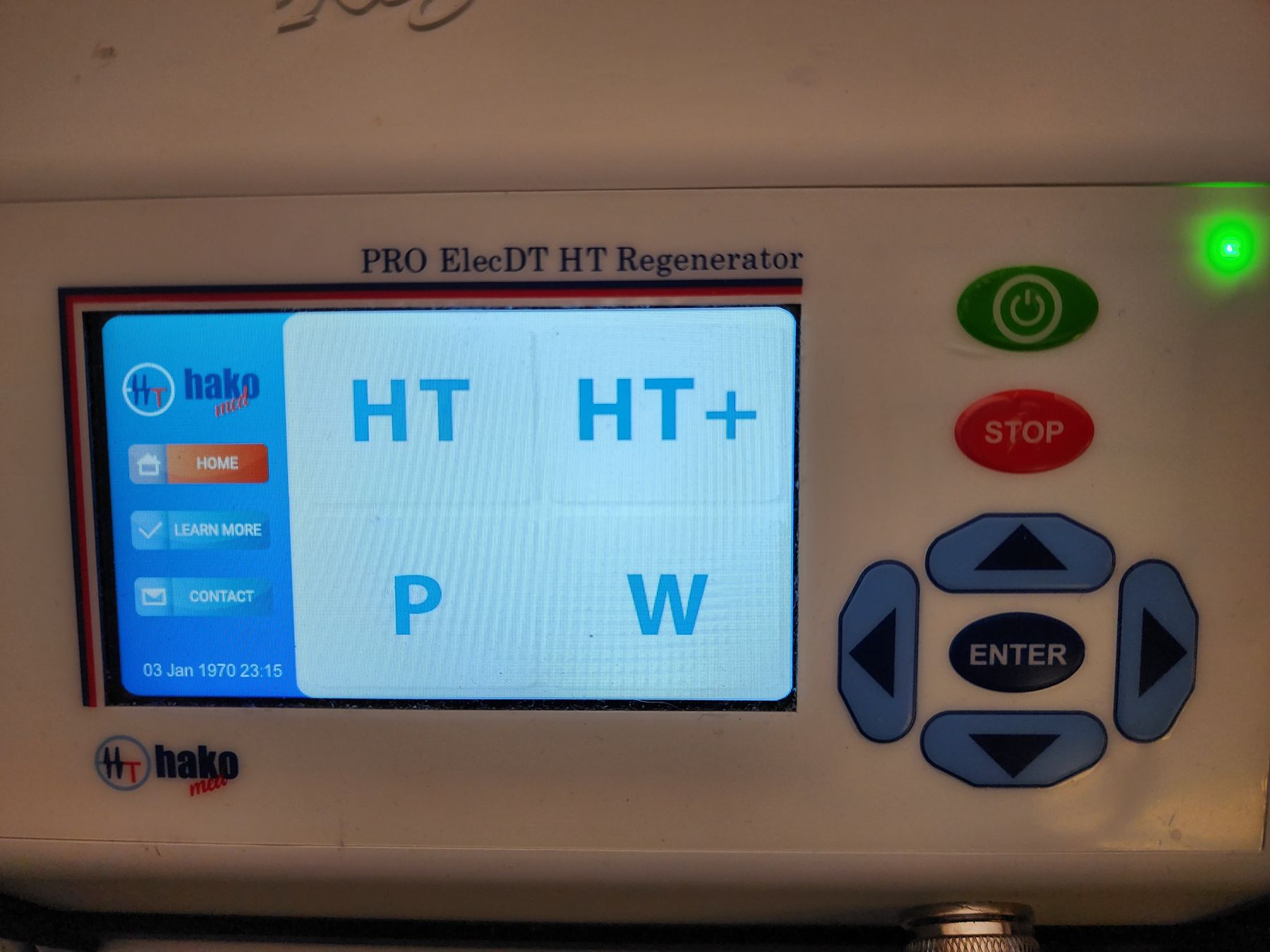
Electroanalgesia: aimed at the nerve
Electroanalgesia is the nerve-focused side of this work, and it is the reason patients travel to us for neuropathy care. We deliver it two ways. The hako-med PRO ElecDT HT provides horizontal therapy, which pairs a mid-frequency carrier wave with low-frequency treatment signals. The mid-frequency carrier is what allows the current to pass through skin resistance and reach deep tissue comfortably, so the treatment gets to the nerve instead of stopping at the surface. Neuragene electroanalgesic delivery is the second route, used for peripheral nerve support where the target is the small nerves of the hands, feet, and lower legs.
Both approaches are applied over a course of treatments rather than as a one-visit fix. Peripheral nerves recover slowly by nature, and the point of the protocol is to work the nerve and its surrounding environment repeatedly and consistently. In most of our nerve cases, electroanalgesia is paired with Class IV cold laser so the tissue around the nerve is being supported at the same time.
Interferential stimulation: aimed at the muscle
Interferential stimulation solves a different problem. Our NeuroMed units send two mid-frequency currents into the area from different directions. Where those currents cross, they interfere with each other and produce a low-frequency therapeutic effect deep inside the tissue, at the intersection point, rather than at the pads on the skin. The practical result is a deep, kneading pulse that helps a spasming muscle let go, encourages local circulation, and quiets acute pain.
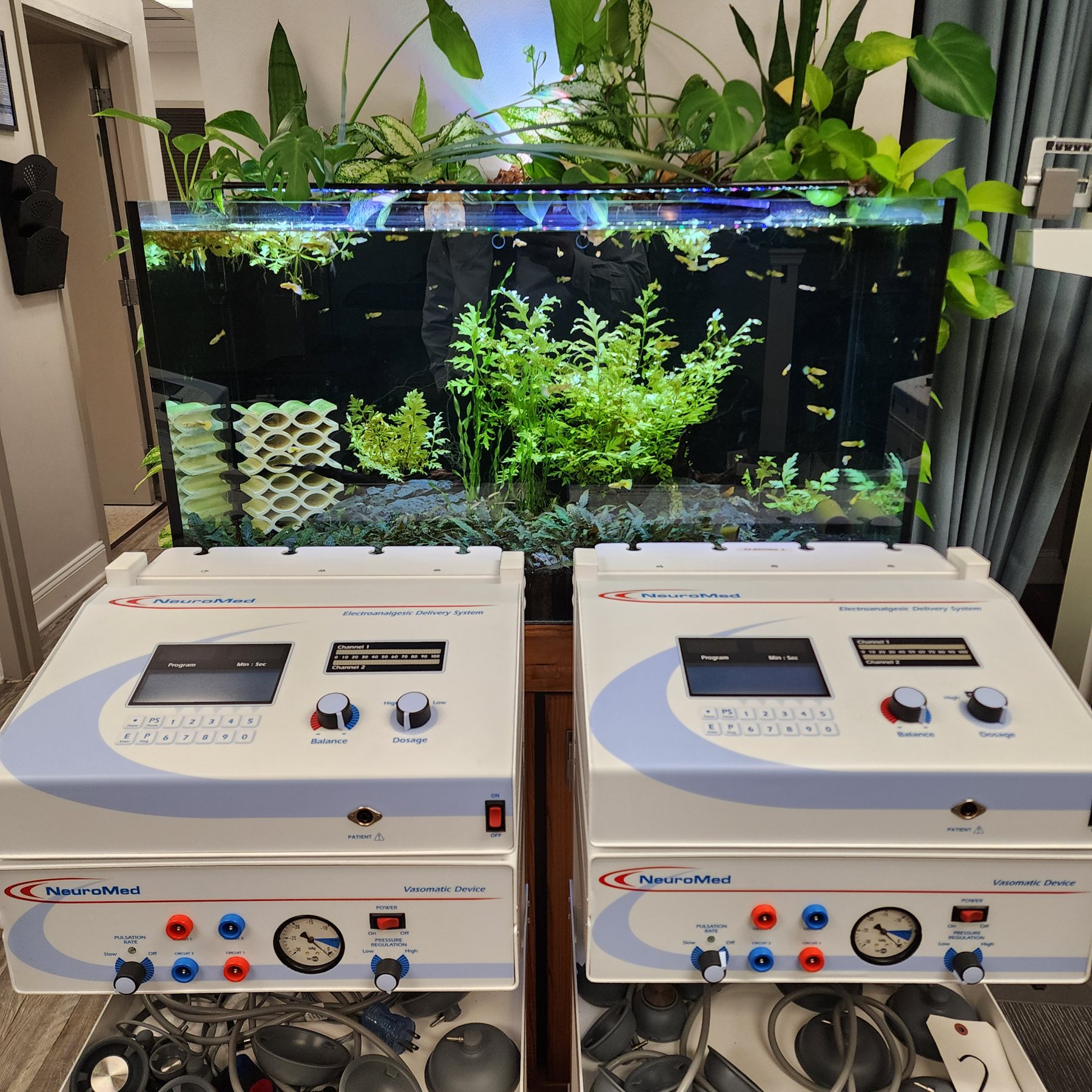
The difference, plainly
Electroanalgesia targets nerve tissue and nerve-generated pain, using waveforms and treatment courses built for nerves that are irritated or compromised. Interferential targets muscle and acute pain, breaking the spasm and guarding that keeps an injured area locked down. One is a nerve therapy delivered as a protocol. The other is a muscle and pain therapy delivered as support around your adjustment. Patients sometimes receive both, at different points in their care, for entirely different reasons.
Who it helps
- Peripheral neuropathy, including burning, numbness, and tingling in the feet and hands
- Diabetic neuropathy and other cases where small peripheral nerves need ongoing support
- Radiating nerve pain, including sciatica and nerve pain running down an arm or leg
- Muscle spasm, guarding, and the acute pain that follows a strain or a new injury
- Areas that are too tight or too irritated to accept an adjustment until the muscle settles
Chosen for the case, not applied to everyone. These are two separate treatments for two separate problems, and neither belongs in every plan. Your sixty minute examination is where Dr. Hayes determines which one, if either, has a role in your care, and he will say so plainly if the answer is neither.
What a visit looks like
You sit or lie comfortably while electrodes are placed over the treatment area. Placement is deliberate: the current has to travel through the tissue we are actually trying to reach, so where the pads go is part of the treatment. Intensity is brought up gradually with your feedback until the sensation is strong but comfortable, then held there while the program runs. There are no needles and no medication, and there is nothing to recover from afterward. Because these are clinical modalities rather than routine care, they are priced per treatment and are not part of a standard adjustment visit. Dr. Hayes reassesses your response as you go and keeps, changes, or drops the electrical phase based on how you are actually progressing.
Questions, answered
Does electrical stimulation hurt?
No. Most patients describe a deep tingling, a light pulsing, or a sensation of pressure moving through the area. The intensity is set with you, not on you, and it is turned up only to the level you find comfortable. Nothing about the treatment should be sharp or stinging.
How is this different from a TENS unit I can buy online?
A home TENS unit runs a single low-frequency current at the skin, which is why the sensation stays on the surface and fades quickly. The systems we use work differently: they carry current deeper on a mid-frequency wave, run treatment-specific programs rather than one buzz setting, and are applied by placement and parameters chosen for your particular problem. The goal is treatment of the tissue, not a distraction from the pain.
Which one will I get, electroanalgesia or interferential?
That is decided by what your examination finds. Nerve-driven pain, burning, numbness, and peripheral nerve cases point toward electroanalgesia. Muscle spasm, guarding, and acute injury point toward interferential. Some plans use both at different stages, and some use neither.
How many sessions will I need?
It depends on the tissue involved, the severity, and how long the problem has been present. Nerve work is generally a course of treatments rather than a single visit, because peripheral nerves respond slowly. After your examination, Dr. Hayes will lay out a specific plan so you know the number of visits and the full cost before you commit.
Is electrical stimulation included in a regular adjustment visit?
No. A routine adjustment visit covers the adjustment itself. Clinical modalities, including the electrical stimulation systems, are priced separately per treatment, because not every visit calls for them. Your plan spells out exactly what each visit includes.
Nerve pain and muscle spasm are not the same problem.
Find out which one you are dealing with. Book online or call the office and we will take a proper look.