
Neck pain treatment in Chesterfield, MO
Desk strain, poor sleep positions, and old injuries all end up in the same seven vertebrae. Precise cervical care restores motion and calms the nerves that motion was irritating.
The cervical spine carries a ten to twelve pound head through more range of motion than any other region of your spine, and it does it on small joints with a dense bundle of nerves running through them. That combination is why the neck is unforgiving. When a few segments stop moving properly, the ones above and below take over the work, the muscles around them stay contracted trying to stabilize, and the nerve roots exiting at those levels get crowded. What you feel is stiffness, an ache at the base of the skull, pain that runs across a shoulder blade, or tingling down an arm. What is actually happening is mechanical.
Where neck pain usually starts
Three patterns account for most of what walks through our door. The first is sustained desk posture: a head held forward of the shoulders multiplies the load on the lower cervical segments, and eight hours a day of it makes that load permanent. The second is sleep, where a pillow that leaves the neck laterally bent or extended holds the joints at end range for hours at a stretch. The third is old injury. A car accident, a fall, a sports collision from decades ago changes how those joints track, the surrounding tissue lays down scar and adapts around the restriction, and the symptoms show up years later when the compensation finally fails.
These are not competing explanations. Most patients we examine have two of the three, and the reason the neck finally became painful is that the third arrived. Finding which segments are actually restricted, and which nerve levels are involved, is the work of the examination.
How we treat the cervical spine
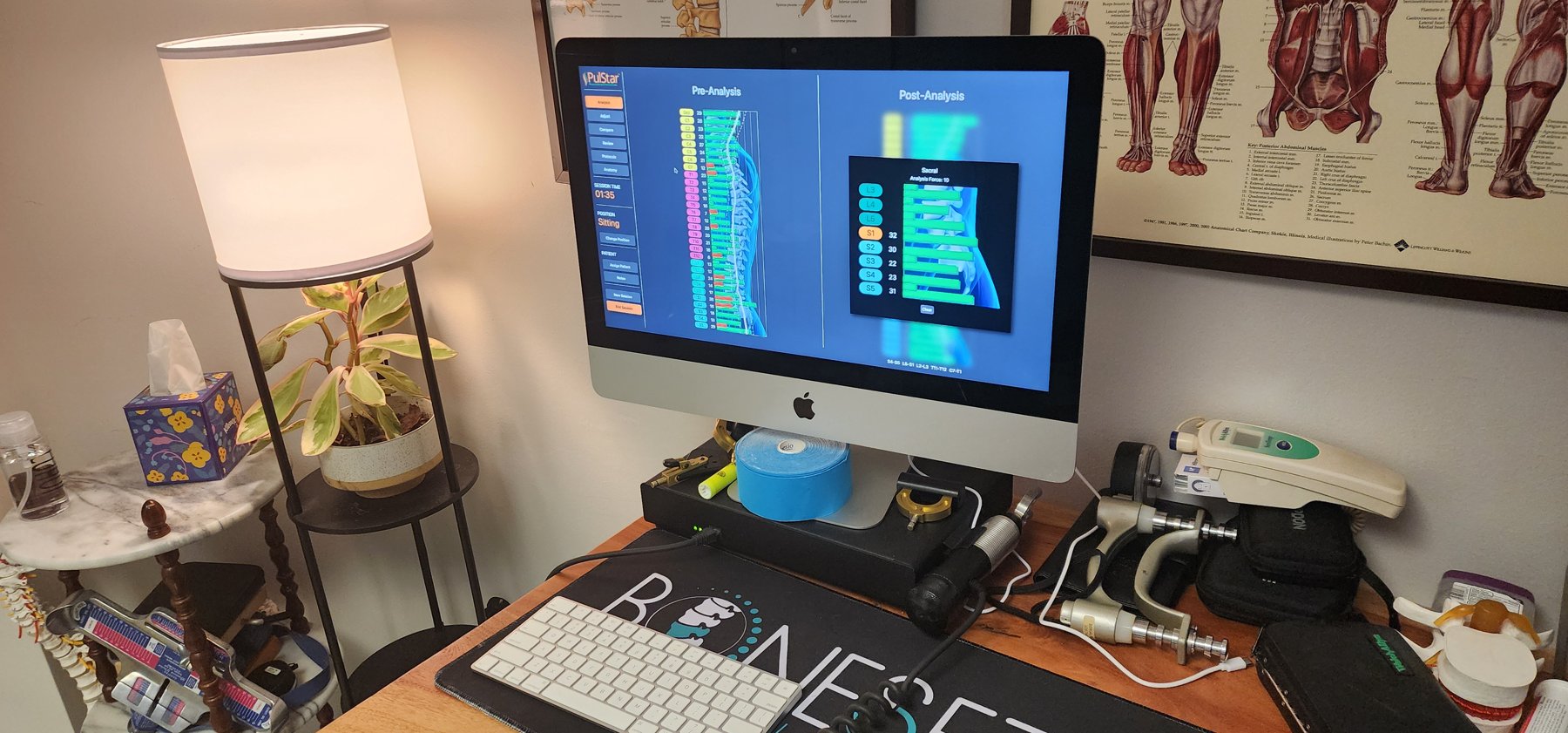
Care here starts gentle and gets more specific, not more forceful. For the joints themselves, we use instrument adjusting: the PulStar delivers a computer-guided series of small impulses and reads the spine's response on screen before and after, so the segments that are actually stiff are identified by measurement rather than by feel alone. The Impulse and Activator instruments do similar work by hand for individual segments. None of it involves twisting or cracking the neck, which matters to patients who have been avoiding chiropractic care for exactly that reason. You can read more about how computer-guided adjusting works.
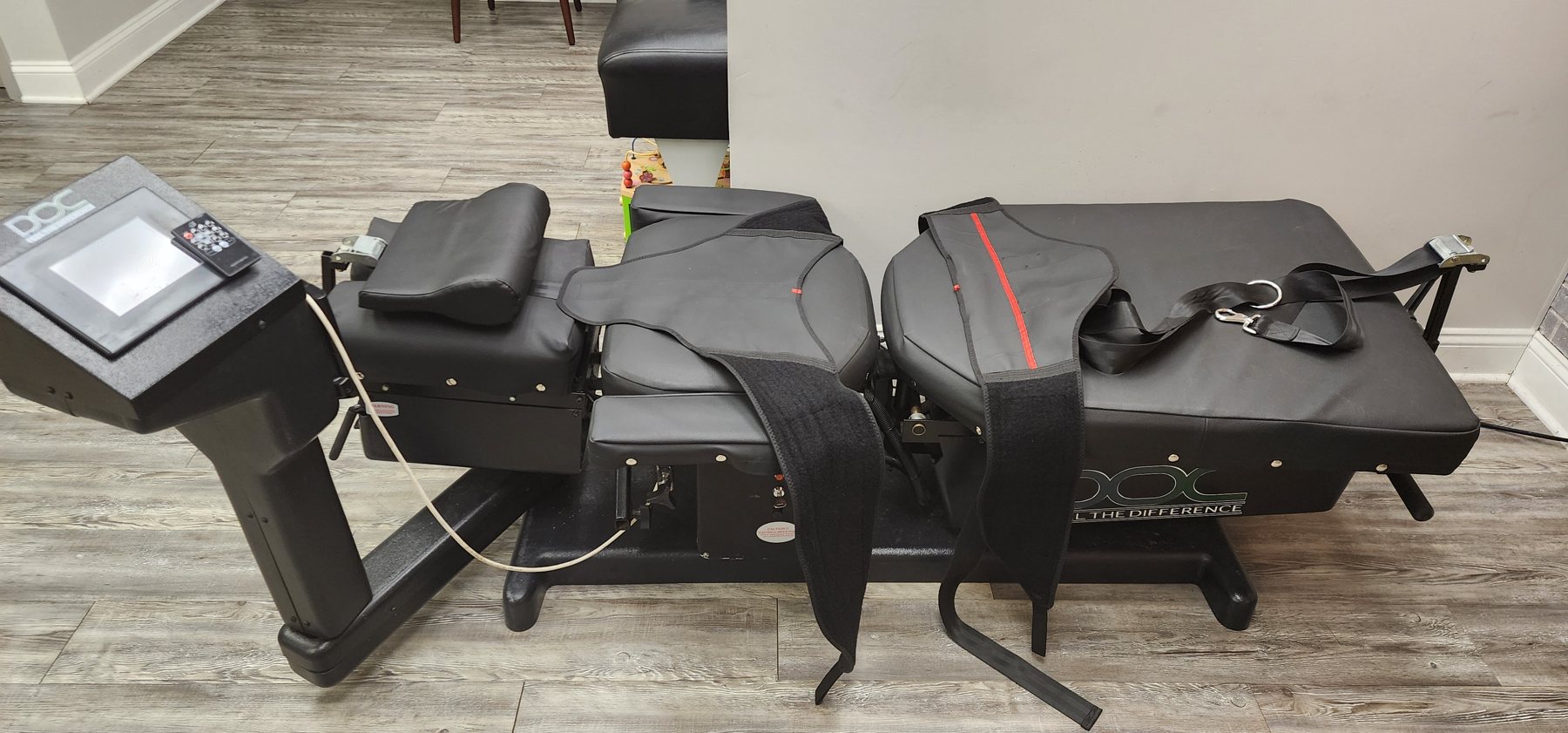
When the problem involves a disc or a crowded nerve root, adjusting alone is not enough. Cervical decompression on the DOC table opens the space at a targeted level, taking pressure off the disc and the nerve exiting beside it. For focal facet restrictions, the handheld VDP (Vertebral Distraction Pump) creates two to three millimeters of distraction at a single segment, which is precision a table cannot reach.
Around that structural work, the supporting tools do their part. Class IV cold laser calms inflammation in irritated tissue and supports repair. Interferential stim quiets the muscle spasm that guards an angry joint. Intersegmental traction and therapeutic ultrasound warm and mobilize the tissue beforehand so the adjustment holds instead of sliding back within a day.
Neck pain that comes with headaches is common. Upper cervical joints refer pain directly into the head, and treating the neck is often what changes the pattern. If that describes you, read about our approach to headaches.
Who this helps
- Chronic stiffness and reduced range of motion
- Desk and forward-head posture strain
- Pain into the shoulder blade or upper back
- Numbness or tingling down the arm or into the hand
- Cervical disc herniation and degenerative change
- Old whiplash and post-injury restriction
- Neck-driven headaches
What a visit looks like
Your first appointment is sixty minutes, and nothing about it is rushed. Dr. Hayes takes a full history, including the injuries you have stopped mentioning to doctors because they were a long time ago. Then comes the testing: neurological, physical, and orthopedic, plus range of motion measured segment by segment and imaging reviewed where it exists. You leave the first visit with your initial adjustment and, more importantly, with a clear explanation of which segments are involved, whether a nerve root is part of the picture, and what care would look like.
Follow-up visits run thirty minutes. Adjusting is included; clinical modalities such as cold laser, shockwave, or electroanalgesia are priced individually per treatment, so you always know what a visit costs before you sit down.
Questions, answered
Do you have to twist or crack my neck?
No. Most of our cervical work is done with instruments: PulStar, Impulse, or Activator. Each delivers a measured impulse into a single joint with no rotation and no popping. If manual adjusting is appropriate for your case, Dr. Hayes will explain it first and you decide.
My neck pain comes with headaches. Is that related?
Frequently, yes. The upper cervical joints and the nerves around them refer pain into the head, and tight suboccipital muscles do the same. When the neck is the driver, treating the neck is what changes the headache pattern.
I have numbness or tingling down my arm. What does that mean?
It usually means a cervical nerve root is being irritated or compressed, often by a disc or a narrowed opening where the nerve exits. That finding changes the plan, which is why the examination includes neurological testing rather than just checking where it hurts.
How long does it take to feel better?
That depends on how long the problem has been building and what is actually causing it. Dr. Hayes sets a defined checkpoint at the start of care and re-measures your motion and neurological findings against your baseline, so progress is judged on findings rather than impressions.
Can old injuries really still be causing pain years later?
Often they can. A whiplash or a fall changes how the cervical joints move, and the surrounding tissue adapts around that restriction. The pain may arrive years later, when the compensations finally run out of room.
Find out what is actually driving your neck pain.
One examination answers it. Book online or call the office and we will take a proper look.