Class IV cold laser therapy in Chesterfield, MO
High-power, FDA-cleared light therapy that accelerates tissue repair and calms inflammation at the cellular level. Drug free, painless, and a core phase of our disc and neuropathy protocols.
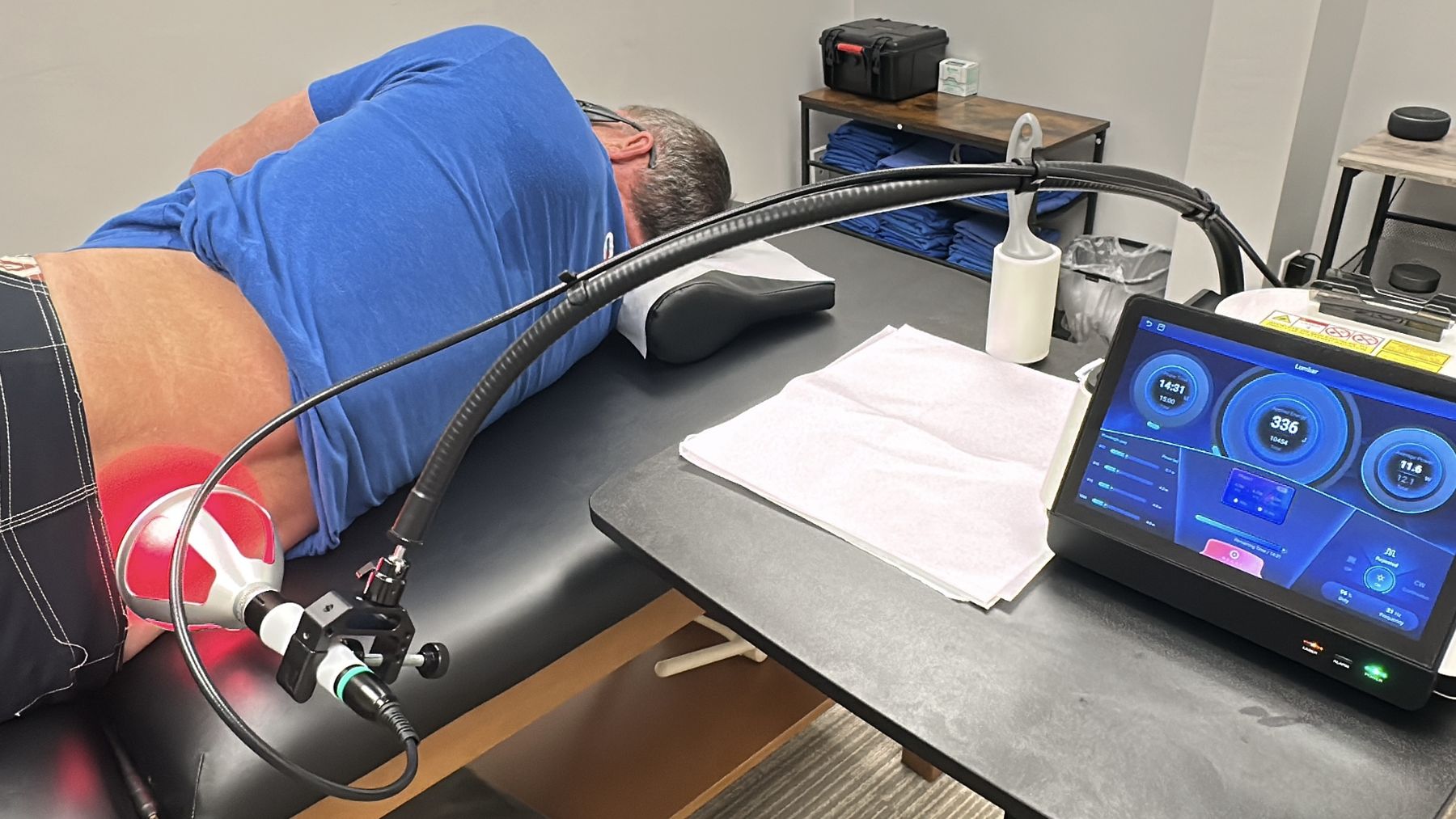
Injured tissue heals only as fast as its cells can do the work, and inflamed, oxygen-starved cells work slowly. Class IV cold laser therapy speeds that work up. A focused beam of therapeutic light is delivered into the injured area, where the cells absorb it as energy. That energy drives the repair process itself: more cellular fuel, better circulation to the site, and a calmer inflammatory response. The goal is to give the tissue you actually injured a better environment to repair in.
What photobiomodulation actually does
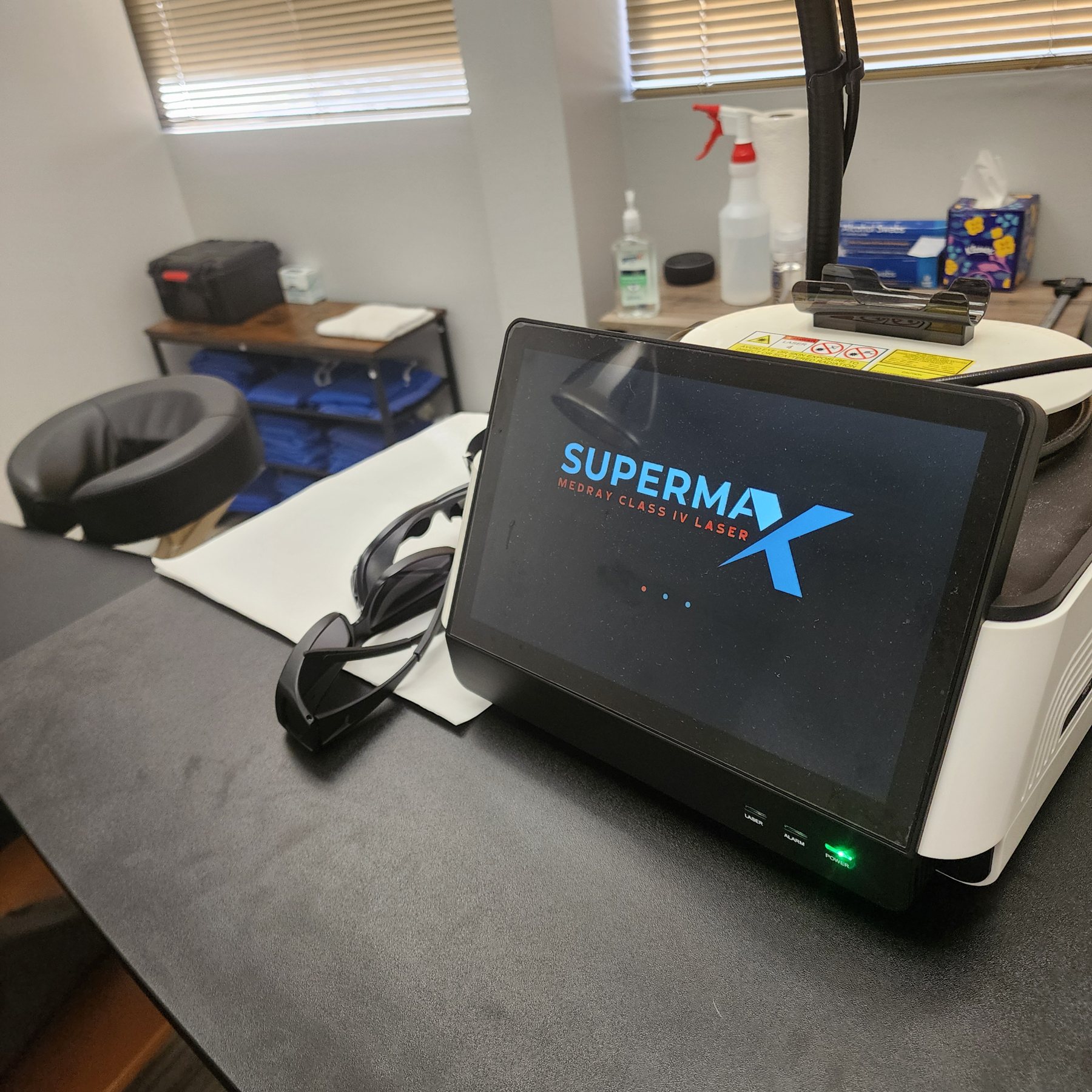
Photobiomodulation is the scientific name for the effect: specific wavelengths of light change how a cell behaves. When the light reaches the mitochondria, the tiny engines inside each cell, it helps them produce more ATP, the fuel every cell runs on. With more fuel available, damaged cells rebuild faster, local blood flow improves, and the chemical signals that drive swelling and pain quiet down. The word "cold" is important: Class IV describes the power class of the device, not heat. The beam reaches deep tissue without burning it, so there is nothing to feel beyond a gentle warmth.
How we use it here
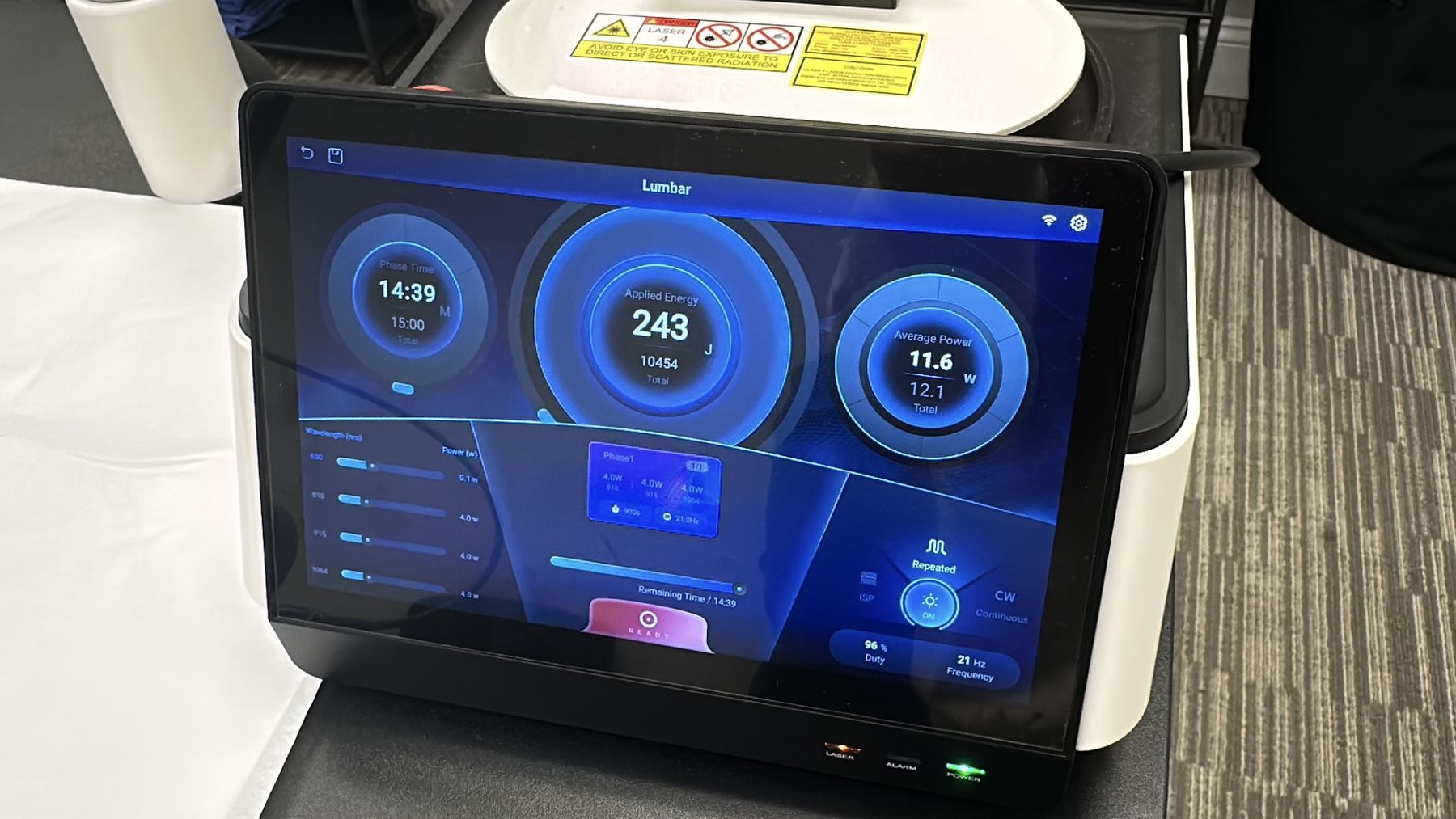
Cold laser is rarely a standalone treatment at Bonesetters. It earns its place as one phase of a larger plan. In our Disc Care Protocol, laser works the soft tissue and inflammation around a disc that spinal decompression is structurally unloading, so the disc has a calmer, better-supplied environment to repair in. In our neuropathy protocol, it supports the small nerves and surrounding tissue alongside electroanalgesia. Each phase makes the others land harder, which is the whole reason patients who stalled out on single-tool care tend to respond here.
Who it helps
Cold laser is useful wherever tissue is inflamed, slow to heal, or irritating a nerve. We reach for it most often in cases involving:
- Disc injuries and the inflamed tissue around a herniated or bulging disc
- Peripheral and diabetic neuropathy, where nerves and surrounding tissue need support
- Stubborn joint pain, including knee pain and other soft-tissue and tendon problems
- Acute strains, sprains, and post-injury inflammation that is slow to settle
One tool, chosen on purpose. Laser is added because a specific tissue needs it, not applied to every patient by default. Your sixty minute examination is where Dr. Hayes decides whether it belongs in your plan, and says so plainly if it does not.
What a session looks like
You sit or lie comfortably while the laser is moved over the treatment area. There is no needle, no medication, and no downtime; sessions are short and most patients feel only a light warmth, if anything. It is delivered as part of your planned protocol, so it is priced per treatment rather than bundled into a routine adjustment. Dr. Hayes tracks your tissue's response at each visit and keeps or adjusts the laser phase based on how you are actually healing, not a fixed script.
Questions, answered
Does cold laser therapy hurt?
No. Most patients feel nothing at all, or a mild, pleasant warmth over the treated area. There are no needles, no medication, and nothing to recover from afterward. You can return to your day immediately.
Why is it called "cold" if it is a high-power laser?
Class IV refers to the power class of the device, not its temperature. The light is delivered at a wavelength and intensity that reaches deep tissue and stimulates the cells there without burning or heating the tissue, which is why it is called cold laser or low-level laser therapy.
Is it safe and drug free?
Yes. Photobiomodulation is non-invasive and involves no medication. The technology is FDA cleared, and Dr. Hayes screens during your examination for the few situations where laser is not appropriate, such as treating directly over an active cancer or certain other conditions.
How many laser sessions will I need?
It depends on the tissue, the severity, and how long the problem has been present. Cold laser is rarely used alone here; it is one phase of a larger protocol. After your examination, Dr. Hayes will lay out a specific plan so you know the number of visits and the full cost before you commit.
Is laser included in a regular adjustment visit?
No. A routine adjustment visit covers the adjustment itself. Clinical modalities like cold laser are priced separately, per treatment, because not every visit calls for them. Your plan spells out exactly what each visit includes.
Healing that keeps up with your body.
Find out whether cold laser fits your case. Book online or call the office and we will take a proper look.