
Peripheral neuropathy treatment in Chesterfield, MO
Numbness, tingling, and burning in the hands and feet come from nerves that are damaged, not from nerves that are imagining things. We treat the nerve.
Peripheral neuropathy is damage to the nerves that run from your spinal cord out to your hands and feet. Those nerves carry sensation in and motor signals out, and when they are injured the signal degrades. That is what produces the classic pattern: numbness that starts in the toes or fingertips and creeps inward, pins and needles, burning that gets loud at night, feet that feel like they are wrapped in a sock that is not there, and balance that is quietly getting worse because your feet no longer report back accurately.
The damage has causes. Diabetes is the most common, but chemotherapy, spinal nerve compression, circulatory disease, thyroid disorders, autoimmune conditions, long-term alcohol use, and certain B vitamin deficiencies all produce it. Most patients arrive here having been offered gabapentin, Lyrica, or an antidepressant repurposed for nerve pain. Those drugs work on perception. They turn down the volume on a signal without touching the nerve that is sending it. That is why patients tell us the numbness kept spreading even while the pills were working.
What we do differently
Our care targets the damaged nerve tissue and the blood supply feeding it. A peripheral nerve needs three things to repair: adequate circulation, a stimulus that drives cellular activity, and the raw materials to rebuild the nerve sheath. We address all three in the same course of care.
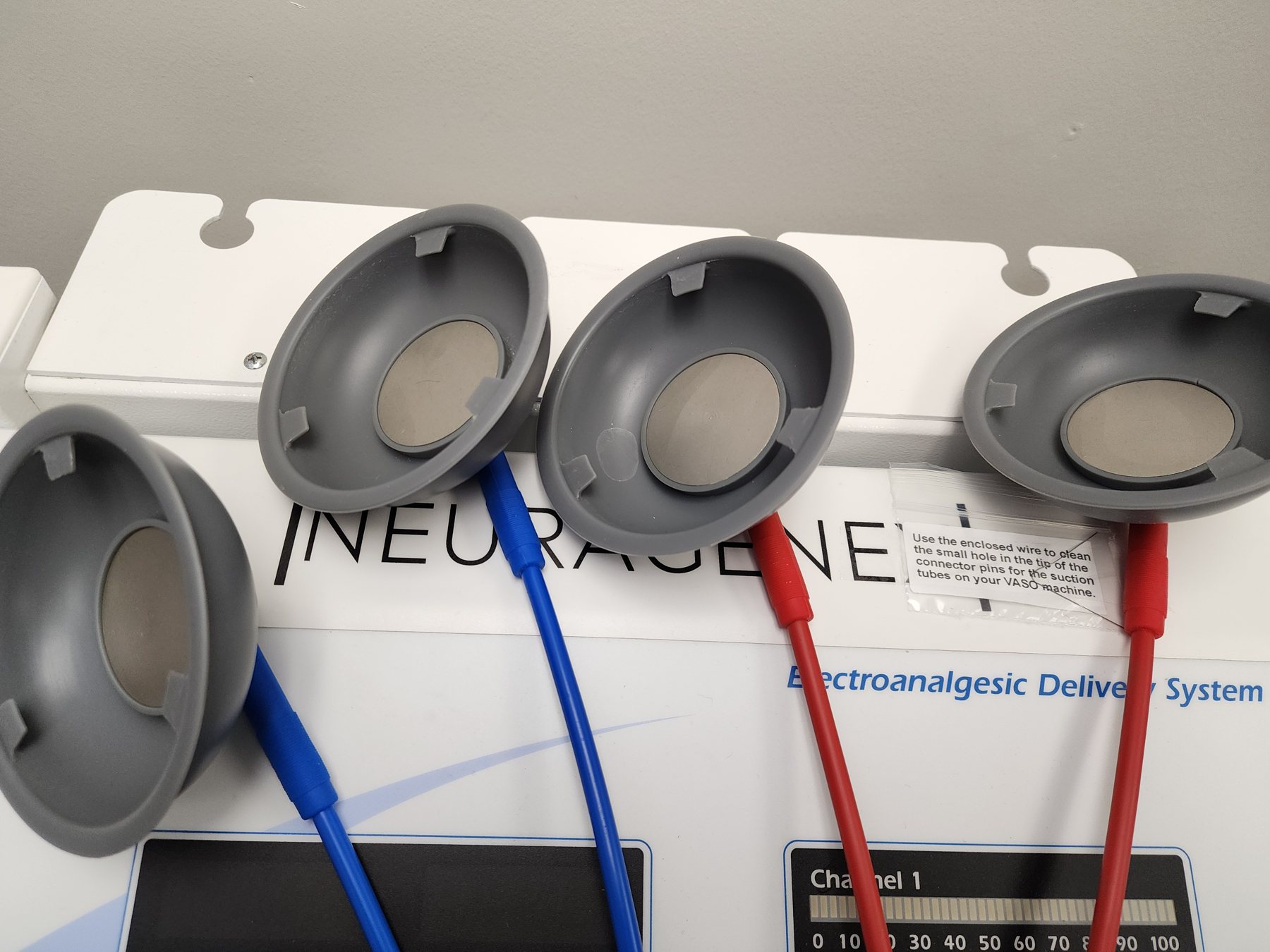
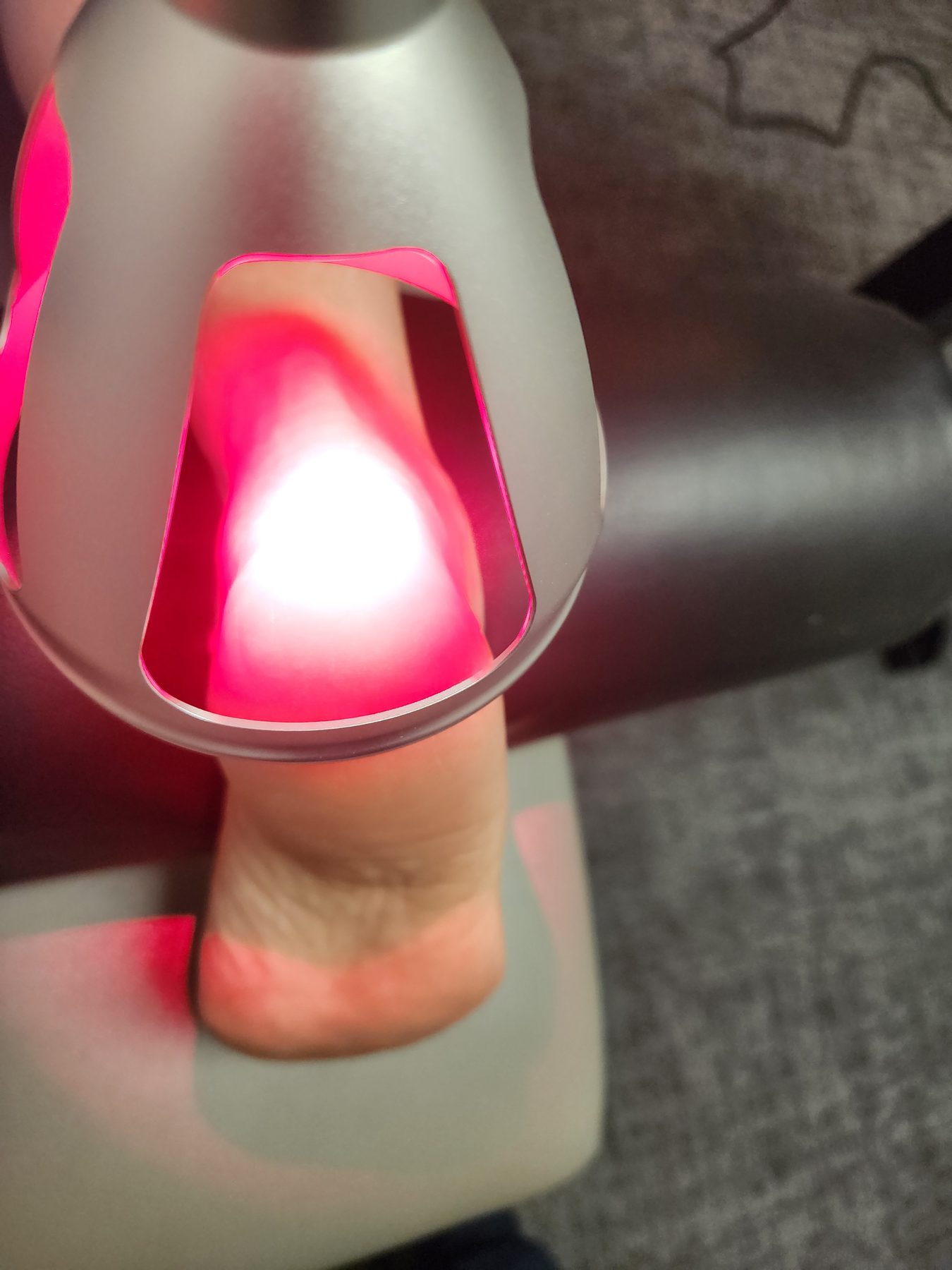
Electroanalgesia is the centerpiece. Using the hako-med PRO ElecDT HT horizontal therapy system and Neuragene electroanalgesic delivery, we drive specific electrical frequencies through the affected tissue to reduce nerve pain and support the nerve environment. It is nothing like the TENS unit in a drawer at home; the currents, depth, and frequency pairing are entirely different. Cold laser follows. Class IV photobiomodulation is FDA cleared, penetrates to the tissue depth we need, and works at the cellular level to accelerate repair and calm inflammation around the nerve. Nutritional support runs alongside both, because a nerve rebuilding its myelin needs the specific building blocks to do it.
We measure before we treat
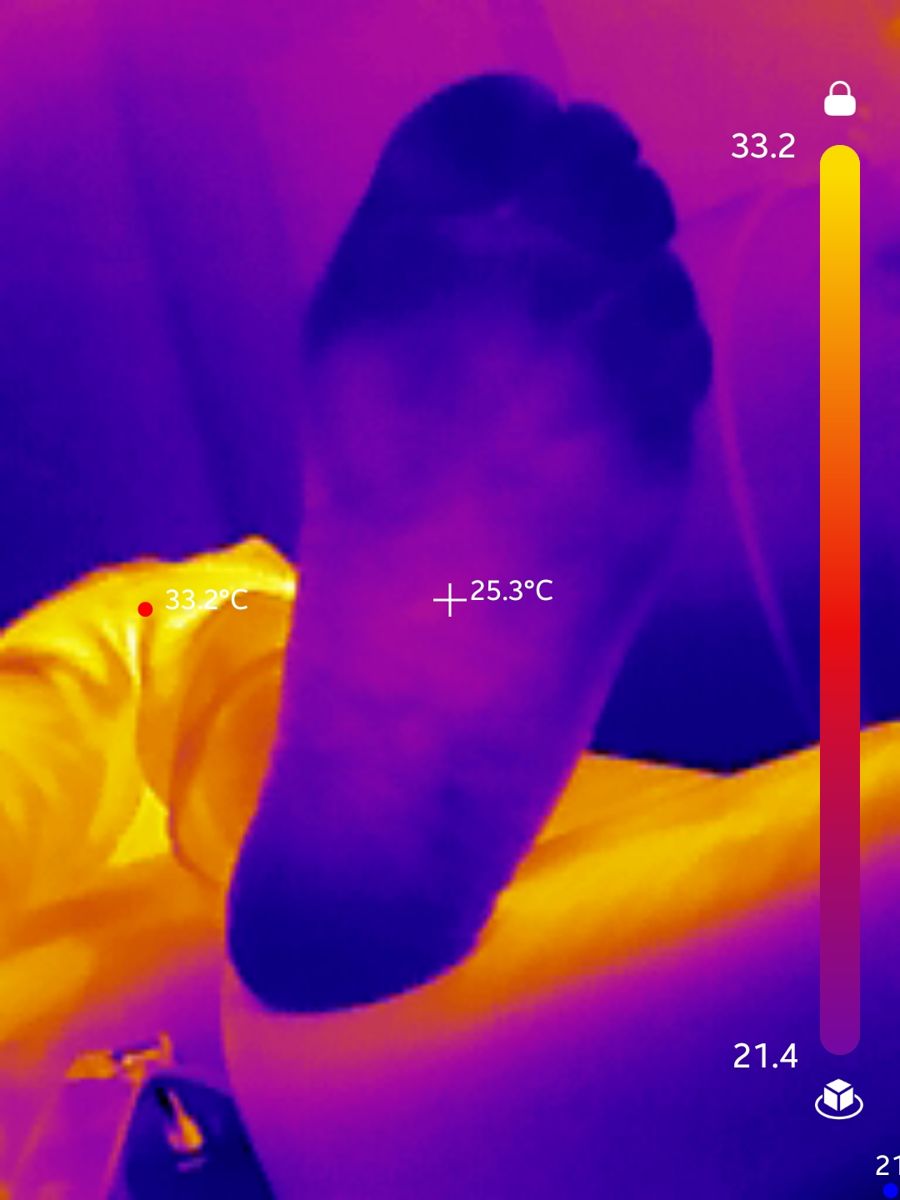
Neuropathy is invisible on a standard exam, which is how it goes unmanaged for years. Thermal imaging makes it visible. A thermal scan maps surface temperature across the feet and hands, and because temperature tracks circulation and autonomic nerve function, the image shows where blood flow has dropped off and which regions are involved. It gives us an objective baseline at the start of care and something concrete to re-measure against later, instead of asking you to remember how bad month one felt.
Who this helps
- Numbness, tingling, or burning in the feet, hands, or both
- Diabetic neuropathy
- Chemotherapy-induced peripheral neuropathy
- Nerve symptoms driven by spinal compression at the nerve root
- Balance loss and unsteadiness tied to reduced sensation in the feet
- Night-time burning that interferes with sleep
Honest candidacy, always. Nerve tissue that has been damaged long enough can reach a point of permanent loss, and no device changes that. Your examination and thermal imaging exist to determine what is still viable before you commit to a plan of care.
What a visit looks like
Care starts with the sixty minute examination: full history, neurological testing, sensory and reflex testing, orthopedic and physical assessment, and thermal imaging. Dr. Hayes looks at the whole picture, including the spine, because compression at the nerve root can drive or worsen a peripheral pattern. Nothing is rushed. You leave that visit knowing what is causing your symptoms, what we can realistically address, and what the full scope and cost of care would be.
Treatment visits combine electroanalgesia and cold laser on the affected limbs, along with any spinal work your examination calls for. Sessions are comfortable, drug free, and require no downtime. Dr. Hayes trained under Dr. Patrick Montgomery and was recognized in 2024 as a top United States specialist in neuropathy treatment and spinal decompression, and this is the work that recognition is built on.
Questions, answered
Is this the same as taking gabapentin or Lyrica?
No. Those medications work on how your brain perceives the pain signal. They do nothing for the nerve that is generating it. Our care is drug free and aimed at the nerve tissue and the circulation feeding it, which is a different target entirely.
Does the treatment hurt?
Most patients describe electroanalgesia as a deep, warm, pulsing sensation and cold laser as gentle warmth or nothing at all. Neither is painful. If a setting is uncomfortable, we adjust it in the moment.
How long before I know whether this is working?
It depends on how long the nerves have been damaged and how much viable nerve tissue remains. Dr. Hayes sets a defined checkpoint at the start of care and re-measures against your baseline testing and thermal imaging, so progress is judged on findings rather than impressions.
What if my neuropathy is from diabetes?
Diabetic neuropathy is the most common form we see, and the approach is the same with added attention to blood sugar control and circulation. Your medical management stays with your physician; we work alongside it.
Can anything be done if I have had this for years?
Sometimes, and sometimes not. Nerves that have been starved for a long time may have permanent loss. The examination and thermal imaging exist to make that call honestly. If we do not believe we can help your case, we will tell you at the exam rather than sell you a plan.
Find out what is still treatable.
One examination and a thermal scan answer it. Book online or call the office and we will take a proper look.