
Migraine and headache care in Chesterfield, MO
A great many chronic headaches are not head problems. They start in the neck and the cranial system, and that is where we look first.
Most people who come to us for headaches have already been through the standard sequence: over the counter medication, then a prescription, then a stronger prescription, then a scan that came back normal. The scan being normal is useful information. It rules out the frightening possibilities. What it does not do is explain why your head hurts three days a week, and that gap is where a lot of headache patients get stranded.
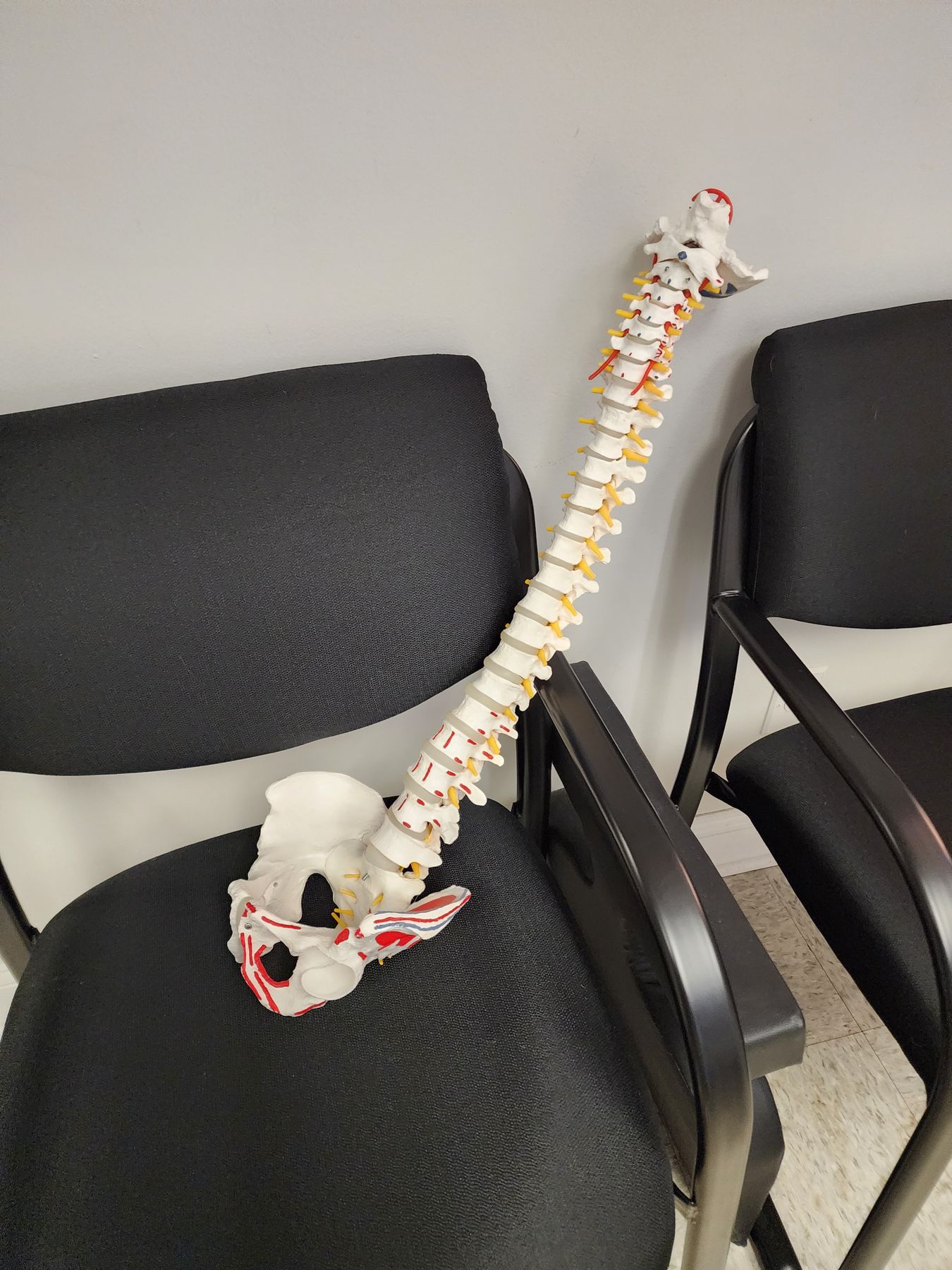
The explanation is often mechanical. The top of your neck is one of the most densely nerved regions in your body. The upper cervical joints, the suboccipital muscles at the base of the skull, and the trigeminal nerve system that supplies sensation to your face and head all converge in the same part of the brainstem. When the upper neck is restricted, irritated, or carrying the strain of a forward head posture, that convergence means the brain can interpret a neck problem as head pain. This is why headache patients so often also have neck pain, and why treating the head alone tends to fail.
The headaches that respond here
We see a broad range, and the examination sorts out which type you are dealing with rather than treating every headache the same way.
- Cervicogenic headaches: pain that begins at the base of the skull and wraps forward, often one sided
- Tension headaches: band-like pressure tied to posture, desk work, driving, and jaw clenching
- Migraines with or without aura, including those with a consistent neck or shoulder warning sign
- Post-traumatic headaches following a car accident, fall, or concussion
- Headaches that began or worsened after a period of high stress, poor sleep, or a new job at a screen
Two systems, treated together
Our approach works the spine and the cranial system as one unit, because they behave as one unit. The structural side uses specific adjusting to restore motion in the upper cervical segments that have stopped moving properly. Where a patient is sensitive, guarded, or simply prefers not to be adjusted by hand, we use instruments instead: the PulStar delivers computer-guided multi-impulse adjusting and gives us a Star analysis of the spine before and after, so change is measured rather than assumed. The Impulse and Activator instruments do similar work by hand, gently, with no twisting and no cracking.
The cranial side is where this practice differs from most. Bio Cranial and Osteopathic Cranial Manipulation are gentle, sustained contacts that address the tension patterns held in the membranes and sutures of the skull, the same tissues that pull on the base of the head where your neck attaches. For patients whose headaches never fully responded to neck care alone, cranial therapy is frequently the piece that had been missing. Sacro Occipital Technique connects the two ends: low-force pelvic blocking that balances the relationship between the sacrum and the skull.
We address the cause, not the symptom. Medication that ends a headache is worth having. It is not the same as changing how often the headaches arrive. Our goal is the second one: fewer episodes, shorter episodes, and less intensity when they do come.
What a visit looks like
Your first appointment is sixty minutes, and nothing about it is rushed. Dr. Hayes takes a real history, because headache patterns carry information: when they started, what time of day they hit, what you were doing, what makes them worse, what you have already tried and how it went. Then comes neurological, physical, and orthopedic testing, with particular attention to upper cervical motion, cranial findings, posture, and the muscles at the base of your skull. You receive your first adjustment at that visit, and you leave understanding what he found and what addressing it would involve.
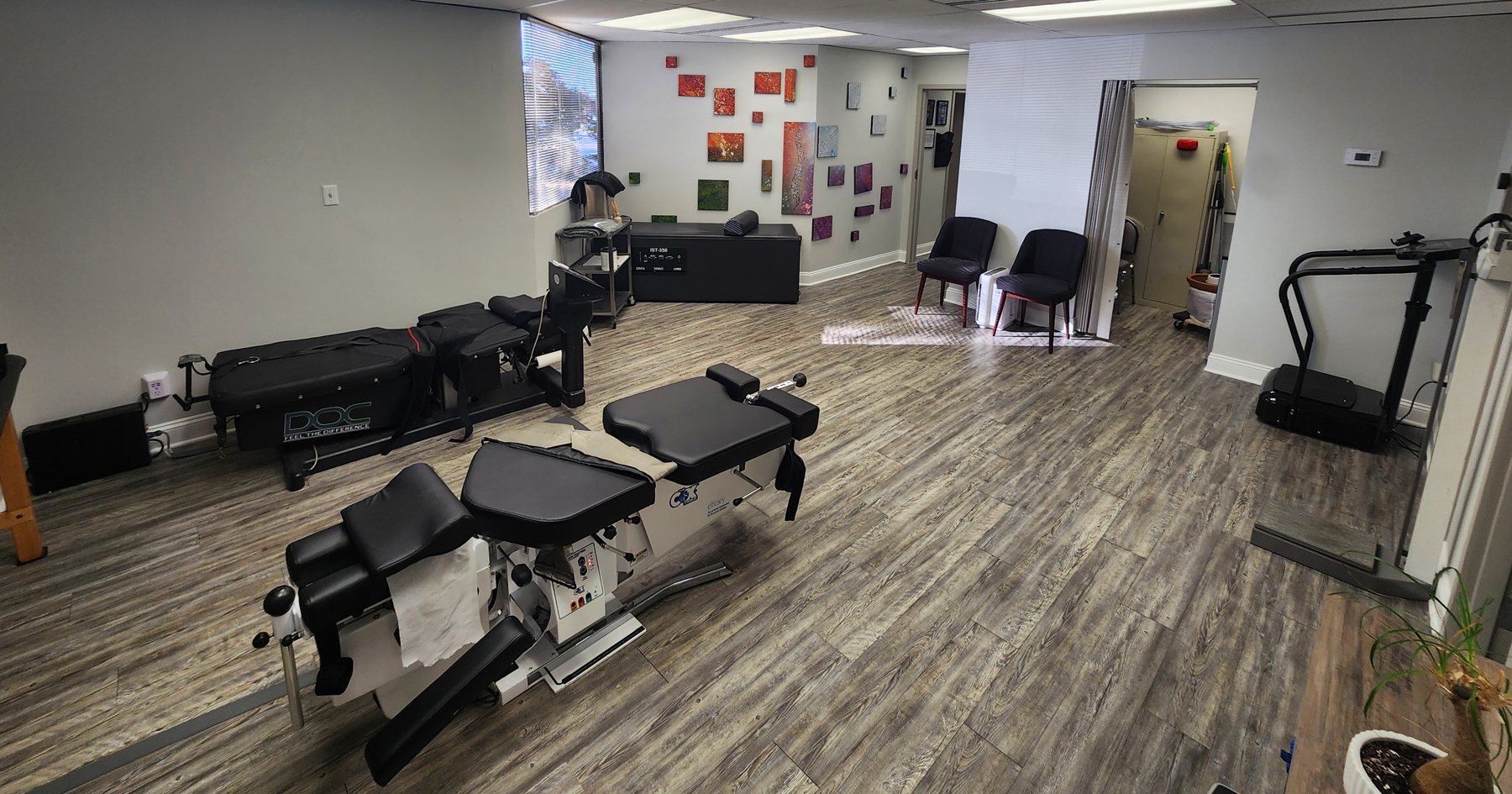
Follow-up visits combine adjusting with whatever supporting work your case calls for. Intersegmental traction and therapeutic ultrasound loosen guarded tissue so the adjustment holds. Class IV cold laser, which is FDA cleared photobiomodulation, calms inflammation in irritated soft tissue. Interferential stimulation quiets muscle spasm in the neck and shoulders when spasm is driving the pattern. We also ask you to keep a simple headache log, because frequency and intensity over weeks tell us more than how you feel on any single afternoon.
Questions, answered
How do I know my headaches are coming from my neck?
Certain findings point that way: headaches that start at the base of the skull, pain that is worse on one side, a stiff or restricted upper neck, tenderness under the occipital ridge, and headaches triggered by desk work, driving, or sleeping wrong. The examination tests upper cervical motion and neurological function directly rather than guessing from the symptom pattern alone.
Will you twist or crack my neck?
Only if it is appropriate for you and you are comfortable with it. Much of our headache work is done with low-force tools: the PulStar and Impulse instruments, the Activator, Sacro Occipital Technique blocking, and gentle cranial work. None of those involve twisting. Patients who are nervous about neck adjusting can be cared for entirely with instruments.
Is this safe if I am already on migraine medication?
Yes. Our care is drug free and does not interact with what your physician has prescribed. Your medication management stays with your prescribing doctor. Many patients keep their medication in place while we work on the structural side, then have that conversation with their physician as things change.
How long before I know whether this is helping?
Dr. Hayes establishes a baseline at the examination: how often your headaches hit, how hard, how long they last, and what your neurological and motion findings look like. He sets a defined checkpoint and re-measures against that baseline, so the answer comes from findings and your own headache log rather than impressions.
What if my headaches are not coming from my neck?
Then we will tell you at the examination. Headaches have causes we do not treat, and some findings call for a medical workup instead. The sixty minute exam exists to sort that out honestly before you commit to a plan of care.
Find out where your headaches are actually coming from.
One thorough examination answers it. Book online or call the office and we will take a proper look.