
Diversified technique adjustments in Chesterfield, MO
The classic hands-on chiropractic adjustment: a specific, controlled correction that restores motion to a stuck joint. It is the everyday backbone of care at Bonesetters.
When most people picture getting adjusted, they picture Diversified. It is the most widely used technique in chiropractic, and for good reason: it is precise, it is efficient, and it works. A joint that has lost its normal motion, whether from an old injury, hours at a desk, or a fresh strain, gets stuck and irritates the nerves and soft tissue around it. Diversified restores that motion directly, by hand.
What a Diversified adjustment actually is
A Diversified adjustment is a specific, controlled thrust delivered by hand to a single joint. Dr. Hayes examines how each segment moves, finds the one that is restricted, sets a precise contact on it, and applies a quick, shallow impulse in exactly the direction that joint needs to move. The force is small and the range is short. This is not brute strength or twisting the whole spine at once; it is one correction, aimed at one joint, to bring it back into motion and better alignment.
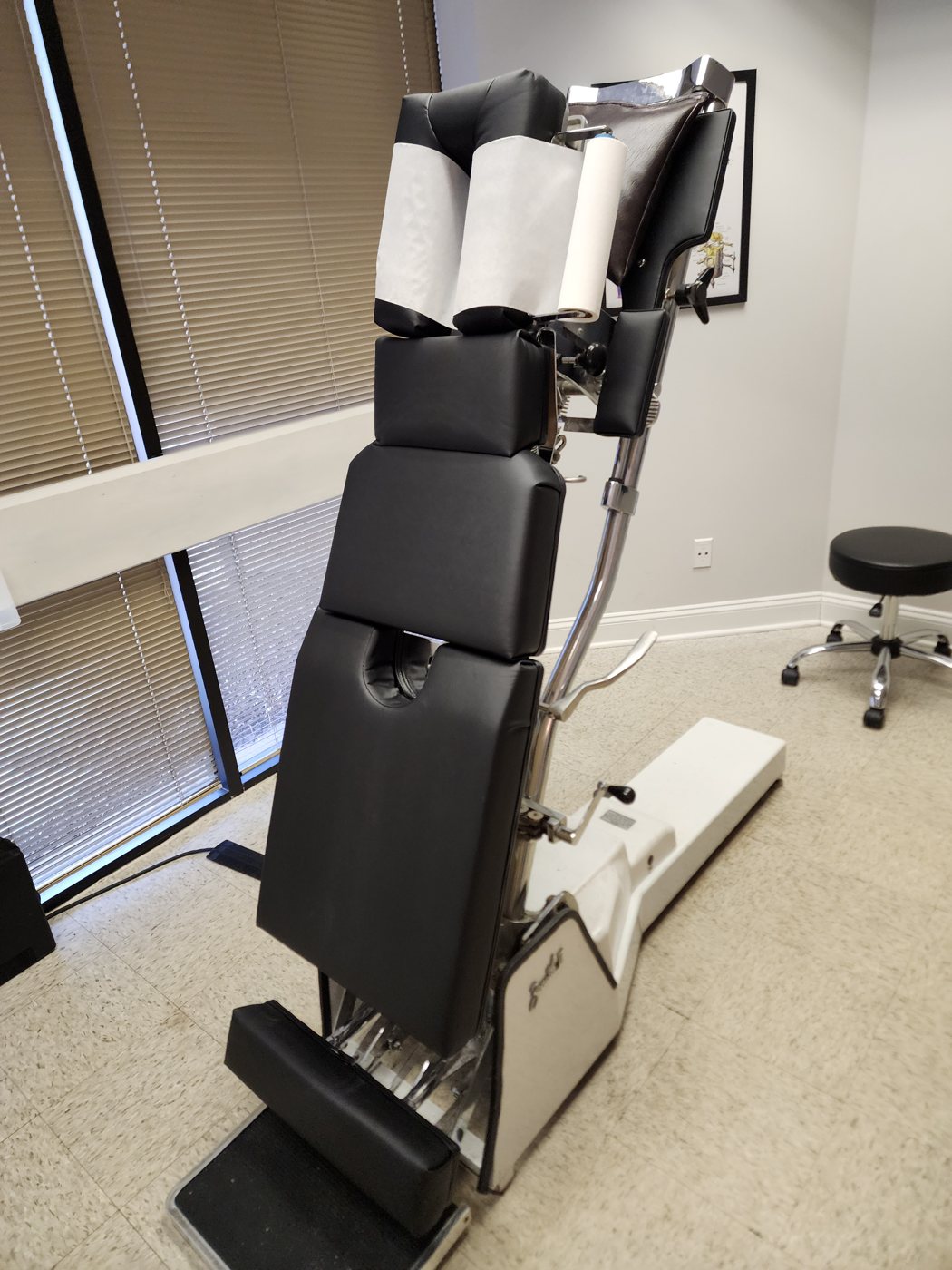
About that pop
The sound that sometimes comes with an adjustment worries people more than it should. That pop is a cavitation. When the surfaces of a joint separate for a fraction of a second, gases dissolved in the joint fluid come out of solution and make an audible release, the same physics as opening a bottle of sparkling water. It is not bone cracking, nothing is breaking, and it is not the point of the adjustment. A correction restores motion whether or not you hear anything, and Dr. Hayes is treating the joint's movement, not chasing a sound.
What it treats and who it suits
Manual adjusting is versatile. It is a mainstay for mechanical back pain and neck pain, for stiffness that limits how you turn or bend, for headaches that trace back to the upper neck, and for the everyday joint restrictions that build up over years. It suits active, otherwise healthy joints that respond well to a direct correction. It is often the fastest way to give a stuck segment its motion back.
Manual or instrument: how Dr. Hayes chooses
Diversified is not the only tool, and it is not always the right first move. When a joint is acutely inflamed, when a patient is very apprehensive, or when bone density or a specific condition calls for a lighter touch, Dr. Hayes reaches for instrument adjusting instead: the Activator, Impulse, or computer-guided PulStar deliver a fast, gentle impulse with no twisting. Many patients get a blend, a manual correction where it is called for and an instrument where it is smarter. Your examination is what decides. That is the whole reason the first visit is built around testing, not assumptions.
The technique serves the patient, not the other way around. Diversified is the everyday backbone of care here, but it is chosen when it fits your body and your case. If a gentler approach is the right call, you get the gentler approach.
What a visit looks like
Everything starts with the $180, 60 minute new patient examination: a full history, plus neurological, physical, and orthopedic testing, and your first adjustment. From there, routine adjusting visits run 30 minutes at $65, unhurried, with Dr. Hayes checking your motion, adjusting the joints that need it, and tracking how you respond over time. Nothing is rushed and no stone is left unturned; that pace is the point.
Questions, answered
Does a Diversified adjustment hurt?
Most patients feel a quick, satisfying release and relief right after. The thrust is fast and shallow, so there is very little time for the body to guard against it. Sore, acutely inflamed joints can be tender, which is one reason Dr. Hayes may start with a gentler instrument or low-force technique and move to manual adjusting as the area calms down.
What is the popping or cracking sound?
That sound is called a cavitation. When the joint surfaces separate slightly, dissolved gases in the joint fluid come out of solution and make an audible pop. It is a gas release, not bone grinding on bone and not anything breaking. The sound is not the goal, and a correction can be effective with or without it.
How is manual adjusting different from an instrument?
A Diversified adjustment is delivered by hand: Dr. Hayes uses a specific contact and a controlled thrust to move a joint through a short, precise range. An instrument such as the Activator or PulStar delivers a lighter, faster impulse with no twisting. Both restore motion. The right choice depends on your body, the joint involved, and how acute things are.
Is manual adjusting safe for everyone?
It is safe for most people, but not the first choice for every case. Advanced osteoporosis, certain fractures, some inflammatory conditions, and recent surgery can call for a low-force approach instead. Your examination screens for these, which is exactly why the first visit is built around thorough testing rather than jumping straight onto a table.
How often will I need to be adjusted?
It depends on what we find and how long the problem has been there. After your examination, Dr. Hayes lays out a specific plan with a defined number of visits, so you understand the scope and the cost before you commit to anything.
Get your joints moving the way they should.
One examination tells us what is stuck and how to fix it. Book online or call the office and we will take a proper look.