
Cox flexion distraction in Chesterfield, MO
Rhythmic, hands-on decompression on the Cox 8 table. A gentle, research-backed way to open disc space and take pressure off an irritated nerve, one segment at a time.
Some discs need a firm, computerized pull. Others respond best to a slow, repeating motion that opens the joint from the inside. Cox flexion distraction is the gentle end of our decompression work. Dr. Hayes uses the Cox 8 table to flex and stretch your spine through a smooth, controlled rhythm, coaxing pressure off an injured disc and the nerve it is pinching. It is one of the most researched techniques in chiropractic, and for the right case it does what a heavier approach cannot.
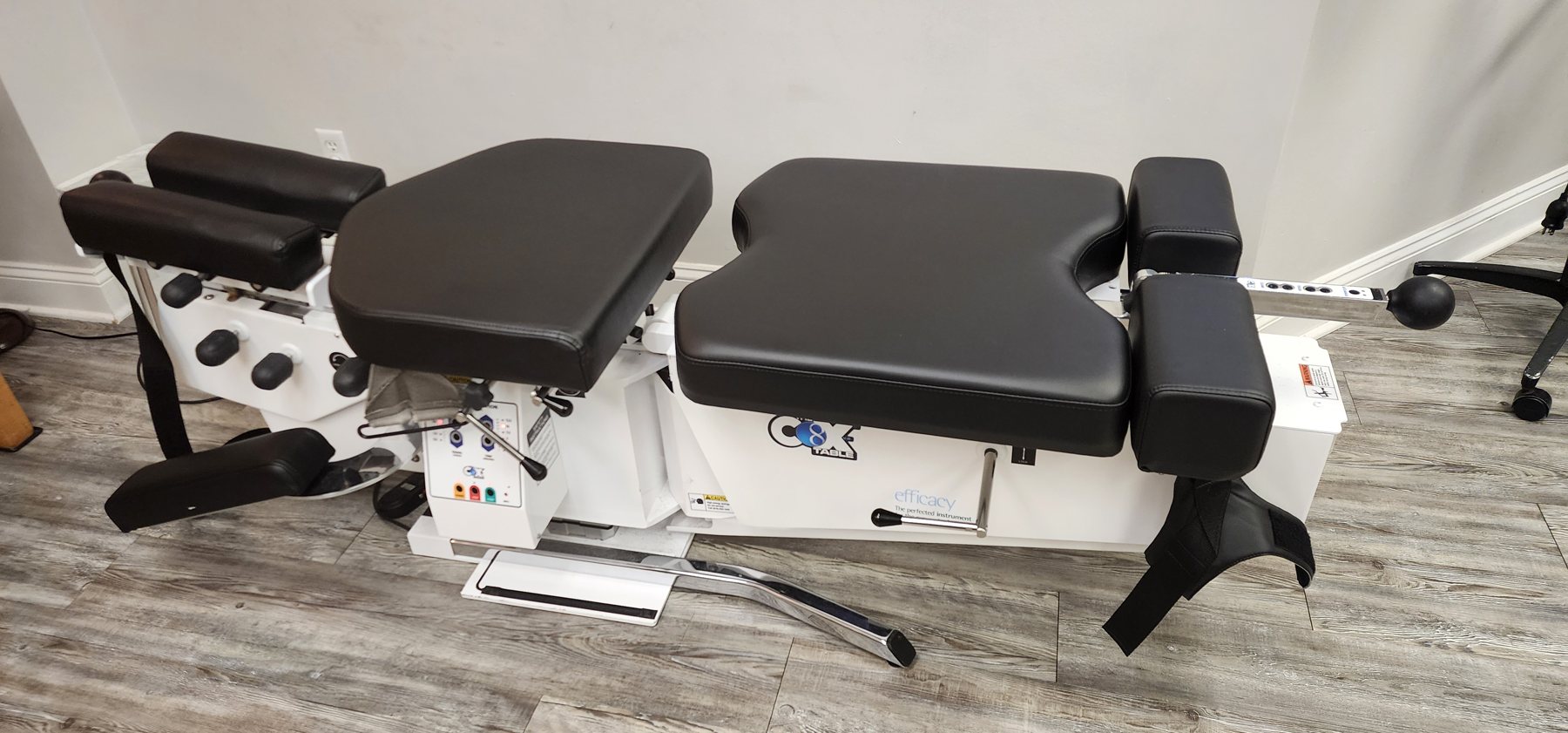
What flexion distraction is
Flexion distraction is a decompression technique performed on a specially designed table with a movable lower section. Dr. Hayes contacts a specific vertebra by hand while the table gently lowers and lifts your legs and pelvis, flexing the spine through a controlled arc. That motion widens the space between two vertebrae and lowers the pressure inside the disc between them. Research measuring intradiscal pressure during flexion distraction shows it drops into negative range, which is the mechanical condition a bulging or herniated disc needs in order to draw its displaced material back toward center and pull in fresh fluid and nutrients. Because Dr. Hayes keeps a hand on the segment the whole time, he feels exactly how your spine moves and adjusts the depth, angle, and rhythm as he works. Nothing is forced. There is no twisting, no popping, and no sudden thrust.
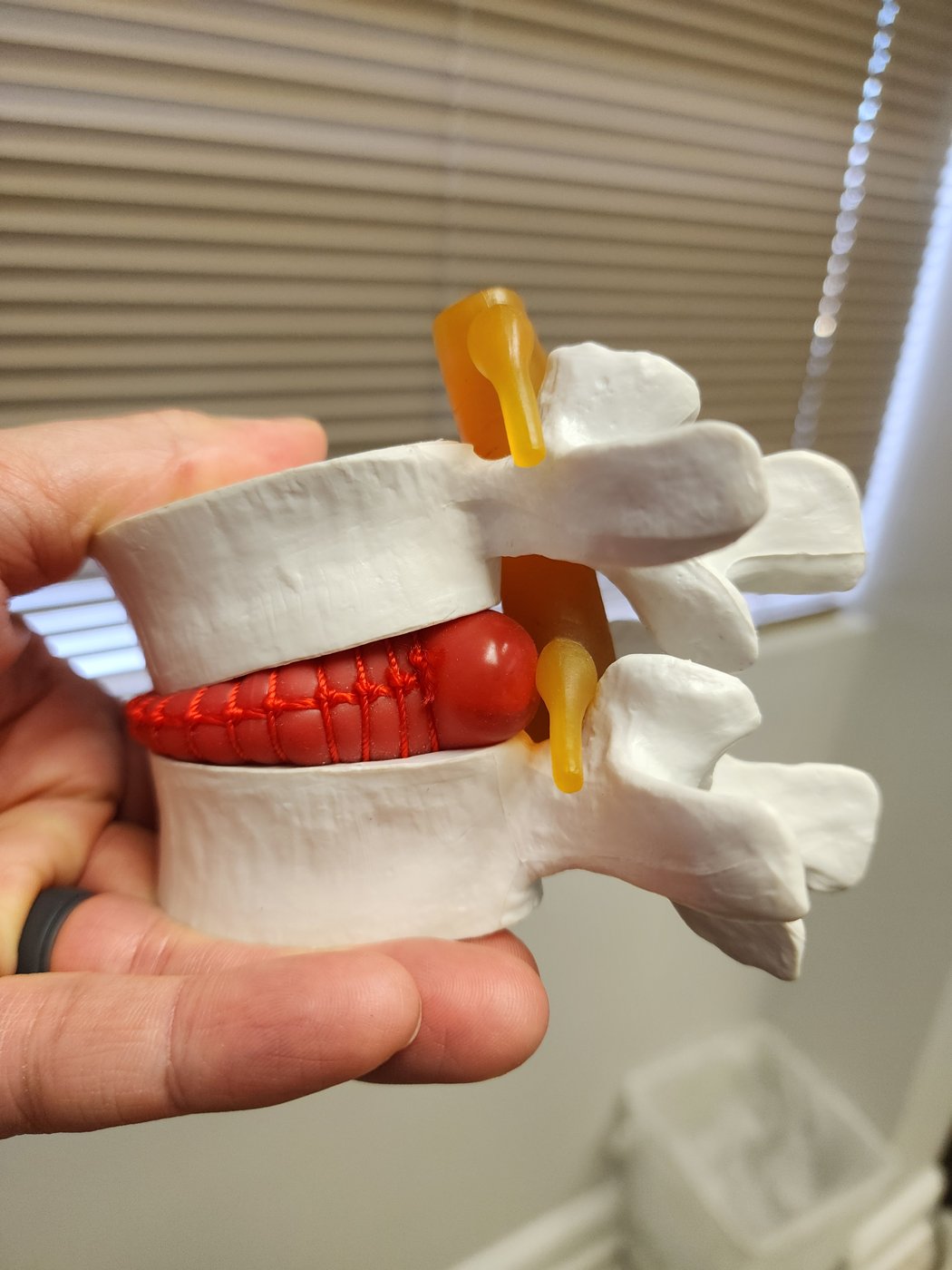
Doctor-guided, one segment at a time
The Cox 8 is what separates this from a machine that pulls the whole spine the same way. Traction stretches everything at once. Flexion distraction isolates. Dr. Hayes can target a single lumbar level, take a stiff joint through flexion, lateral bending, and circular motion, and stop the instant your body tells him to. That hands-on control is why the technique is gentle enough for patients in acute pain, older patients, and cases where a stronger pull would be too much, yet specific enough to work on a disc that has not responded to anything else.
Part of the disc protocol
Flexion distraction rarely works alone, and it is not meant to. It sits alongside computer-controlled spinal decompression as one of the tools in our four phase Disc Care Protocol. Some spines respond best to the motorized DOC table, some do better with the hands-on Cox 8, and many get both, matched to how the disc behaves. Around the decompression, Class IV cold laser accelerates tissue repair, HakoMed electroanalgesia calms radiating nerve pain, and gentle instrument adjusting keeps the joints above and below moving correctly. Each phase supports the others, and that combination is why patients who failed single-tool care respond here.
Who it helps
Cox flexion distraction is a first-line conservative option for disc and low back problems, including:
- Herniated discs and bulging discs, lumbar or cervical
- Spinal stenosis, where the motion opens narrowed spaces and eases pressure on the cord and nerve roots
- Sciatica and radiating leg pain
- Degenerative disc disease and facet syndrome
- Low back pain that has not resolved with rest, medication, or generic therapy
Honest candidacy, always. Flexion distraction is a strong fit for many disc and stenosis cases and the wrong tool for a few. Your sixty minute examination exists to make that call, and to tell you plainly if a different approach would serve you better.
What a visit looks like
You lie comfortably on the Cox 8, fully clothed, while Dr. Hayes sets his contact on the segment he is treating and works the table through slow, repeating cycles. You simply breathe and relax. A treatment runs a few minutes per targeted level and is easy to tolerate, and most patients describe it as a pleasant stretch rather than anything they have to brace for. There is no downtime afterward. He tracks how the disc and the surrounding nerves respond at each visit and adapts the plan as you improve.
Questions, answered
Does Cox flexion distraction hurt?
No. Most patients feel a gentle, rhythmic stretch and relax through the treatment. Dr. Hayes keeps a hand on the segment the entire time and works within your comfortable range, easing off the moment your body guards. There is no twisting, cracking, or forceful thrust.
How is it different from the motorized decompression table?
Both create negative pressure inside the disc, but flexion distraction is hands-on. Instead of a computer running a programmed pull, Dr. Hayes guides the motion by feel, one segment at a time, and can add lateral or circular movement a table cannot. Many disc patients receive both, matched to how their spine responds.
How many visits will I need?
It depends on the disc, the severity, and how long the problem has been there. After your examination and imaging review, Dr. Hayes lays out a specific plan with a defined number of visits, so you know the scope and the cost before you begin.
Is it safe if I have stenosis or have been told I may need surgery?
Often, yes. Flexion distraction was developed in large part for stenosis and difficult disc cases, and many of our patients arrive after injections or while weighing a surgical consult. The examination determines candidacy honestly, and screens for the conditions that would rule it out.
Find out if flexion distraction fits your disc.
One examination answers it. Book online or call the office and we will take a proper look.