
Post-surgical pain in Chesterfield, MO
Pain that outlived the operation, including failed back surgery cases. Careful, conservative work around hardware and healed surgical sites.
You had the surgery. You did the recovery, the restrictions, and the therapy. And months or years later the pain is still there, or it came back, or it moved somewhere new. This is a common and demoralizing place to end up, common enough that spine surgeons have a name for it: failed back surgery syndrome. The name is unkind and misleading. In many cases the operation did exactly what it was designed to do. The disc fragment came out. The canal was opened. The fusion healed. What did not get addressed is how the rest of the body moves now that one part of it has been rebuilt.
That is the problem we work on. Surgery is a structural solution, and it is often the right one. It is not a mechanical one. It removes or stabilizes tissue, and then leaves the surrounding joints, muscles, and scar tissue to sort out a new set of rules on their own. Sometimes they do. When they do not, the result is pain that no follow-up scan seems to explain.
Why pain outlasts a successful operation
Several things tend to be going on at once. A fused segment no longer moves, so the levels directly above and below it take on the motion it used to contribute, and those adjacent joints get overworked. Scar tissue forms around a surgical site and tethers structures that are supposed to glide past each other. Muscles that spent months guarding a painful area stay guarded long after the reason is gone. The sacroiliac joints and pelvis, having compensated through a long pre-surgical period and a long recovery, are frequently still torqued and still moving badly.
None of that registers as a surgical failure on imaging, which is why patients get told the pictures look fine while they are plainly still hurting. Motion problems do not show up on a static image. They show up in examination.
Working carefully around hardware
Post-surgical spines require more caution and more information than an ordinary case. Nothing begins until Dr. Hayes knows what was done, at which levels, and what is holding it together. Bring your operative report and any imaging you have, including films taken after the procedure. If you cannot get the records, we will help you request them.
With that in hand, the approach is straightforward. Instrumented or fused segments are not manipulated. Care is aimed at the joints, muscles, and connective tissue around them, and at the pelvis and extremities carrying the redistributed load. Where the tissue is irritable or the anatomy is altered, adjusting is done with low-force computer-guided and handheld instruments, the PulStar, Impulse, and Activator, which deliver a precise, measured impulse with no twisting and no rotation. Supportive tools including Class IV cold laser, electroanalgesia, and therapeutic ultrasound are used to help manage pain and irritability in the surrounding tissue. Stretch therapy with Yevgeniy Kapusterynsky is often part of the plan when guarded muscles have been holding a pattern for years.
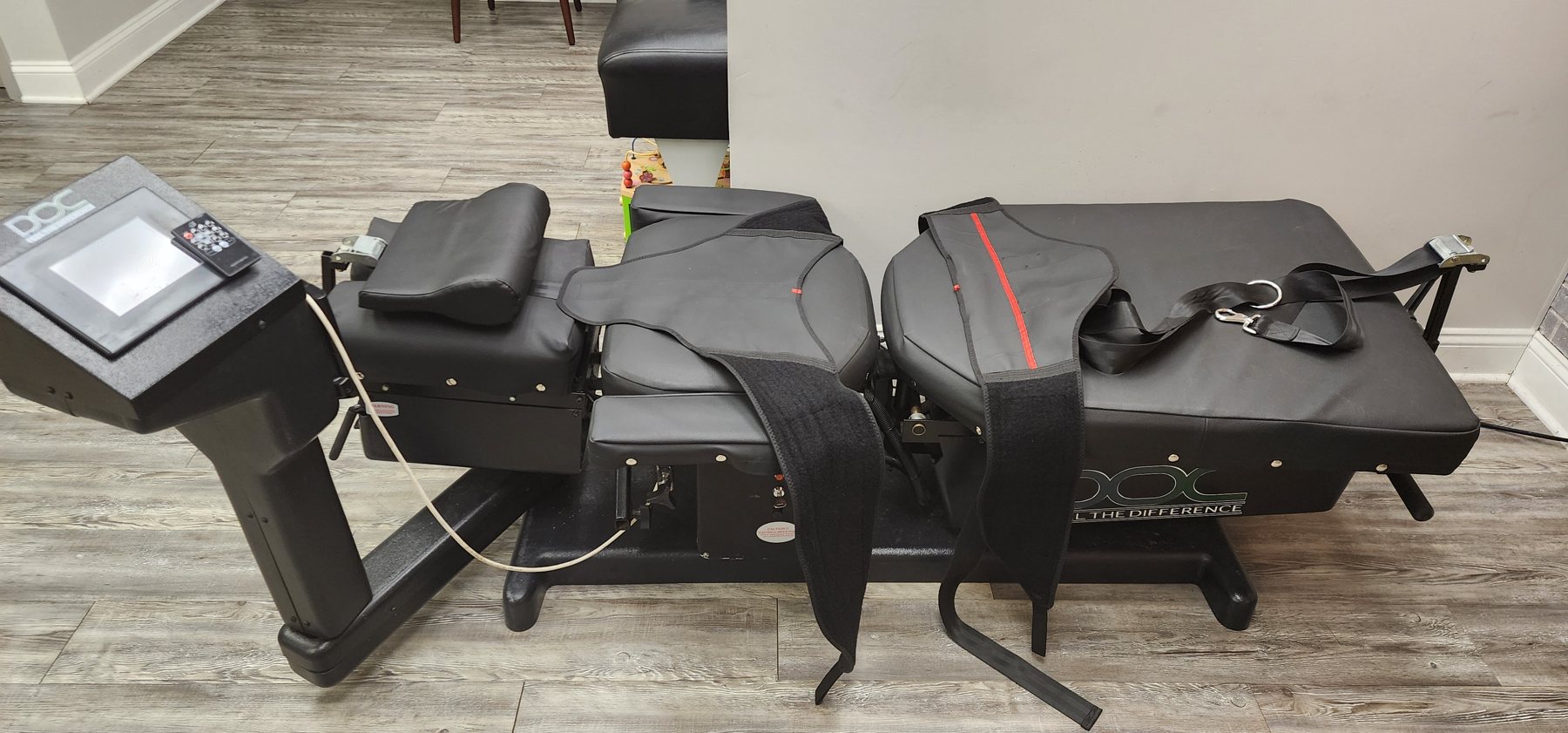
Where a disc problem remains at an unoperated level, non-surgical spinal decompression may be appropriate, but candidacy after surgery is decided case by case and never assumed. Certain hardware, certain fusions, and certain findings rule it out, and the examination exists to catch that.
Coordinating with your surgeon
We are not a second opinion on whether your surgery should have happened. That decision is behind you. Our role sits alongside your medical team. With your authorization, Dr. Hayes will request or share records so everyone works from the same information, and any post-operative restriction your surgeon has given you governs what we do. If the examination raises something surgical, including new weakness, worsening numbness, or changes in bowel or bladder function, you go back to your surgeon, promptly and without hedging.
Who we see
- Persistent back pain after laminectomy, discectomy, or microdiscectomy
- Failed back surgery cases, single level or multi-level fusion
- Adjacent segment pain above or below a fusion
- Continued leg or arm symptoms after decompression surgery for disc injuries
- Sacroiliac and pelvic pain that appeared or worsened after spinal surgery
- Knees, hips, and shoulders that never fully returned after replacement or repair
- Scar tissue restriction and chronic muscle guarding around an old surgical site
Honest candidacy, always. Some post-surgical pain is mechanical and responds to conservative care. Some of it is not, and some of it belongs back with your surgeon. Your sixty minute examination is where that gets sorted out, before you spend anything on a treatment plan.
What a visit looks like
Your first appointment is a full sixty minutes, and post-surgical cases need every one of them. Dr. Hayes takes a detailed history of the original problem, the procedure, and how the pain has behaved since. He reviews your imaging and operative records with you, so you can see which levels are involved. Then comes neurological, orthopedic, and physical examination, plus an assessment of how your spine, pelvis, and hips are actually moving now. You leave with a plain explanation of what he found and a specific plan, including what it will cost, or with a referral if that is the honest answer.
Questions, answered
Is it safe to be adjusted after a spinal fusion?
A fused segment is not adjusted. It is fixed, and it stays fixed. What we assess and treat is everything the fusion now depends on: the joints immediately above and below it, the pelvis, the sacroiliac joints, and the ribs. Dr. Hayes reviews your operative report and imaging first so he knows exactly which levels are instrumented before he puts a hand on your spine.
What if I have plates, screws, rods, or a joint replacement?
Bring the records. Hardware changes how we work, not whether we can work. Care around instrumented or replaced joints is done with low-force instruments such as the PulStar, Impulse, or Activator rather than manual thrusting, and treatment is directed at the surrounding tissue and the joints carrying the extra load.
My surgeon said the operation was successful, so why do I still hurt?
Both things can be true. Imaging can confirm that a decompression opened the canal or that a fusion healed solidly while the surrounding muscles, joints, and scar tissue remain irritated and poorly moving. A successful structural repair does not automatically restore normal movement, and pain frequently lives in what was left behind rather than in what was fixed.
Do you talk to my surgeon?
When it is appropriate, yes. With your written authorization, Dr. Hayes will request records or communicate findings. If your examination turns up something that belongs back in a surgeon's hands, such as new or progressing weakness, we say so directly and refer.
How soon after surgery can I be seen?
That depends on your procedure and your surgeon's post-operative restrictions, and those restrictions come first. Many patients come in months or years out, once it is clear the pain is not resolving on its own. If you are early in recovery, bring your surgeon's guidance to the examination and we will work inside it.
The surgery is done. The mechanics still deserve a look.
Bring your operative report and imaging, and we will take a proper hour with it. Book online or call the office.