
Degenerative disc disease treatment in Chesterfield, MO
Degeneration is a cycle, not a verdict. We work on the three things that drive it: disc height, segmental motion, and circulation.
Most people hear the phrase for the first time when a radiology report reads back to them. Degenerative disc disease sounds like a diagnosis of decline, and patients often arrive assuming the only options left are medication now and surgery later. The reality is narrower and more workable. A disc is largely water, and it stays healthy by exchanging fluid under changing pressure. When a segment loses motion and stays compressed, that exchange slows, the disc dries and flattens, and the joints around it start carrying load they were never designed to carry.
The cycle you are trying to interrupt
Degeneration feeds itself. A disc that loses height narrows the space where the nerve root exits and shifts load backward onto the facet joints, which respond by thickening and stiffening. That stiffness reduces motion at the segment, and less motion means less fluid pumped in and less waste pumped out, so the disc dries further. Meanwhile the levels above and below start moving more to compensate, which is how a one level problem becomes a three level problem over a decade.
This is also why the symptoms rarely stay the same. Early on it is morning stiffness and a deep ache after sitting. Later it can include pain that flares with extension or standing, reduced tolerance for walking, and eventually nerve symptoms if the exit channel narrows enough to crowd the root. Because the mechanics keep changing, care that only chases the pain tends to stop working.
How we treat it here
The disc protocol addresses degeneration from several directions at once, because no single tool restores height, motion, and circulation on its own.
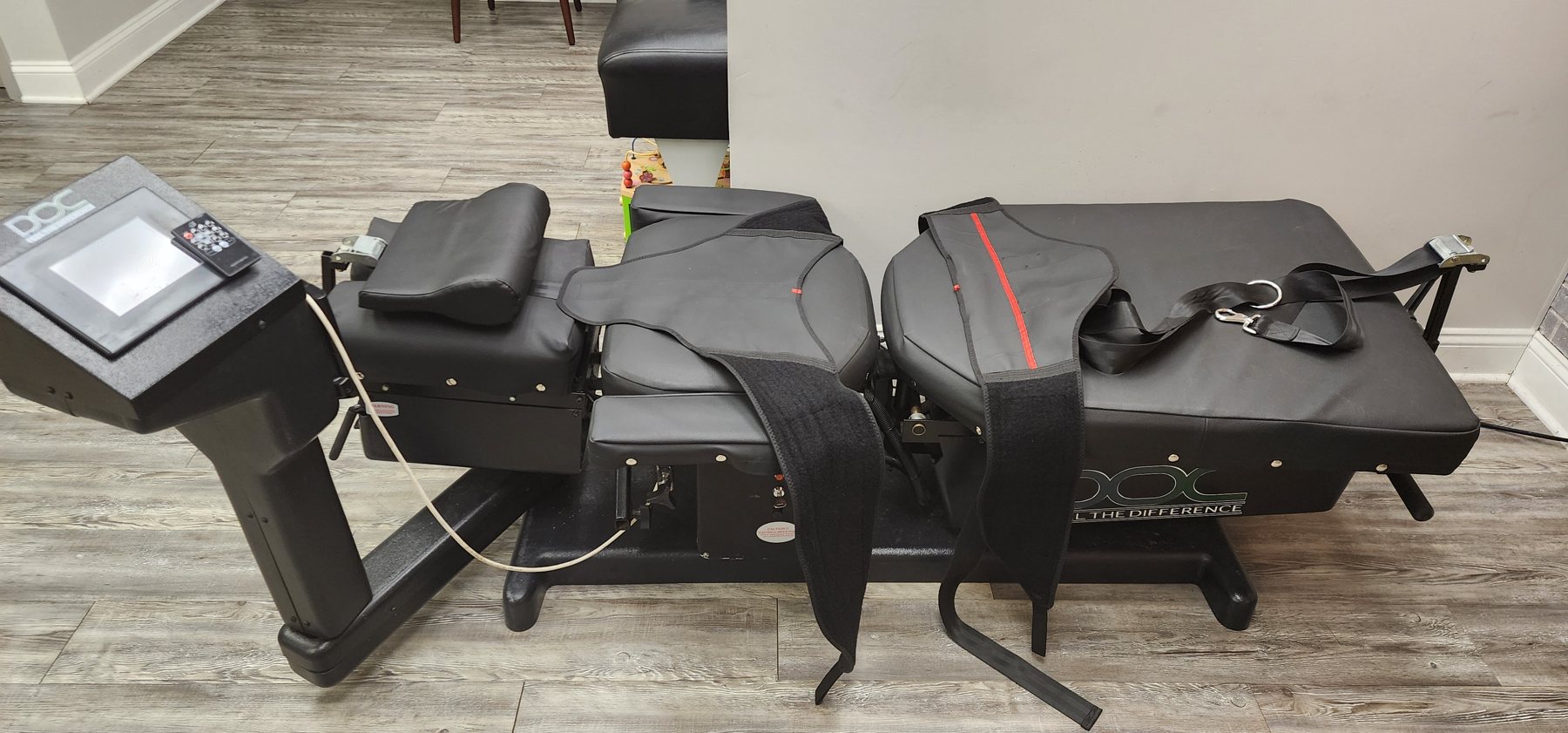
- Decompression. The DOC table delivers motorized cervical and lumbar spinal decompression programmed to your specific levels, unloading the segment long enough for fluid exchange to restart. The Cox 8 table gives Dr. Hayes hands-on flexion distraction when a gentler, doctor-guided pull is the better call, and the handheld VDP (Vertebral Distraction Pump) is FDA registered and creates 2 to 3 mm of segment-specific distraction of the facet joints and disc anywhere from C2 to the sacrum.
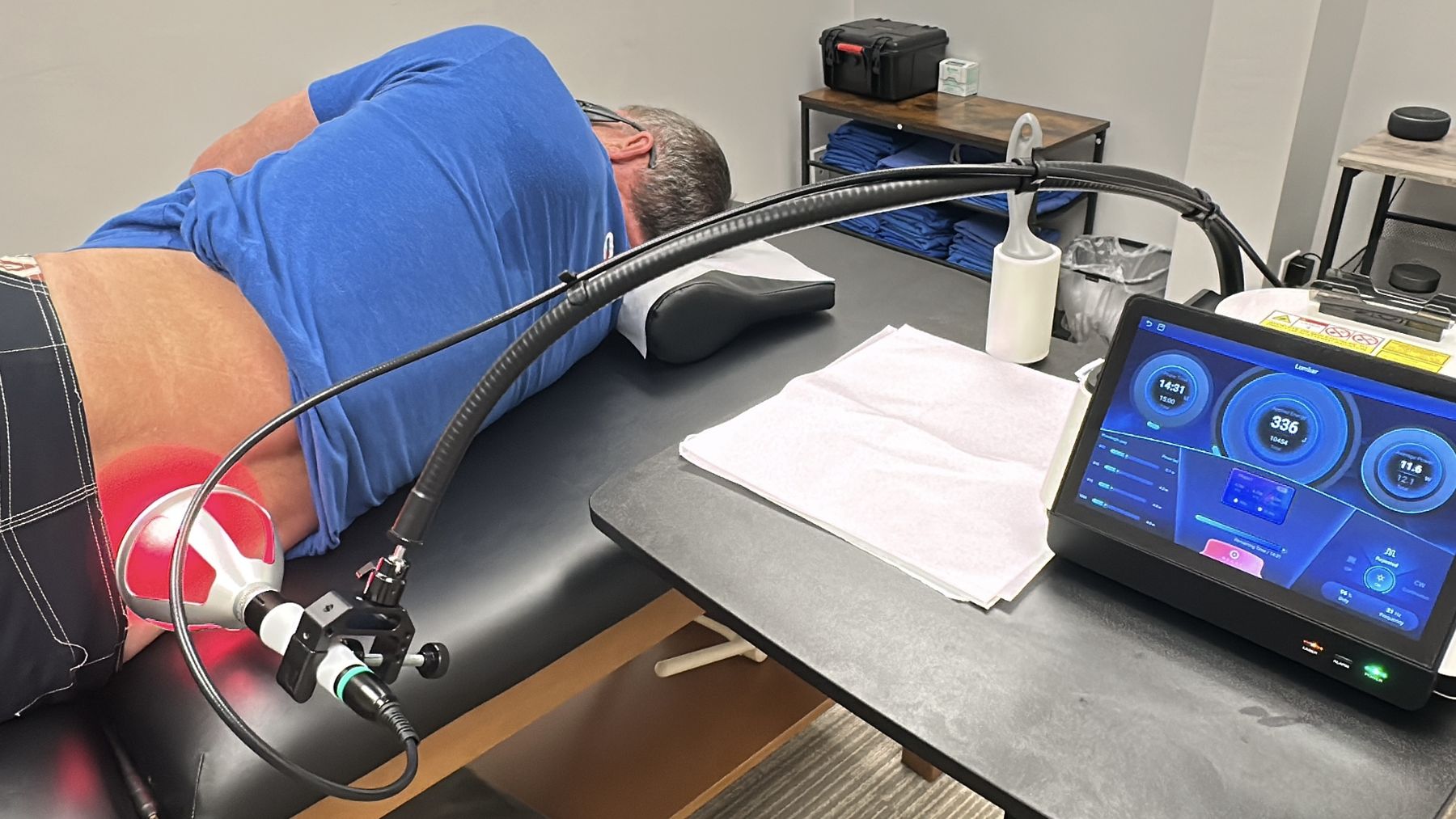
- Class IV cold laser. FDA-cleared photobiomodulation that accelerates tissue repair and calms the inflammation living in the joint capsules and ligaments around a worn segment. More on cold laser.
- Gentle adjusting. Degenerated spines usually do the worst with force. PulStar computer-guided adjusting uses multi-impulse percussion with real-time Star analysis before and after, and the Impulse and Activator instruments deliver low-force corrections by hand. No twisting, no cracking.
- Supportive therapies. Intersegmental traction on the roller table, therapeutic ultrasound, and shortwave diathermy warm and mobilize stiff tissue so the adjustment holds and the segment keeps the motion it gained.
When a degenerated level has also produced a bulge or a frank herniation, the plan shifts to account for it. That overlap is common, and our approach to disc injuries runs on the same protocol with different emphasis.
We treat the segment, not the report. Degeneration on imaging is nearly universal after a certain age, and plenty of it is silent. Your examination determines which levels are generating your symptoms, which are incidental, and whether this care is right for your spine at all.
What your first visit looks like
Your new patient examination runs a full sixty minutes: a real history, neurological, physical, and orthopedic testing, a review of any imaging you bring, and your first adjustment. Nothing is rushed and no stone is left unturned. Dr. Hayes will show you on a spine model what is happening at your levels, explain which findings matter and which do not, and lay out what a plan would involve, including the number of visits and the cost, before you commit to anything.
Dr. Hayes trained under Dr. Patrick Montgomery and was recognized in 2024 as a top US specialist for spinal decompression and neuropathy. Bonesetters is by appointment only, and we see patients from Chesterfield, Ballwin, Creve Coeur, Ladue, Town and Country, and Des Peres.
Questions, answered
Is degenerative disc disease actually a disease?
Not in the usual sense. It is a process: discs lose water content, height, and shock absorption over time, and the joints and ligaments around them adapt to the change. Almost everyone shows some of it on imaging as they age. What matters clinically is not the label on the report, it is whether the degeneration at your levels is producing pain, stiffness, or nerve symptoms.
If the disc is already worn down, can anything actually change?
Degenerated discs do not turn back into twenty year old discs. What can change is the mechanics driving the wear: pressure on the segment, lost joint motion, and poor fluid exchange. Improve those and the tissue has a chance to rehydrate somewhat, the joints move better, and the irritation that generates pain often settles. The honest goal is a spine that works and hurts less, not a reversed MRI.
My imaging says degeneration at several levels. Does that make me a poor candidate?
Multi-level degeneration is common and does not rule you out. It does change the plan. Dr. Hayes identifies which levels are actually symptomatic and which are incidental findings, then treats accordingly rather than pulling on the whole spine and hoping.
Is decompression safe on a degenerated, arthritic spine?
Treatment parameters scale to the patient, and gentler options exist, including hands-on flexion distraction and the handheld VDP for segment-specific work. During the examination, Dr. Hayes screens for the findings that would rule decompression out, such as certain fractures, tumors, or advanced osteoporosis, and says so plainly if you are not a candidate.
What happens if I leave it alone?
Degeneration is a cycle. A stiff, compressed segment moves less, feeds itself less, and loses more height, which loads the facet joints behind it and the discs above and below. Left alone, that pattern tends to spread rather than stay put. Interrupting it early is easier than reversing years of accumulated compensation.
Stop the cycle before it spreads.
One thorough examination tells you which levels are the problem. Book online or call the office.