
Frozen shoulder care in Chesterfield, MO
Adhesive capsulitis takes range of motion away slowly and gives it back slowly. Care here is aimed at both: less pain through the process, and motion that stays.
A frozen shoulder does not announce itself. Most people describe an ache that started for no clear reason, or after a minor strain, and then a slow narrowing of what the arm will do. Reaching into the back seat stops working. Fastening a bra or pulling on a coat becomes a two step maneuver. Sleeping on that side is out. By the time patients reach us, the shoulder has usually been getting quietly worse for months, and the reflex to protect it has made it worse still.
The medical name is adhesive capsulitis. The joint capsule, the sleeve of connective tissue surrounding the shoulder, becomes inflamed, thickened, and progressively contracted. It is not a muscle problem and it is not a tear. The container the joint lives in has shrunk, which is why the arm stops at a hard limit rather than simply feeling weak.
The three phases, and why timing matters
Adhesive capsulitis moves through a recognizable sequence. In the freezing phase, pain leads: the shoulder hurts constantly, hurts worse at night, and motion begins slipping away. In the frozen phase, the pain often eases somewhat but stiffness takes over, and the loss of range is at its most obvious. In the thawing phase, motion gradually returns, though frequently not all of it, and rarely on a schedule anyone would choose.
Which phase you are in changes what should be done to the shoulder. Aggressive stretching of an angry, freezing capsule usually provokes more guarding and more pain. The same work in the frozen and thawing phases is where graded range work belongs. Guessing wrong costs months, which is the single best reason to have the shoulder properly examined rather than treated generically.
How we approach it here
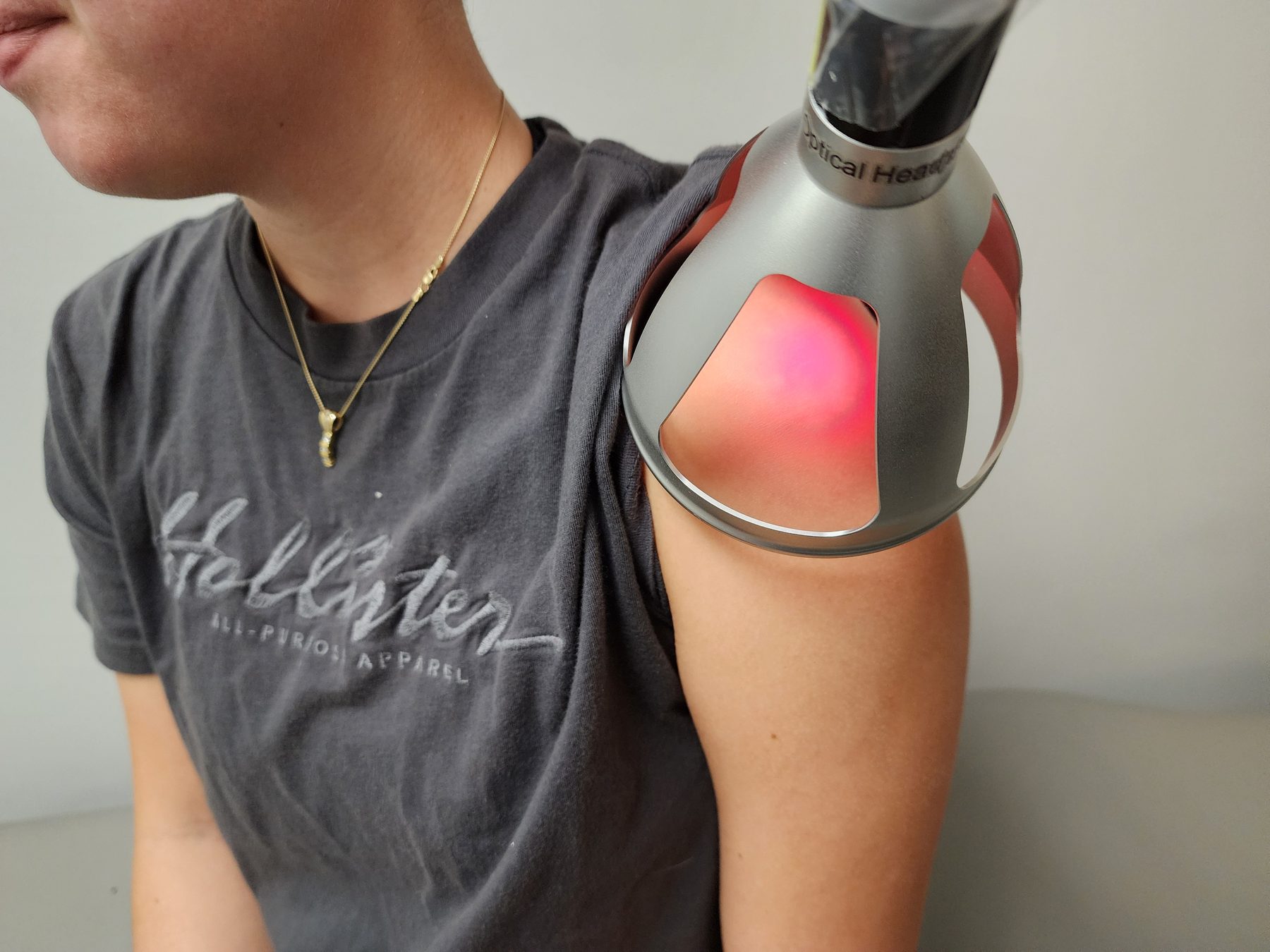
Three things happen in parallel. First, we calm the capsule. Class IV cold laser is photobiomodulation: light at a specific wavelength and dose is absorbed by tissue, raising cellular energy production, settling inflammatory signaling, and improving local circulation. On a shoulder that means the capsule and the tissue around it get a metabolic push while it is too irritable to be stretched hard.
Second, we work on the tissue that has stiffened. Our Storz shockwave therapy drives radial acoustic waves into thickened, chronically restricted tissue that has stopped remodeling on its own. It suits the frozen and thawing phases well, when the problem is less about inflammation and more about a capsule that has settled into a shortened, unproductive state.
Third, we restore motion where it is actually missing. A shoulder is not one joint. It is the ball and socket, the shoulder blade on the rib cage, the collarbone at both ends, and the mid back behind all of it. Months of protecting one arm commonly locks up the shoulder blade and the thoracic spine, and that motion often does not return on its own. Dr. Hayes uses specific adjusting to restore those segments, with low-force instruments such as the PulStar, Impulse, or Activator when the joint is too irritable for hands-on work. Stretch therapy with Yevgeniy Kapusterynsky is available when surrounding tissue is a limiting factor.
Who this helps
- Shoulders losing range with no clear injury behind it
- Stiffness that followed a minor strain, a fall, or a long period in a sling
- Shoulders that stiffened after surgery or an immobilized arm, wrist, or elbow
- Night pain that makes sleeping on one side impossible
- Adhesive capsulitis alongside diabetes or a thyroid condition, managed by your physician
- Partially thawed shoulders that recovered some motion and then stalled
Honest candidacy, always. Not every stiff, painful shoulder is a frozen one. A full-thickness rotator cuff tear, a fracture, or advanced joint degeneration is a different problem with a different answer, and Dr. Hayes will tell you that at the examination rather than sell you a plan. The exam exists to find out which shoulder you have.
What a visit looks like
Your first visit is a sixty minute examination: history, neurological, physical, and orthopedic testing, careful measurement of both active and passive range in every direction, an assessment of shoulder blade and thoracic motion, imaging review where it applies, and your first adjustment. Nothing is rushed. Dr. Hayes tells you which phase your shoulder is in and what the realistic arc looks like from there.
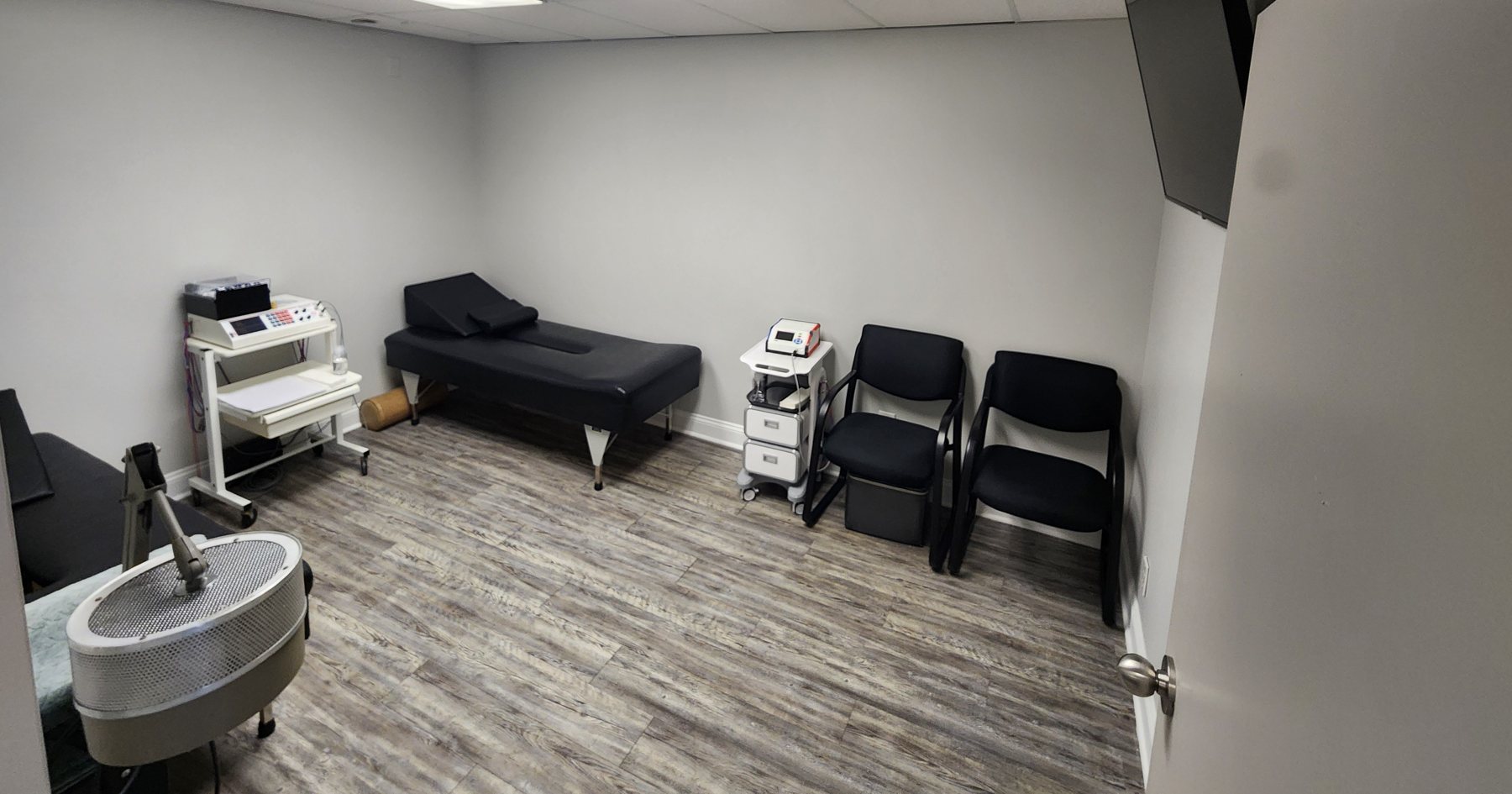
Follow-up visits are unhurried and consistent. Laser or shockwave is applied to the shoulder, specific work restores motion through the shoulder blade and mid back, and supportive tools such as therapeutic ultrasound and shortwave diathermy prepare tissue so the range you work for is easier to hold. Range is re-measured as you go, so progress is a number rather than an impression. Modalities are priced per treatment, so you always see what you are paying for.
Questions, answered
How do I know if this is a frozen shoulder and not a rotator cuff problem?
The clearest difference is passive motion. With a rotator cuff problem, you struggle to lift the arm yourself but someone else can usually move it further for you. With adhesive capsulitis, the shoulder stops at the same point no matter who moves it, because the capsule itself has tightened. That distinction is one of the first things the examination sorts out.
Will care hurt? My shoulder is already painful to move.
Treatment is matched to the phase you are in. During the painful freezing stage we work well inside your tolerance, using cold laser and low-force instrument adjusting rather than aggressive stretching, because forcing an inflamed capsule tends to make it guard harder. As irritability settles, we add more range work. You set the ceiling at every visit.
How long does a frozen shoulder take to improve?
Honestly, longer than most conditions we treat. Adhesive capsulitis runs a slow course, often measured in months rather than weeks, and no one can shorten it to a promise. What care aims to do is keep motion from being lost in the first place, reduce how much pain you carry through it, and work the capsule steadily so recovered range actually stays.
Do I still need to do anything at home?
Yes, and it matters more here than almost anywhere else. A capsule tightens in the hours between visits. Dr. Hayes gives you a small, specific set of motions to do daily at an intensity that does not flare the joint. Consistency beats intensity with this condition every time.
I have diabetes and was told that is related. Does that change treatment?
Adhesive capsulitis is more common in people with diabetes or thyroid conditions, and those shoulders often move more slowly. We treat the shoulder itself, the joint, capsule, and surrounding tissue, and we do not treat the underlying medical condition, which stays with your physician. Knowing about it simply helps us set a realistic pace.
The sooner a frozen shoulder is examined, the less motion you lose.
One examination tells you which phase you are in and what the shoulder needs now. Book online or call the office.