Sports injury treatment in Chesterfield, MO
Strains, sprains, and overuse injuries in weekend athletes and competitors, treated with the goal of returning to sport properly rather than early.
Sports injuries arrive two ways. Some are sudden: a hamstring that grabs on a sprint, an ankle that rolls on a landing, a shoulder that comes up wrong after a hard swing. Others build quietly over weeks, where the first mile feels fine and the fourth does not, or the elbow only hurts the morning after. The sudden ones get attention immediately. The gradual ones get ignored until they change how you move, which is usually when they start causing a second problem somewhere else.
Both types share a mechanical story. Tissue failed because the load it was asked to carry outran what it was prepared to handle, either all at once or a little at a time. That is why treating only the sore spot tends to buy short relief. The calf that keeps tightening may be compensating for an ankle that lost motion two seasons ago. The shoulder that is impinging may be working around a stiff mid back. Find the tissue that hurts, then find why it was the one that gave out.
How we work up an athletic injury
Your first visit is a sixty minute examination, not a five minute look at the painful part. Dr. Hayes takes the history of the injury and the training around it, then runs neurological, physical, and orthopedic testing, checks range of motion joint by joint, and compares the injured side against the healthy one. He assesses the joints above and below the injury, because those are frequently where the restriction lives. If imaging is warranted, he will say so plainly.
The tools we reach for
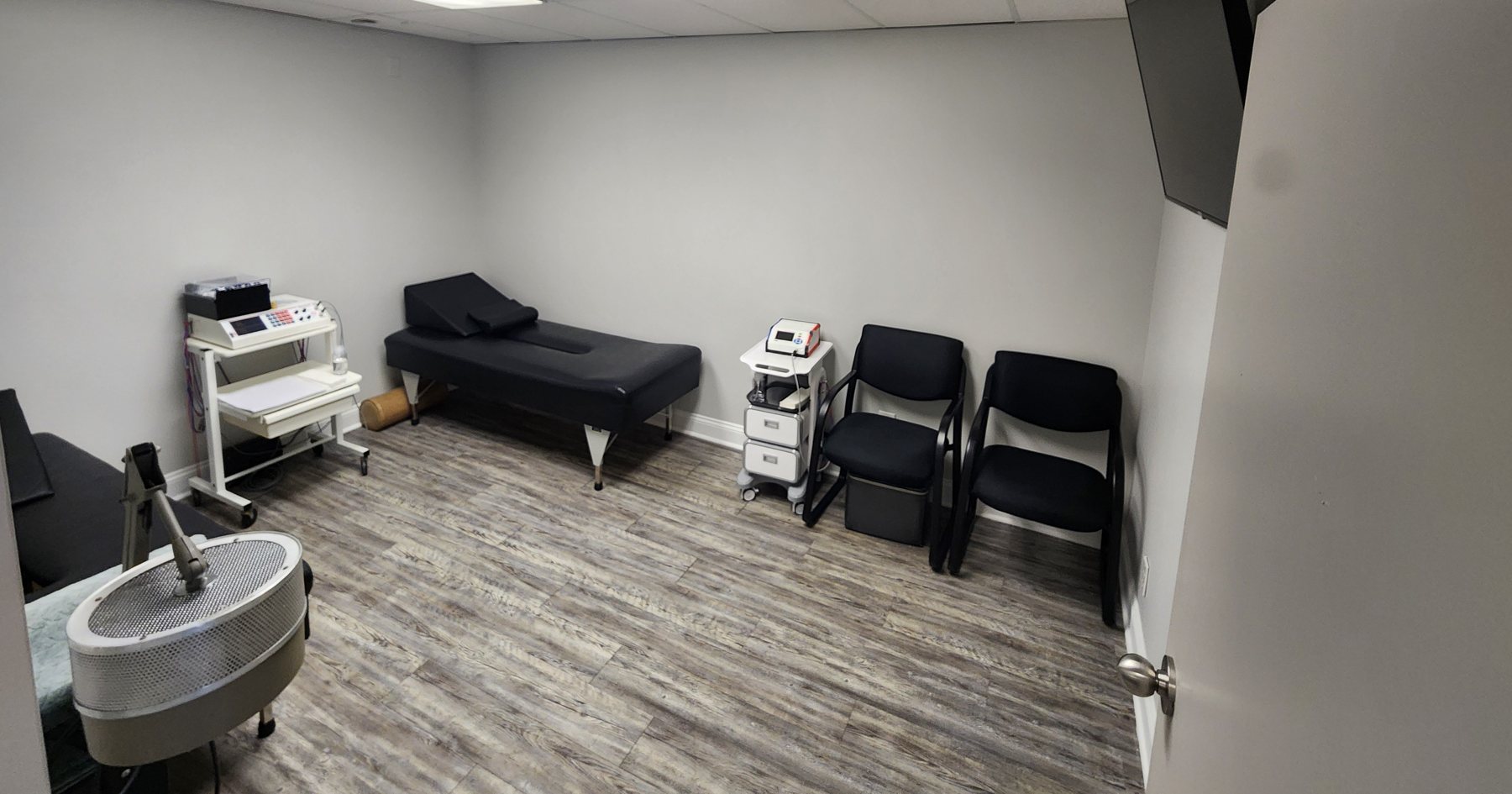
Class IV cold laser is our workhorse for fresh and inflamed tissue. Light at a specific wavelength and dose is absorbed locally, which raises cellular energy production, calms inflammatory signaling, and improves circulation through the area. It is painless, drug free, and carries no downtime, so it fits easily around a training week.
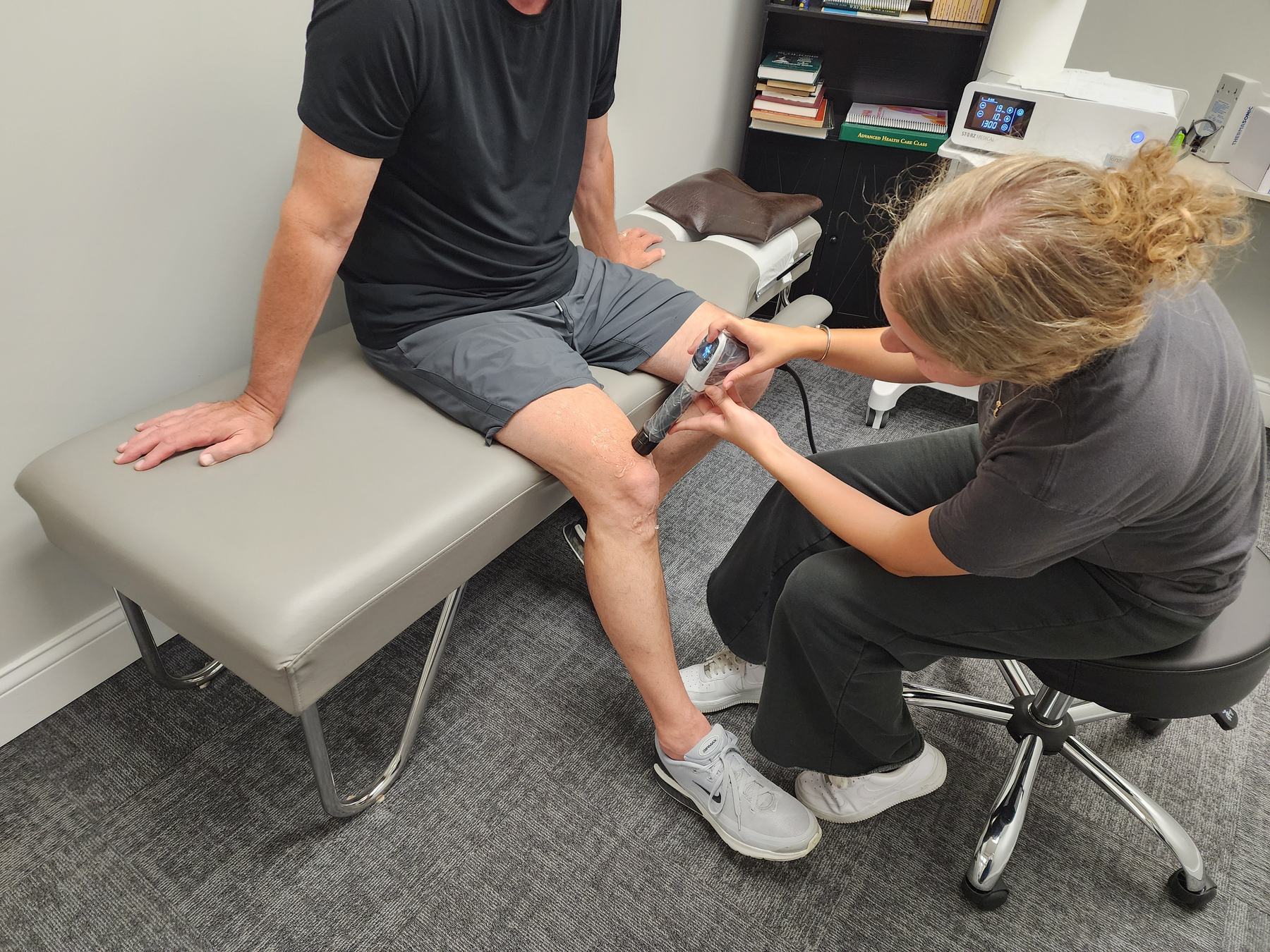
Our Storz shockwave therapy does the opposite job. It is for tissue that has stalled: the patellar tendon that has been sore for four months, the plantar fascia that never quite settled, the chronic tennis elbow that has outlasted every brace. Radial acoustic waves reintroduce a mechanical stimulus to tissue that has settled into an unproductive holding pattern.
Specific adjusting restores the motion that the injury took away, and that work is not limited to the spine. Ankles, feet, knees, hips, shoulders, elbows, and wrists all get assessed and treated. When a joint is too irritable for hands-on work, low-force instruments such as the PulStar, Impulse, or Activator do the same job without twisting. Alongside that, stretch therapy with Yevgeniy Kapusterynsky addresses the tight, guarded tissue that keeps pulling a healing area back into a bad position.
Injuries we see
- Hamstring, quadriceps, calf, and groin strains
- Ankle sprains, including ankles that never fully recovered
- Rotator cuff irritation and shoulder impingement
- Tennis and golfer's elbow
- Patellar and Achilles tendinopathy, shin splints, plantar fasciitis
- Low back and neck injuries from lifting, contact, or rotation
- Overuse pain from running, throwing, racquet sports, or a sudden jump in training volume
Return to play, not return to pain. Pain settles down before tissue finishes healing, and that gap is where reinjury happens. We would rather hold you out one more week than clear you a week early. Some injuries also belong elsewhere first: obvious deformity, an inability to bear weight, a joint that feels unstable, or any suspected fracture or concussion needs medical evaluation before conservative care begins.
What care looks like here
Visits are unhurried and by appointment only, so you are not competing with a waiting room. After the examination, care usually pairs a modality with specific adjusting and, where it applies, stretch work. Early sessions focus on calming the tissue and restoring motion. Later sessions shift toward loading the area again and rebuilding the tolerance that failed in the first place. Modalities such as laser and shockwave are priced per treatment, so you always see exactly what you are paying for.
Questions, answered
How soon after an injury should I come in?
Once serious injury has been ruled out, sooner is better. Early care is aimed at controlling swelling, protecting the tissue, and keeping the joints around the injury moving so the rest of the body does not stiffen while one part heals. If you have obvious deformity, cannot bear weight, felt a pop with immediate swelling, or suspect a fracture, get medical imaging first.
Will I have to stop training completely?
Usually not completely. Most athletes can keep training around an injury with modified load while the injured tissue is treated. Dr. Hayes will tell you which movements to keep, which to shelve, and what a reasonable week of training looks like while you are healing. Total rest is reserved for the injuries that genuinely require it.
How do you decide when I am ready to return to sport?
Not by the calendar and not by pain alone. Pain often quiets down well before the tissue has caught up, which is why reinjury so often happens in the first weeks back. We look at restored range of motion, symmetry side to side, strength under load, and how the joint behaves during sport-specific movement before recommending a full return. Where a team physician or athletic trainer is involved, that call stays theirs.
Does shockwave therapy hurt?
It is intense but brief. Most patients describe a firm, rapid tapping over the treated area that is strongest in the first minute. Intensity is dialed to what you can tolerate and adjusted as the session goes. Cold laser feels like mild warmth or nothing at all.
What about a suspected concussion?
A suspected concussion is a medical evaluation first, without exception. Once you have been assessed and cleared by your physician, we can address the neck and cranial mechanics that often contribute to lingering headaches, neck pain, and stiffness after a head impact. That work targets the mechanical structures of the neck and skull, not the brain injury itself, and it is done alongside your medical team rather than in place of it.
Get back to your sport on the tissue's timeline, not the calendar's.
One examination tells you what is actually injured and what returning safely requires. Book online or call the office.