
Tennis elbow treatment in Chesterfield, MO
Care for lateral epicondylitis and repetitive strain that treats the irritated tendon and the arm mechanics that keep reloading it.
Tennis elbow is a sharp, specific pain on the outside of the elbow that shows up when you grip. Lifting a coffee cup, turning a doorknob, shaking a hand, carrying a grocery bag by the handle: small, unremarkable actions that suddenly hurt out of proportion to what they are. Press on the bony point at the outside of the elbow and you can usually find the exact spot.
The medical name is lateral epicondylitis, though the tissue tells a slightly different story. In cases that have been going for more than a few weeks, what is found in the tendon is generally not active inflammation but degeneration: disorganized collagen, poor blood supply, and a repair process that started and then stalled. That distinction matters, because it explains why anti-inflammatories and rest often take the edge off without ever finishing the job. The tendon does not need to be quieted. It needs to be pushed back into healing.
Why the elbow is rarely the whole problem
The muscles that extend your wrist and fingers originate at the outside of the elbow, funnel into one small common tendon, and anchor there. Every gripping motion you make loads that anchor point. So the question worth asking is not just why the tendon is irritated, but why it is absorbing so much of the work.
Very often the answer sits above and below it. A wrist that has lost mobility forces the forearm muscles to work harder for the same grip. A shoulder blade that does not stabilize properly leaves the arm working from an unsupported base, and the small muscles downstream compensate. A stiff, forward-carried neck changes the nerve supply and tone through the whole arm. Repetitive strain injuries tend to land wherever the chain is weakest, which is why the same patient may show up first with elbow pain and later with carpal tunnel symptoms in the same hand.
Treating the tendon directly
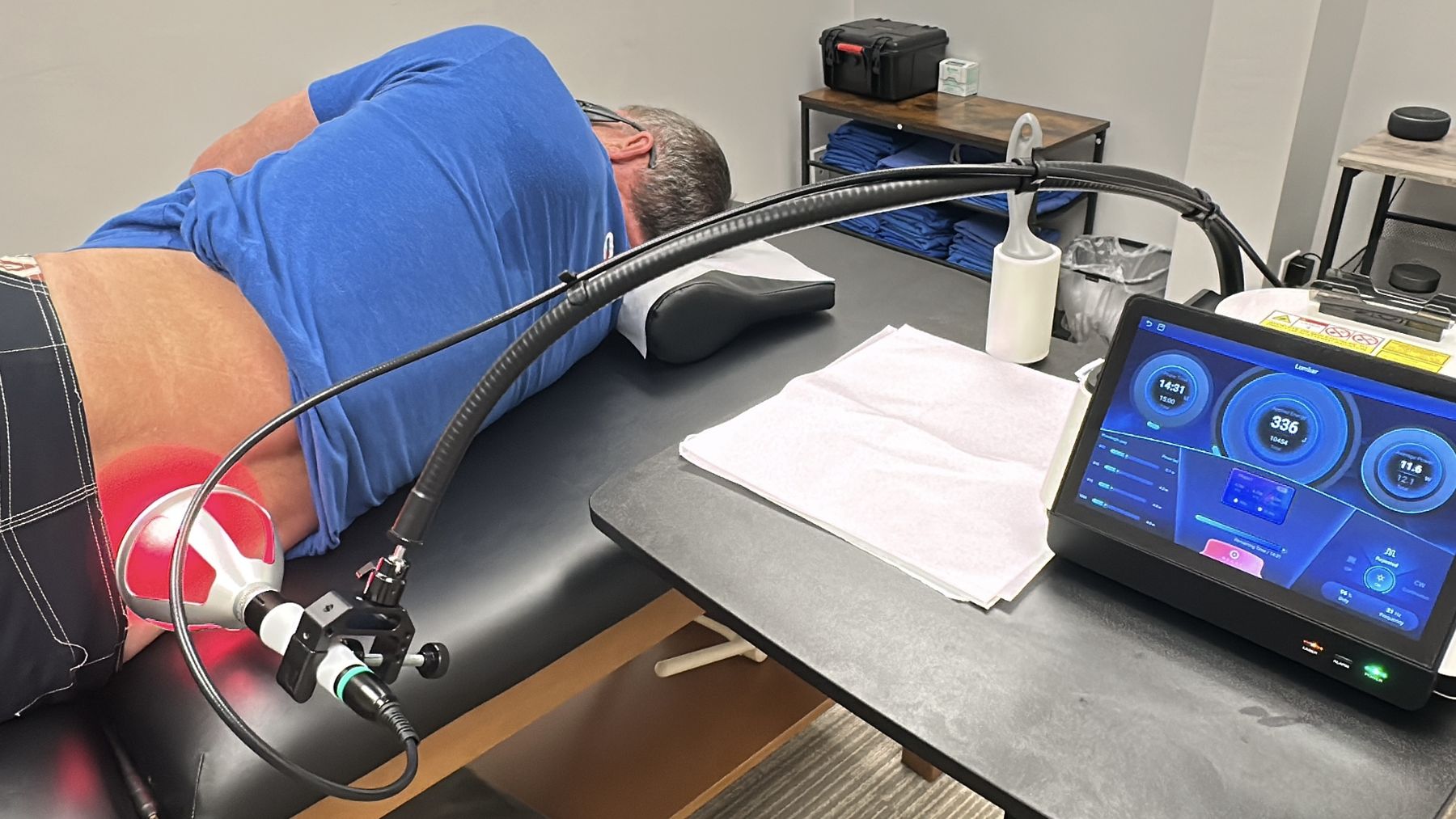
Our Storz shockwave therapy is the primary tool for a stalled tendon. Radial acoustic waves are driven into tissue that has settled into a chronic, unproductive state, and the mechanical stimulus provokes a fresh repair response along with new local circulation. Chronic lateral epicondylitis is one of the classic applications for it. Class IV cold laser is used alongside, or on its own for more irritable, acutely painful cases. Light at a specific wavelength and dose raises cellular energy production and calms inflammatory signaling in the tissue it reaches. It is painless and drug free.
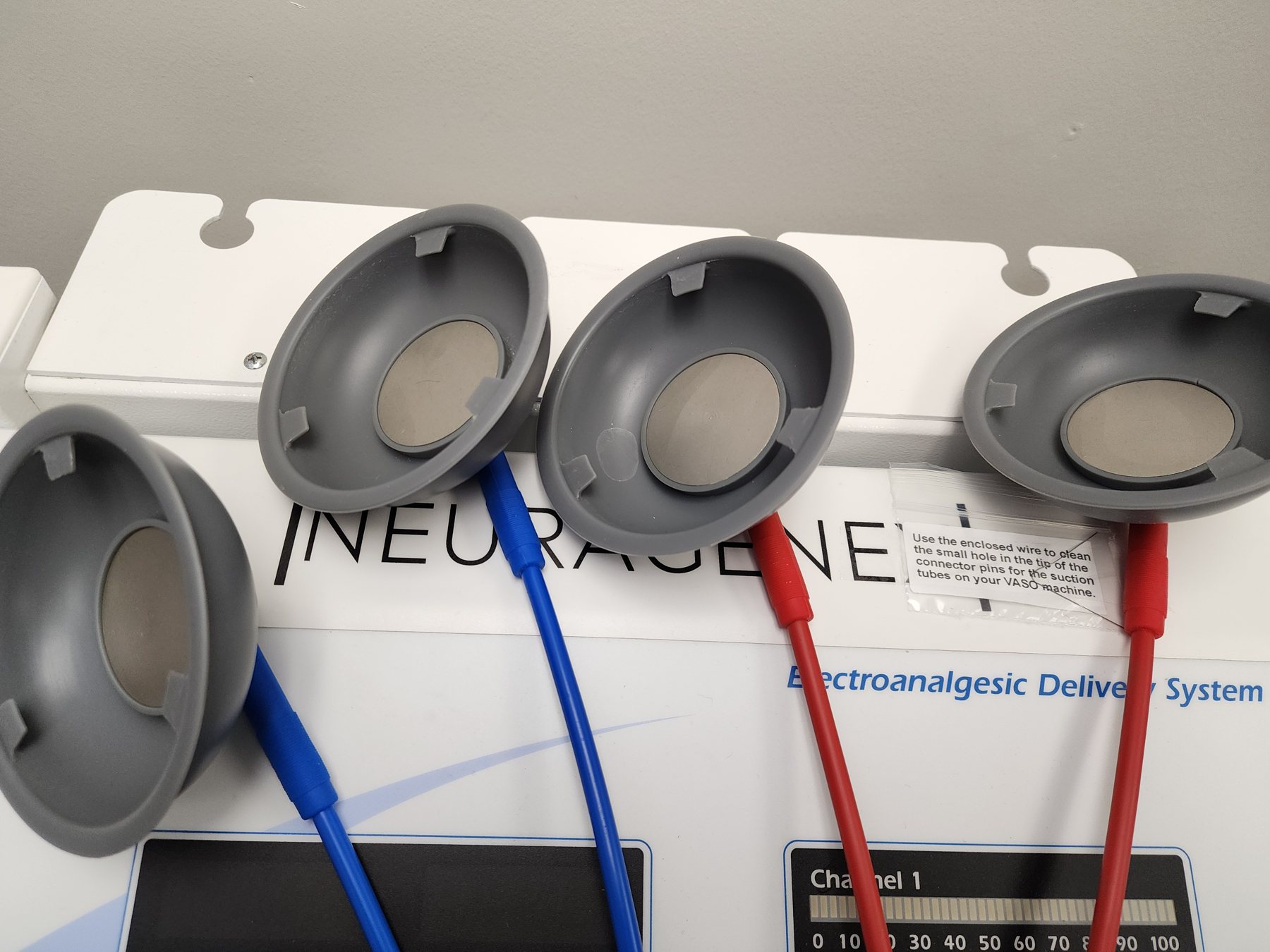
When forearm pain has a strong nerve component, tingling into the hand, burning along the outside of the forearm, hako-med electroanalgesia and interferential current are available to settle the nerve-level irritation while the tendon work continues.
Repetitive strain problems we see
- Lateral epicondylitis, the outside-of-elbow tennis elbow pattern
- Medial epicondylitis, golfer's elbow on the inside of the elbow
- Forearm and wrist extensor strain from keyboard, mouse, and tool use
- Grip-related pain in trades, kitchens, salons, and clinical work
- Shoulder and rotator cuff overuse feeding elbow symptoms
- Racquet, throwing, and lifting strain, alongside our other sports injuries care
Honest candidacy, always. Not every elbow is a tendon problem. A true tear, a fracture, a joint that locks, or pain that turns out to be referred from the neck all call for a different answer. The sixty minute examination exists to work out which one you have before you spend anything on treatment.
What care looks like here
Your first visit is a sixty minute examination: history, neurological, physical, and orthopedic testing, an assessment of wrist, elbow, shoulder, and cervical motion, and your first adjustment. Nothing is rushed, and nothing about your work or your sport is treated as irrelevant detail. From there, care pairs the modality the tendon needs with specific adjusting to restore motion through the wrist, elbow, shoulder, and neck. Where a joint is irritable, that adjusting is done with low-force instruments such as the PulStar, Impulse, or Activator, with no twisting. Therapeutic ultrasound and shortwave diathermy prepare tissue so corrections hold, and stretch therapy with Yevgeniy Kapusterynsky is available when a tight forearm and shoulder girdle are part of the picture.
Questions, answered
I have never played tennis. Why is it called tennis elbow?
The name is historical and misleading. Lateral epicondylitis is far more common in tradespeople, cooks, hairstylists, nurses, mechanics, musicians, and anyone at a keyboard and mouse all day. The tendon does not care what the repetition is, only how much of it there has been and how well the rest of the arm shares the load.
How is this different from bracing and rest?
A counterforce strap and time off can quiet symptoms, and sometimes that is enough early on. It does not change the tissue quality in a tendon that has been degenerating for months, and it does not touch the wrist, shoulder, or neck mechanics that overloaded it in the first place. That is why so many cases come back the week normal activity resumes.
Does shockwave therapy hurt?
It is intense but brief. Most patients describe firm, rapid tapping over the sore spot, strongest in the first minute, and it eases as the area desensitizes. Intensity is set to what you can tolerate and adjusted in the moment. Cold laser feels like mild warmth or nothing at all.
Can I keep working while I am treated?
Usually yes. There is no downtime after either laser or shockwave. Dr. Hayes will talk through the specific movements and grip positions that are keeping the tendon irritated, and what to modify at work or in your sport while the tissue recovers.
How many visits does this take?
It depends on how long the tendon has been irritated and how much of the problem sits up the chain. Tendon cases treated with shockwave typically run a short series. After the examination Dr. Hayes gives you a specific plan and its cost before you commit to anything. Modalities such as laser and shockwave are priced per treatment.
An elbow that has hurt for months is not going to rest its way better.
One examination tells you what the tendon needs and what is still overloading it. Book online or call the office.