
Thompson drop-table technique in Chesterfield, MO
A drop-piece table lets Dr. Hayes make a precise correction with a fraction of the force of a manual adjustment. The table does part of the work, so you get the result with less pressure and more comfort.
The Thompson technique is an adjusting method built around a specially engineered table. Instead of one flat surface, the table is divided into sections that sit under your neck, mid-back, lower back, and pelvis. Each section is spring loaded and can be raised a fraction of an inch, then set so it drops the instant Dr. Hayes delivers a thrust. That drop is the whole point: it lets a light, controlled push move a joint that would otherwise take a much heavier manual effort.
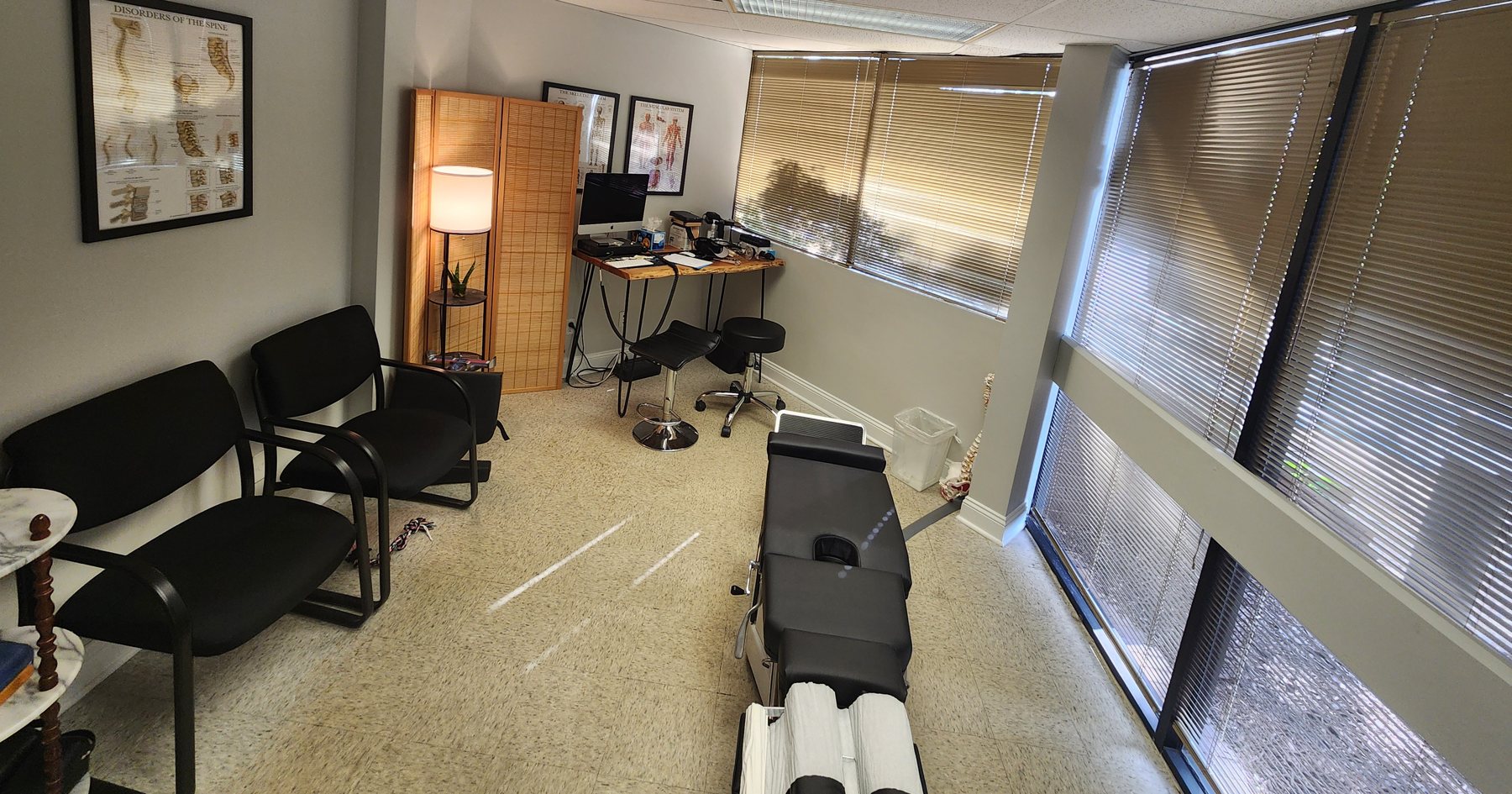
How the drop mechanism works
Before the adjustment, the section of the table under the area being treated is cocked: raised slightly and held on a tension spring. When Dr. Hayes applies a quick, shallow thrust, that section releases and falls those few millimeters with your body. Because the table is already moving in the direction of the correction, your own weight and momentum finish the motion. The joint moves, but the force your body absorbs is small and the push is over in a fraction of a second. There is no twisting of the spine and no deep, sustained pressure. Most patients feel a soft, cushioned bump and a quiet release rather than a hard crack.
Who it helps
Because it lowers the force needed to make a correction, the drop table suits patients who are not comfortable with a traditional twisting adjustment, larger patients where hands-on leverage is harder to get, and anyone in an acute flare who cannot tolerate much pressure. It is a natural fit for lower back and pelvic complaints: the pelvic drop piece lets Dr. Hayes address sacroiliac and hip mechanics directly. If you came in for back pain, the drop table is often part of how we unload the joint without aggravating it.
One tool, not the whole plan. Some spines respond best to the drop table, others to a specific manual Diversified adjustment or an instrument. Your examination decides which approach, or which combination, actually holds for you. We address the cause, not the symptom, and the tool follows the findings.
What a visit looks like
You lie face down or on your side on the drop table, fully clothed. Dr. Hayes checks your alignment, often including a leg-length comparison that helps localize which segment is off, then sets the relevant drop piece and delivers the adjustment. The correction itself takes a moment. A routine adjustment visit runs about 30 minutes, and there is no downtime afterward. If it is your first time in, everything starts with the 60 minute examination, so the plan is built on what we actually find rather than guesswork.
Questions, answered
Does the drop table hurt?
No. Most patients feel a soft, cushioned bump and a quiet release rather than a hard push. Because the table section drops with your body, the force your spine absorbs is small and the correction is over in a fraction of a second.
Will I hear a pop or crack?
Sometimes, sometimes not. The drop mechanism lets Dr. Hayes move a joint without the twisting that usually produces an audible release, so a quiet correction is normal and does not mean it did not work.
Who is the drop table a good fit for?
Patients who are not comfortable with a traditional twisting adjustment, larger patients where hands-on leverage is harder to get, and anyone in an acute flare who cannot tolerate much pressure. It is especially useful for lower back and pelvic problems.
How is this different from a manual adjustment?
A manual, or Diversified, adjustment uses the doctor's hands and body position to move a joint directly. The Thompson table uses a spring-loaded section that drops as the thrust is delivered, so the same correction takes far less force. Dr. Hayes chooses between them based on your exam.
Is the drop table used on its own?
Often it is part of a combination. Some spines respond best to the drop table, others to a specific manual adjustment or an instrument. Your examination determines which approach, or which mix, actually holds for you.
Adjusting that meets your body where it is.
If a lighter, no-twist correction sounds like what you need, one examination tells us whether the drop table fits your case. Book online or call the office.