
Weakness and balance issues in Chesterfield, MO
Unsteadiness, near-falls, and limbs that feel weak often involve nerve function, spinal mechanics, and position sense rather than age alone. The examination sorts out which findings are mechanical and which belong with a physician.
Reaching for a wall halfway down the hallway. Turning around slowly because turning quickly feels risky. Watching your feet on stairs you used to take without thinking. A leg that gives a little when you stand from a chair, or a hand that drops things it used to hold. These are the reports we hear, and most of the people making them have already been told some version of "that happens at your age."
Balance is not a passive state. It is a calculation your nervous system runs continuously, and it needs three streams of information to run it: your inner ear, your eyes, and the position sensors buried in your joints, muscles, and spine. Weakness works on a similar principle. A muscle that tests weak is frequently not a failing muscle. Often it is a muscle receiving a degraded signal from the nerve that drives it.
Why position sense sits at the center of this
Two regions supply an outsized share of that positional information. The upper cervical spine carries one of the densest concentrations of joint position receptors in the body, and it feeds directly into the brainstem structures that coordinate balance and eye movement. The feet supply the other end: the soles and ankle joints report constantly about the surface under you. When the neck loses normal motion, or when the small nerves in the feet stop reporting reliably, the calculation runs on incomplete data. What you feel is drift, hesitancy, or a sense that the floor is less trustworthy than it was.
Weakness that follows a pattern is a different signal. When a nerve root leaving the spine is compressed or irritated, the muscles it supplies get a weaker drive, and the weakness maps to that specific root rather than to the whole limb. That distinction, generalized unsteadiness versus a mapped motor deficit, is one of the first things the examination sorts out.
What the evaluation screens for
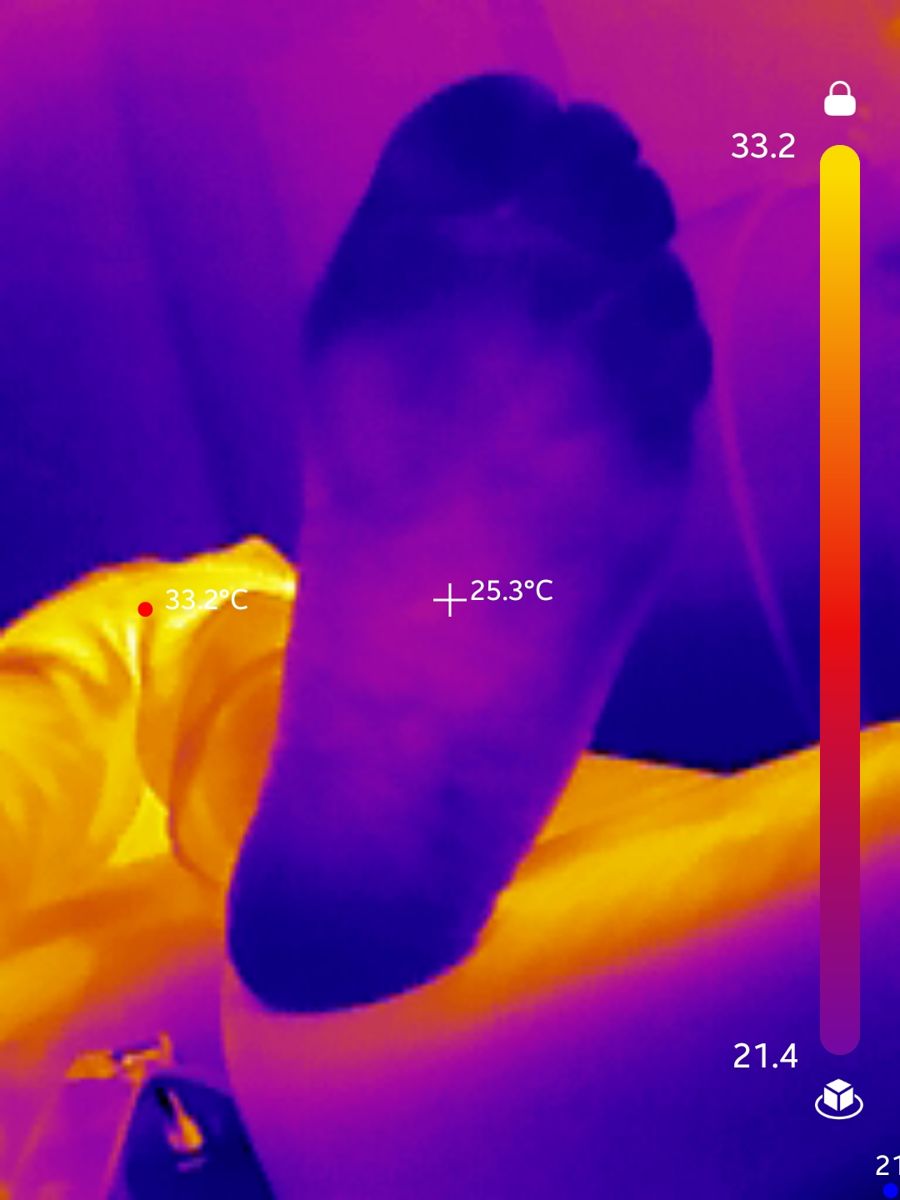
Your first visit is a sixty minute examination, and for this complaint it is heavily neurological. Dr. Hayes tests deep tendon reflexes and compares sides, grades muscle strength group by group to see whether weakness follows a nerve root pattern, and checks sensation, including vibration sense, which is often the first thing to fade in the feet. Coordination testing, static and tandem stance, and observed gait show how your system performs when it has to integrate all of it at once. Cervical and lumbar motion, hip and pelvic mechanics, and orthopedic testing round out the mechanical side, and thermal imaging documents surface temperature patterns in the extremities.
The point of testing that broadly is to separate causes. Unsteadiness that comes from a stiff, poorly moving neck is a different finding from unsteadiness driven by peripheral neuropathy, and both are different from the lingering imbalance and visual strain that can follow a head injury, where care focuses on the neck and cranial mechanics contributing to post-concussion symptoms alongside your medical team.
Who this helps
- Adults who feel unsteady, unsure on stairs, or reluctant to walk on uneven ground
- Patients who have had a fall or a near-fall and want to know why
- Weakness or heaviness in one arm or leg that maps to a nerve root
- Numbness or reduced sensation in the feet affecting footing
- Older adults maintaining independence and mobility through geriatric care
- Lingering imbalance after a head injury, managed alongside a physician
Some of this belongs to a physician, and we will say so. Sudden one-sided weakness, facial droop, slurred speech, or sudden vision change is a 911 call, not an appointment. Rapidly progressing weakness, loss of bowel or bladder control, or a fall involving a head strike needs medical evaluation first. Screening for those patterns is part of the examination, and when the findings point that way, Dr. Hayes refers you out rather than starting a care plan.
What care looks like here
When the findings are mechanical and nerve-mechanical, care is built around restoring motion and improving the quality of the signal. That usually means specific adjusting to the cervical spine, pelvis, and lower extremities, delivered with low-force instruments such as the PulStar, Impulse, or Activator when a patient is older or a joint is irritable. Where a nerve root is compressed, decompression on the DOC or Cox 8 table is used to reduce pressure on it. Where the peripheral nerves in the feet are the limiting factor, Class IV cold laser and hako-med electroanalgesia address the nerve tissue and the circulation feeding it. Bio Cranial and Sacro Occipital Technique are used when cranial and pelvic mechanics are part of the picture, and stretch therapy with Yevgeniy Kapusterynsky helps when tight hips and calves are quietly narrowing your base of support. Visits are long and unhurried by design, because this complaint does not get sorted out in ten minutes.
Questions, answered
Is feeling unsteady just part of getting older?
Age changes the margin you have to work with, but it does not explain unsteadiness on its own. Plenty of people in their eighties are steady, and plenty of people in their fifties are not. Balance depends on joint position sense, nerve conduction, vision, and inner ear input, and several of those are mechanical problems worth examining before anyone calls it age.
When does weakness or imbalance need a medical workup instead?
Sudden weakness on one side, a drooping face, slurred speech, sudden vision loss, or a sudden severe headache is an emergency: call 911. Weakness that is progressing quickly, loss of bowel or bladder control, unexplained weight loss, or a fall with a head strike needs a physician, not a chiropractor. Dr. Hayes screens for these patterns at the examination and will send you out when the findings point that way.
My weakness is in one hand rather than my legs. Is that a different problem?
Often, yes. Weakness confined to one limb, or to a specific muscle group, usually follows a single nerve root or peripheral nerve and points toward a compression or entrapment site. Generalized unsteadiness on your feet is more often a sensory and proprioceptive picture. The examination distinguishes them, because they call for different care.
I have already been diagnosed with neuropathy in my feet. Does that change the approach?
It focuses it. When the small nerves in the feet stop reporting reliably, the nervous system loses much of the ground-level information it uses to keep you upright, which is why falls are common in that group. Care then addresses both the nerve tissue itself and the spinal and hip mechanics that have to compensate for the missing input.
Is adjusting safe if I am older or have thin bones?
It is when the technique matches the patient. Care here is scaled to your body, and for older or fragile spines that usually means low-force instrument adjusting with the Activator, Impulse, or PulStar, with no twisting and no cracking. Conditions that would rule out a given technique, including advanced osteoporosis, are screened for at the examination.
Before you accept unsteadiness as normal, get it examined.
One sixty minute examination shows what the findings point to and whether it is something we can address. Book online or call the office.