
Geriatric chiropractic in Chesterfield, MO
Light-touch and instrument adjusting built around arthritis, thinning bone, and joints that have earned their wear. The aim is comfortable movement, steadiness, and staying independent.
Most older adults who come here have been told a version of the same thing: it is arthritis, it is your age, learn to live with it. Age does change a spine. It does not make stiffness, aching joints, and unsteadiness untreatable. What it changes is how care has to be delivered. A seventy-eight year old with thinning bone, a stiff lower back, and a knee replacement should not receive the same adjustment as a thirty year old athlete, and at this office she does not.
What actually changes in an older spine
Discs lose water and height, which narrows the space nerve roots travel through. Facet joints thicken and lose their glide. Ligaments stiffen. Bone density drops, often quietly. The muscles that used to hold you upright lose cross section, so the joints absorb more of the work that muscle used to handle. Patients describe the result in familiar terms: a low back that hurts more standing than sitting, a neck that will not turn far enough to check a blind spot, hips that ache getting out of the car, and a creeping sense that the ground is less reliable than it used to be.
None of that is a reason to stop treating the spine. It is a reason to treat it carefully, and to know precisely what you are working with before touching anything.
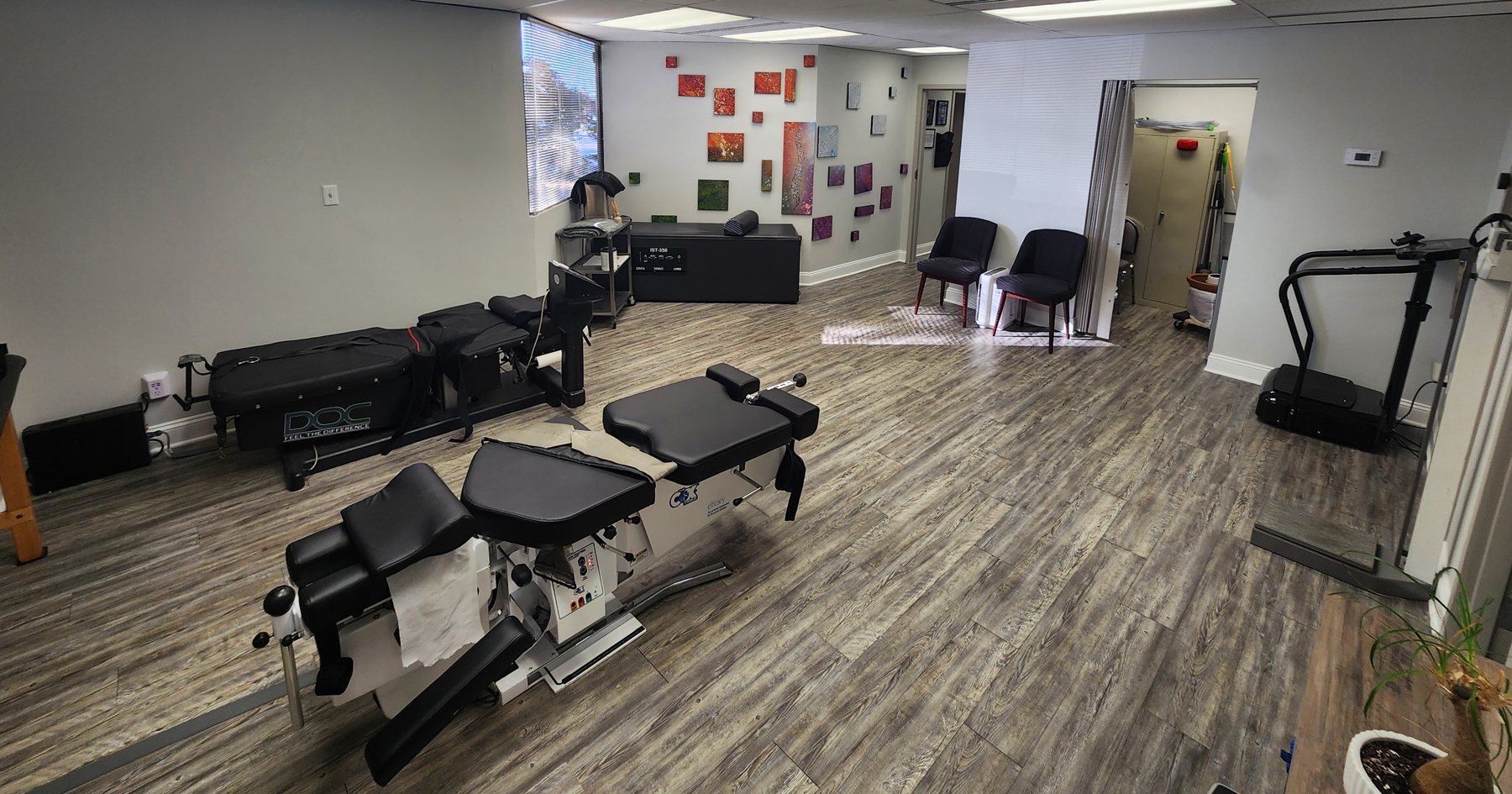
The examination comes first, always
Every older patient starts with the same sixty minute examination: history, a review of the medications you take, neurological and orthopedic testing, joint by joint motion assessment, and a look at how you stand, walk, and get out of a chair. Dr. Hayes is specifically screening for the findings that change or rule out manual care, including known or suspected osteoporosis, prior fractures, spinal hardware and joint replacements, vascular concerns in the neck, inflammatory arthritis, and neurological signs that belong with your physician. If imaging is needed before treatment, we say so. If what we find belongs in a medical workup, we refer, and we tell you why.
Nothing about that visit is rushed. This is an appointment-only practice and the visits are long on purpose, which matters more with a complicated history than with a simple one.
How the adjusting is actually done
For most older patients the answer is low force. The Activator, Impulse, and PulStar instruments deliver a small, precisely aimed impulse into a single joint: no twisting of the neck, no deep thrust, no body weight dropped through the spine. Our page on low-force instrument adjusting explains how that works. The PulStar also measures joint stiffness before and after, which gives an objective read on whether a segment is moving better rather than a guess.
When a hands-on adjustment is appropriate and comfortable for you, Dr. Hayes uses it. Cox flexion distraction offers a gentle, doctor-guided stretch of the lumbar spine that patients with narrowed nerve canals often tolerate well. Thompson drop pieces let the table absorb the force instead of your body. Logan Basic and Sacro Occipital Technique work through sustained, light contacts. Supportive tools including therapeutic ultrasound, shortwave diathermy, interferential current, and intersegmental traction warm and prepare stiff tissue first, so the correction takes less force to make and is more comfortable to receive.
What we see most often
- Chronic low back pain and stiffness that limits standing, walking, or working in the yard
- Neck pain and lost rotation that makes driving harder
- Arthritic hip, knee, shoulder, and hand pain
- Spinal stenosis symptoms, including leg heaviness or cramping after walking a certain distance
- Complaints of balance and weakness, and the fear of falling that comes with them
- Postural change, rounded upper back, and forward head carriage
- Rebuilding activity tolerance after surgery or a long inactive stretch
Honest scope, always. Chiropractic care here addresses musculoskeletal and nerve-mechanical problems and supports how well you move. It does not replace the rest of your care team. Sudden weakness, unexplained weight loss, a suspected fracture, or a new neurological change is a medical evaluation first, and Dr. Hayes will say so plainly rather than sell you a plan.
What a visit looks like
After the examination, ongoing visits run about thirty minutes. You are not asked to get down on the floor or hold positions you cannot hold. Adjusting is done in whatever position you tolerate best, seated included, and you are told what is coming before it happens. Progress is measured in function rather than in promises: how far you can turn your head, how long you can stand at the counter, how confidently you rise from a chair. When tight hips and hamstrings are shortening your stride, stretch therapy with Yevgeniy Kapusterynsky is available alongside your adjustments.
Questions, answered
I have osteoporosis. Can I still be adjusted?
Frequently yes, but not with a manual thrust. Reduced bone density moves care toward instrument adjusting, flexion distraction, and sustained light contacts, all of which apply far less force than a traditional adjustment. Advanced osteoporosis, a recent fracture, or a compression fracture on imaging changes the plan again, which is exactly why the examination screens for it before any treatment happens.
I have had a hip or knee replacement, or spinal hardware. Does that rule me out?
No. It changes technique selection and positioning. Dr. Hayes works around fused or instrumented segments and replaced joints rather than through them, and treats the levels above and below that are usually doing the extra work. Bring your surgical history and any imaging reports to the first visit.
Will you twist my neck?
Not unless it is appropriate for you and you are comfortable with it. Most older patients here are adjusted with the Activator, Impulse, or PulStar instrument, which involves no rotation of the neck and no cracking. You will always know what is about to happen before it happens.
I am not in much pain, I am just stiff and unsteady. Is that worth an appointment?
Yes. Stiffness and unsteadiness are mechanical findings, and they are worth examining while they are still mild rather than after they have limited what you do. The examination assesses joint motion, posture, and how you stand, walk, and rise from a chair, so you get an honest read on what is limiting you.
What does care cost?
The first visit is a $180 sixty minute examination. Adjustment visits after that are $65 for thirty minutes. Modalities such as cold laser, shockwave, and HakoMed electroanalgesia are priced per treatment and are not included in the adjustment fee, so you always see what you are paying for before you agree to it.
Age is a reason to adjust the approach, not to stop treating the problem.
One thorough examination tells you what is mechanical, what is not, and what can be done about it. Book online or call the office.